Concept
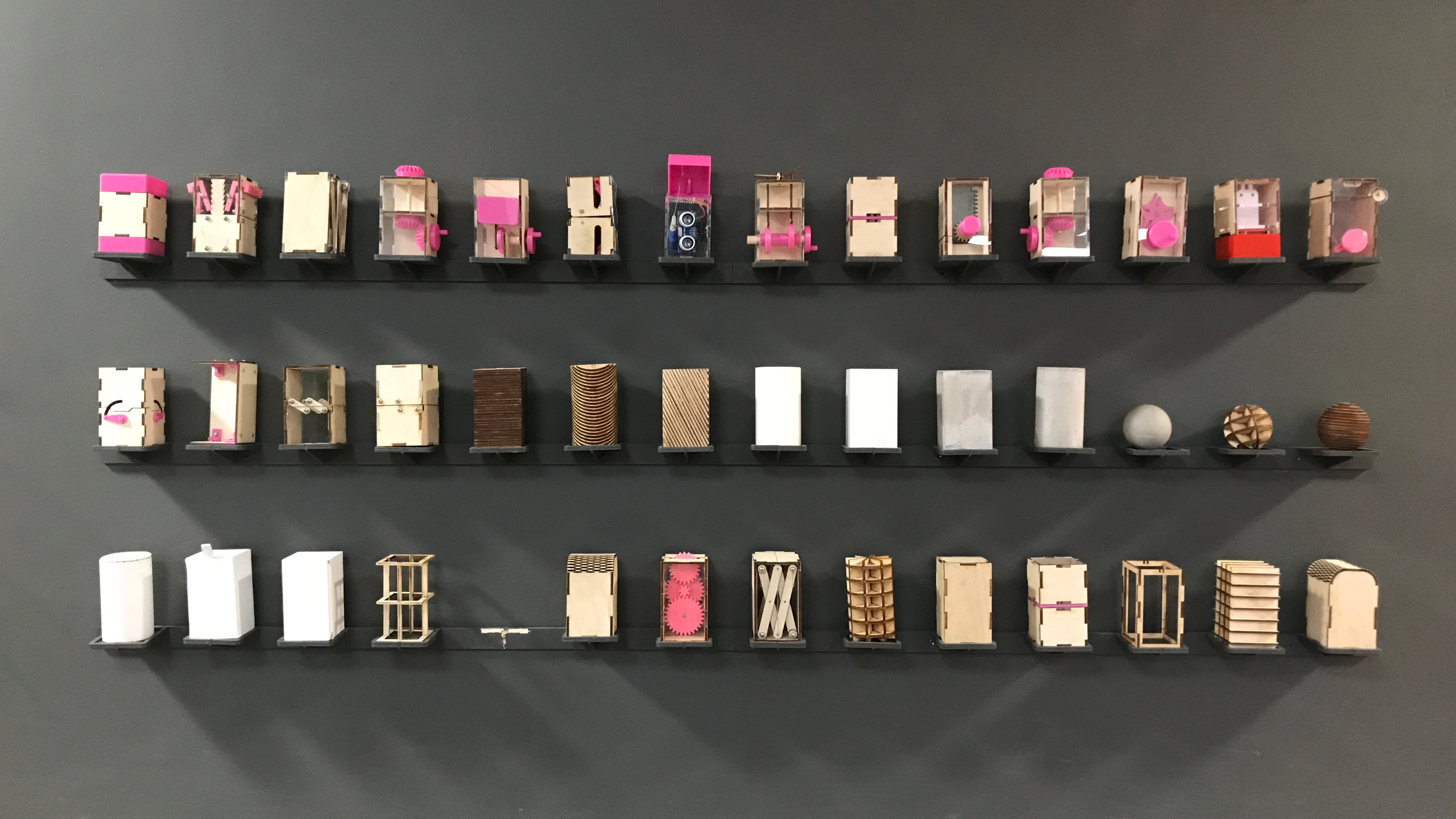
NuVu ToolBox is a comprehensive system of objects designed to help inexperienced creators turn their ideas into reality using the tools available to them.
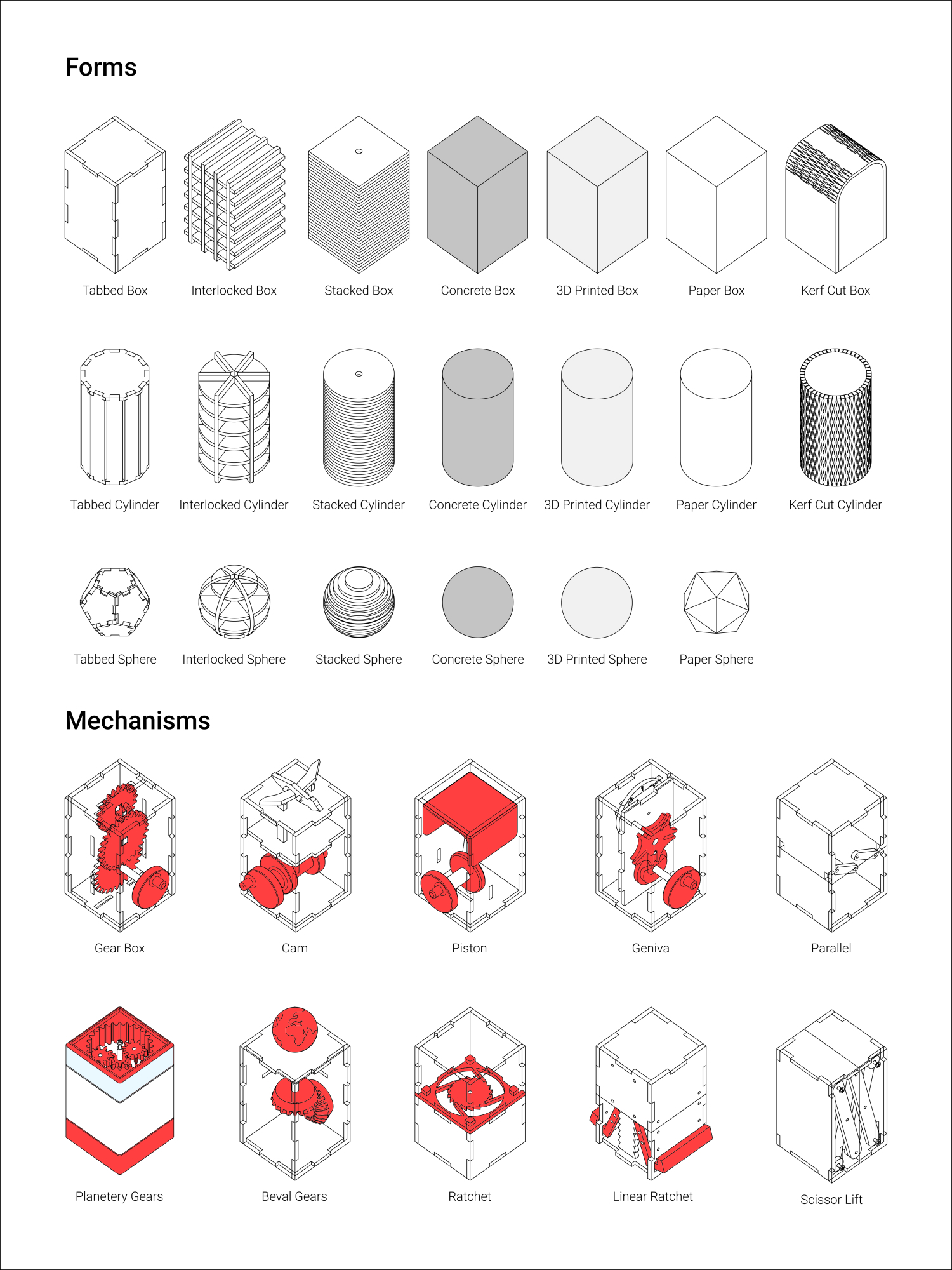
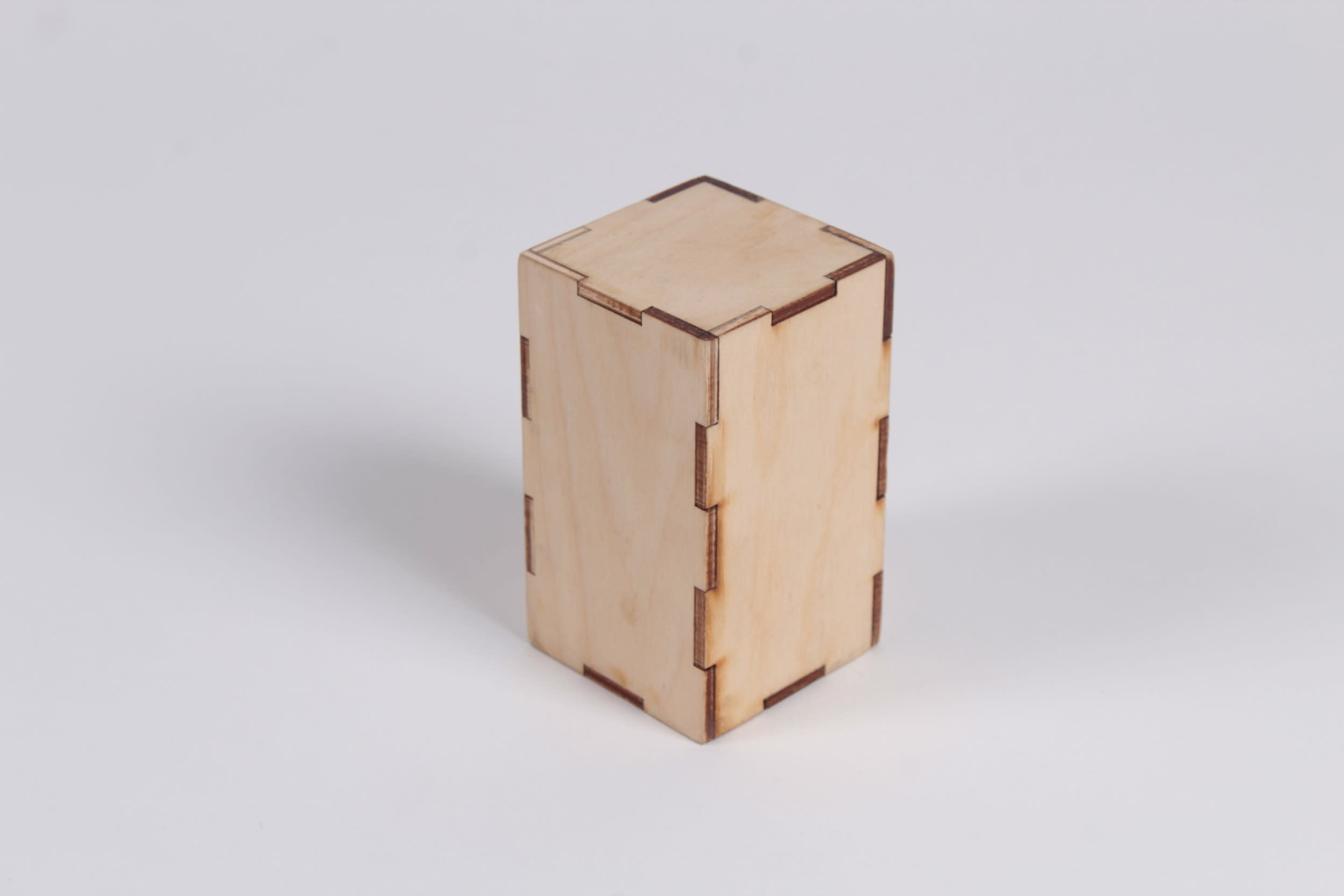
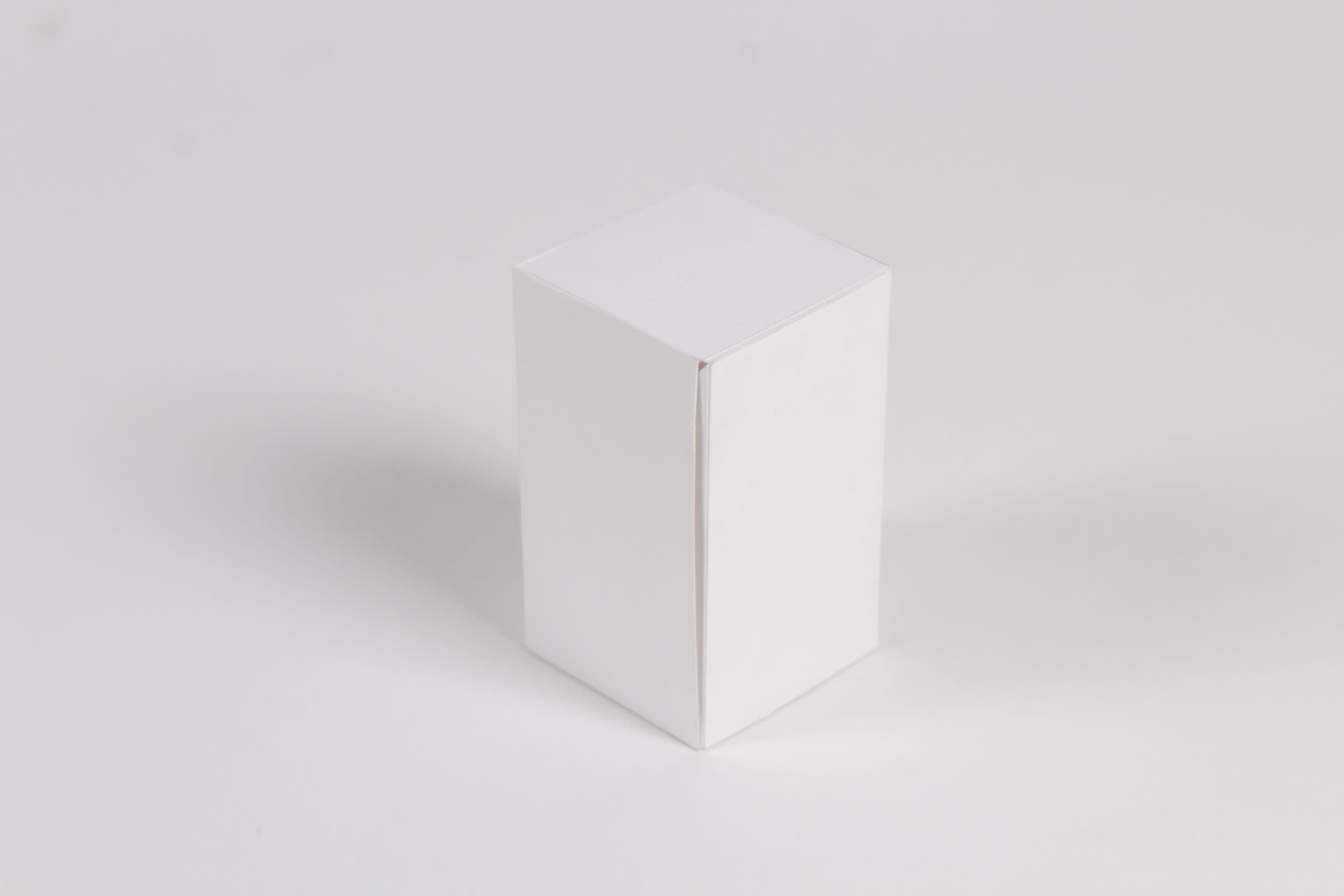
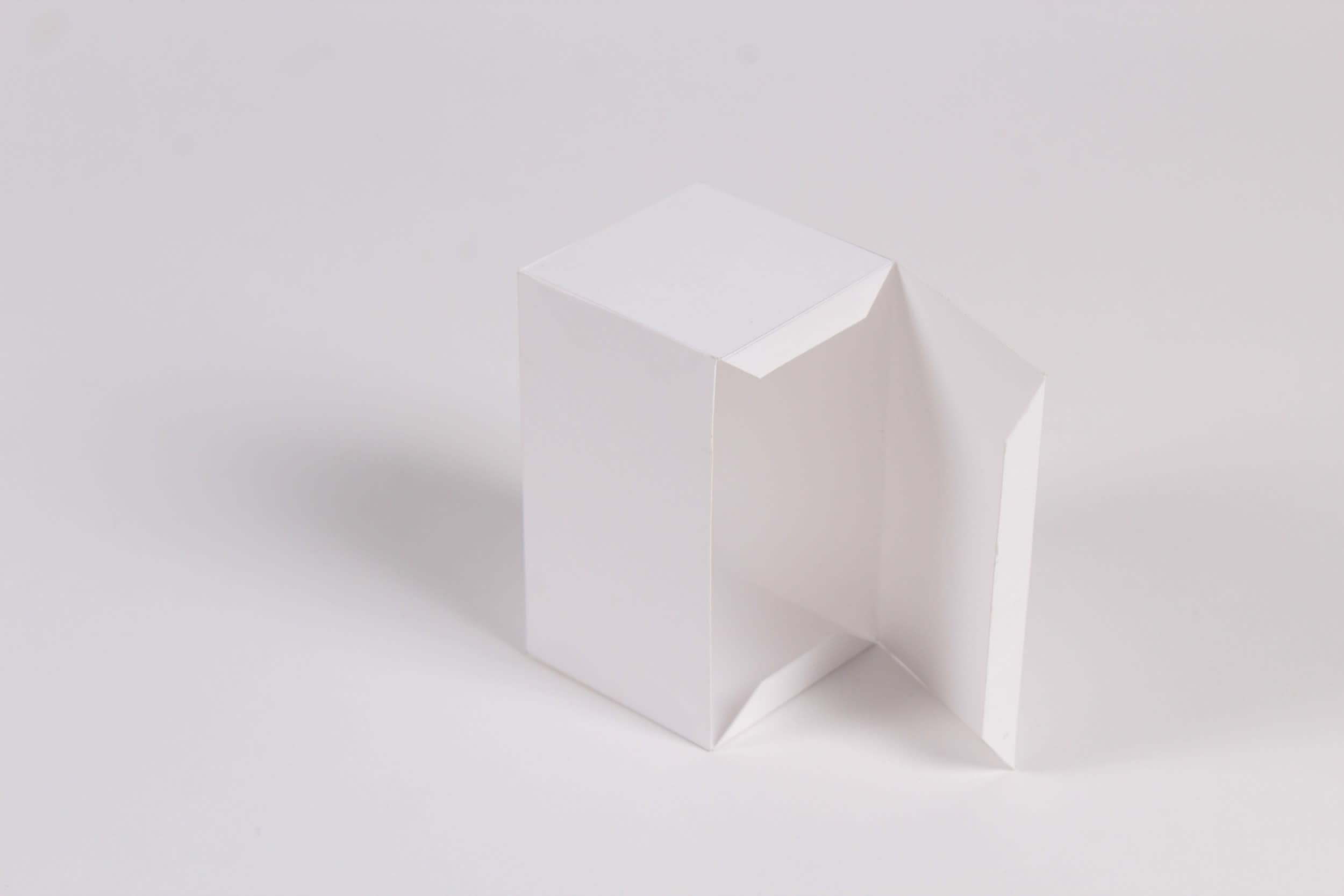
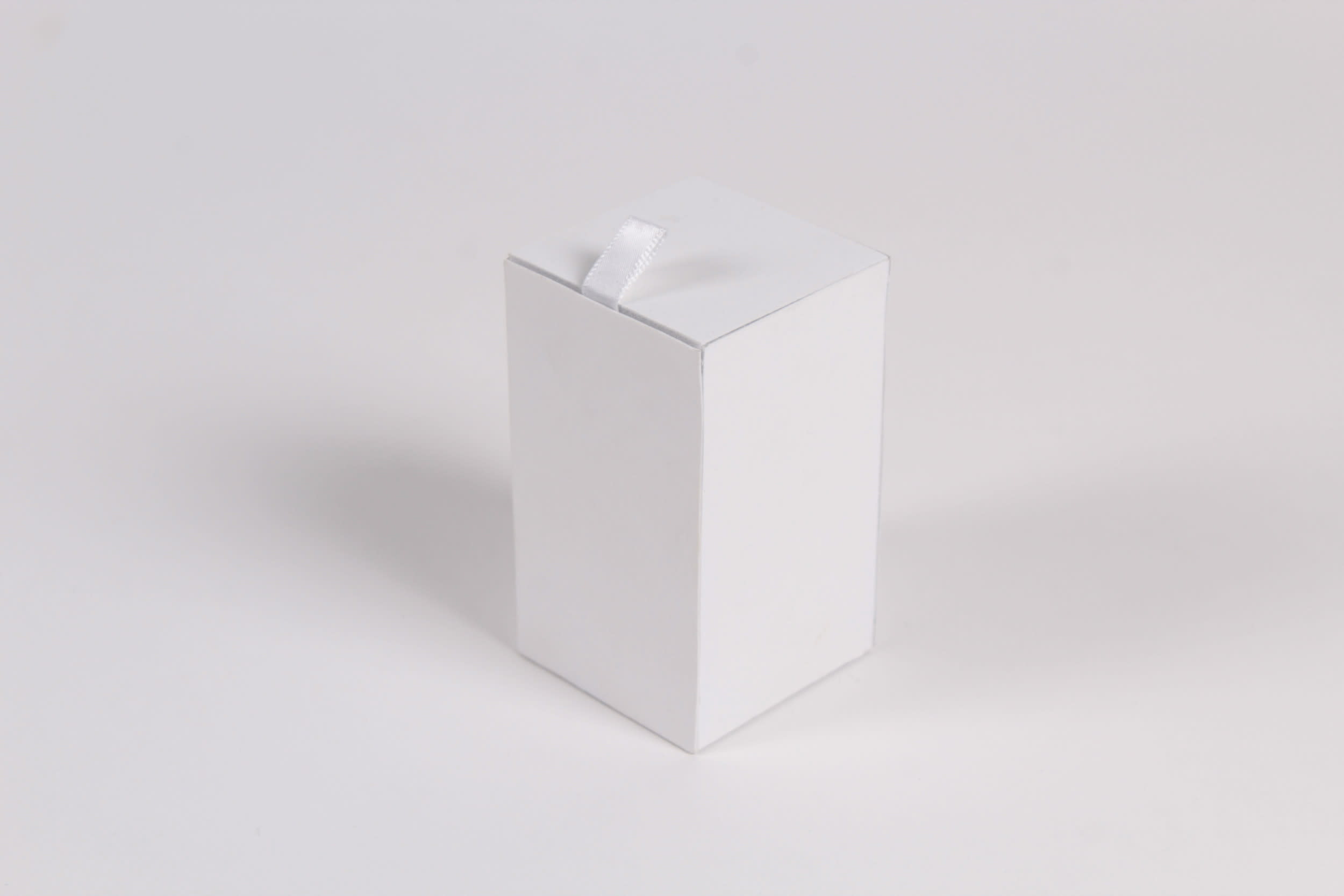
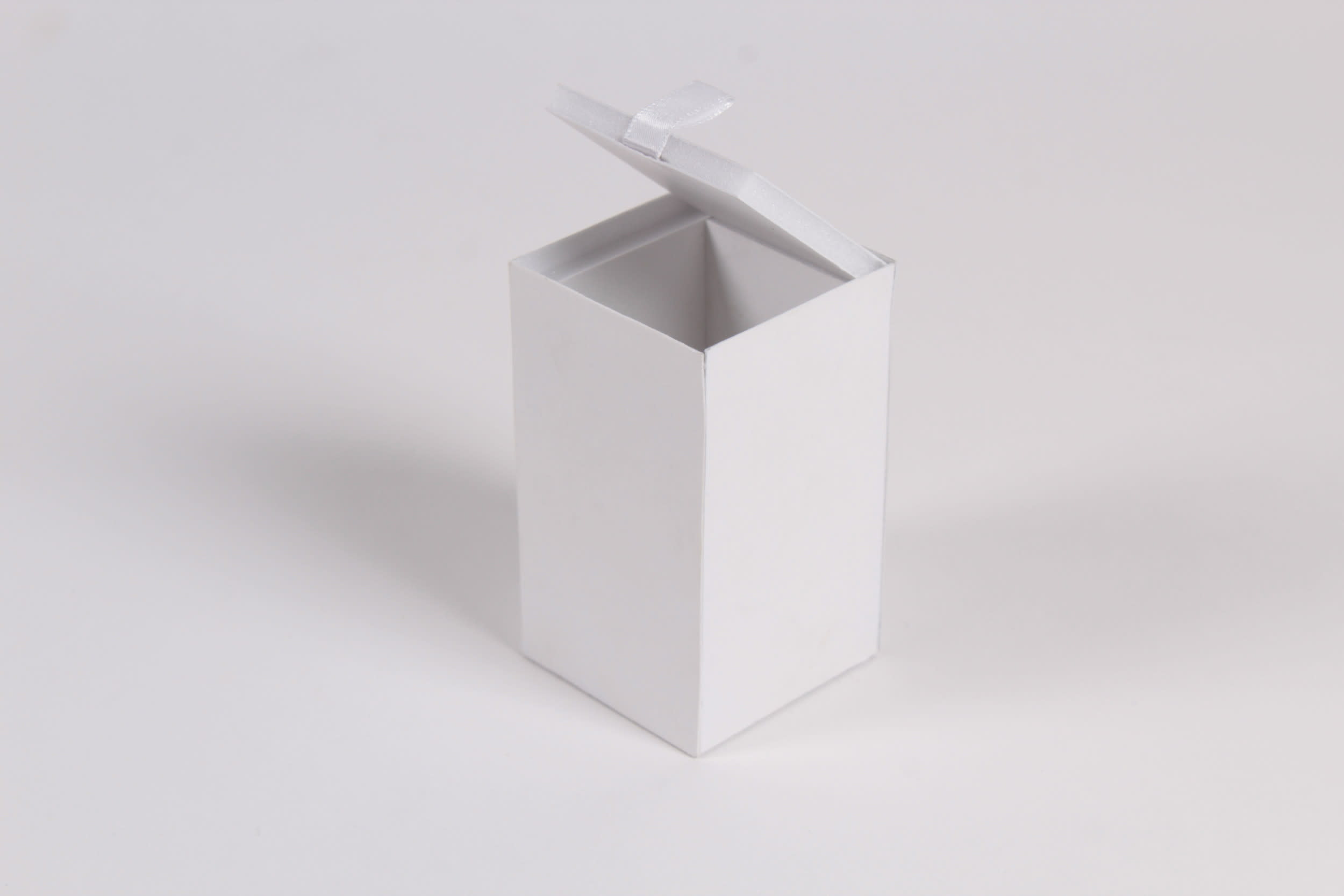
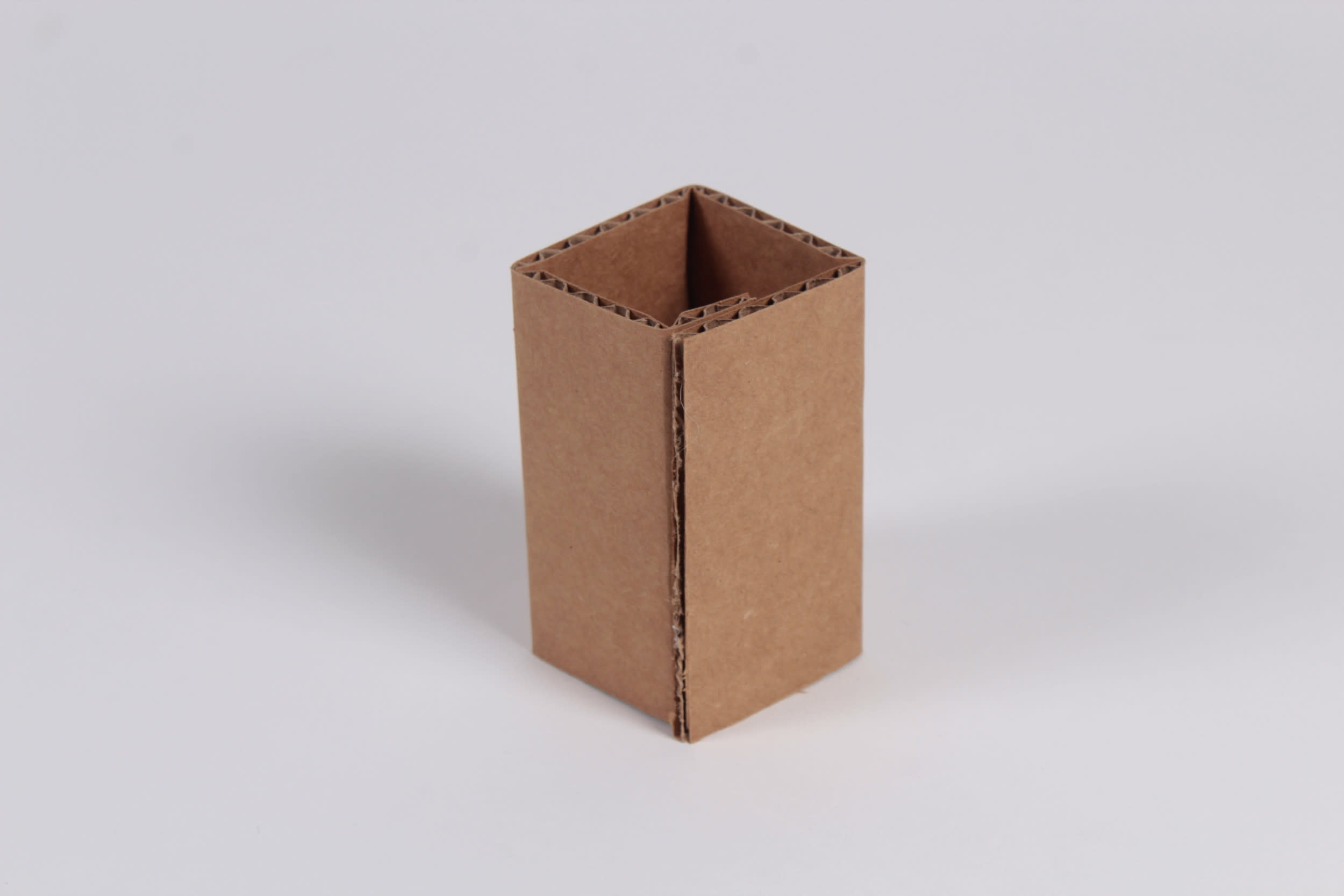
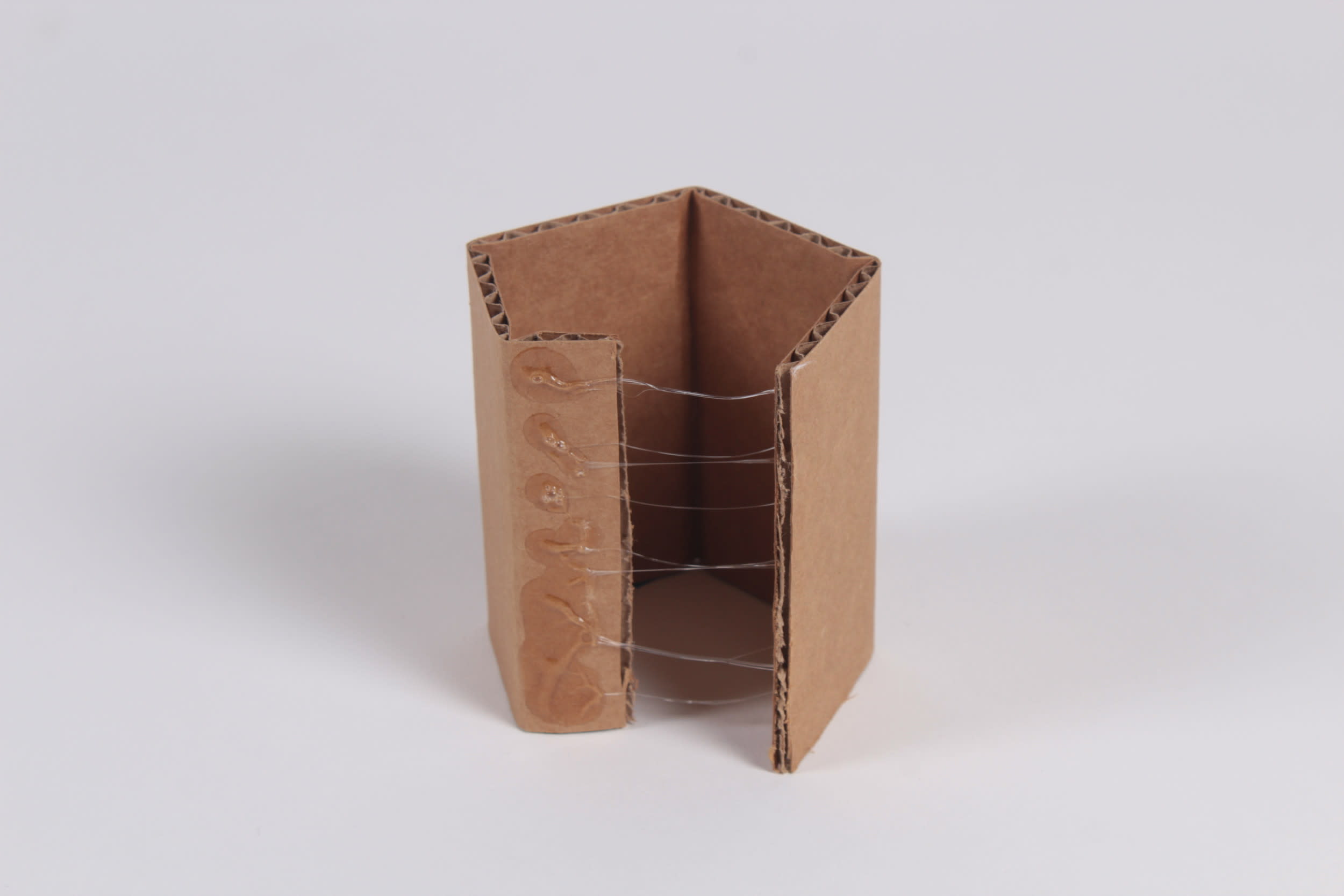
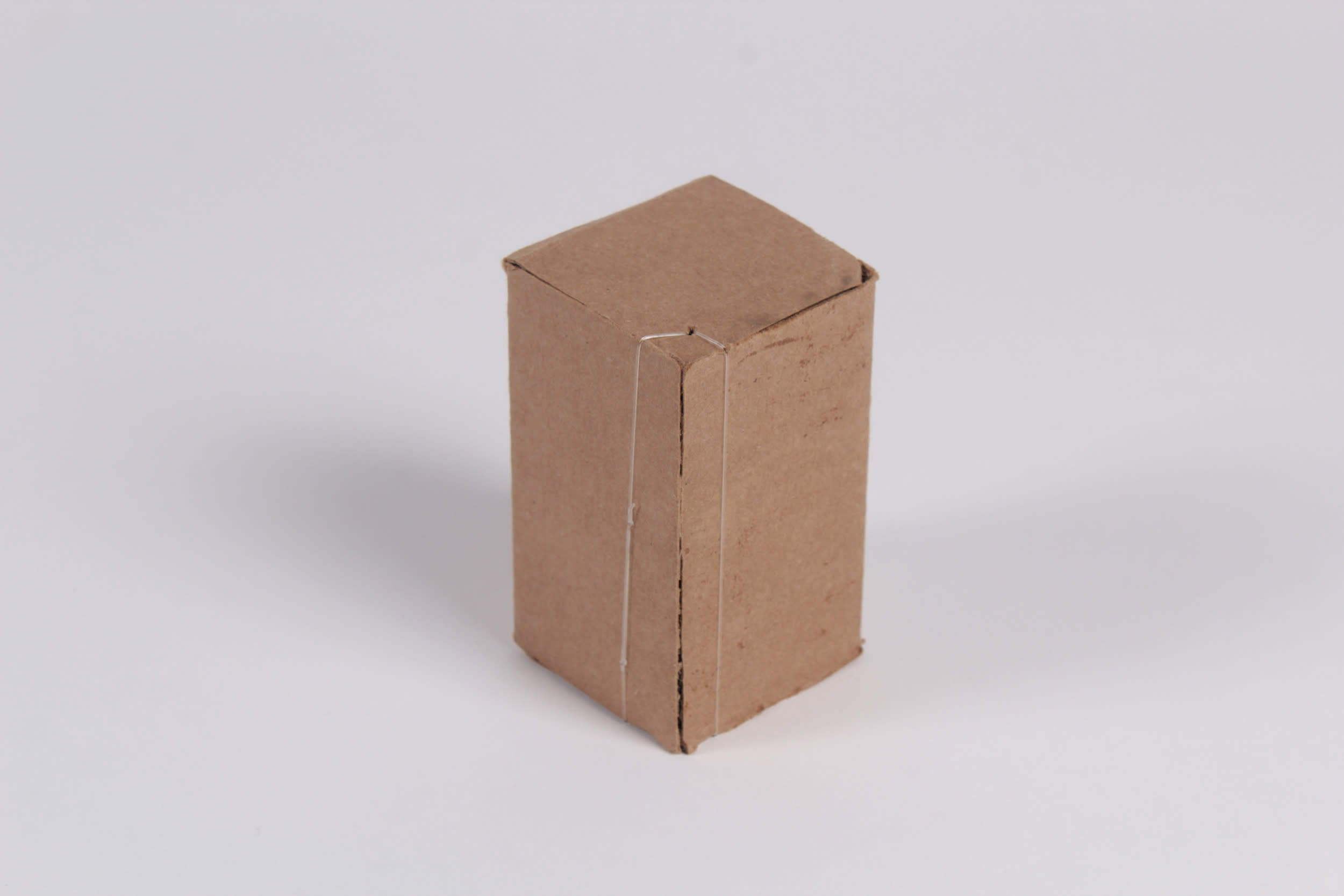
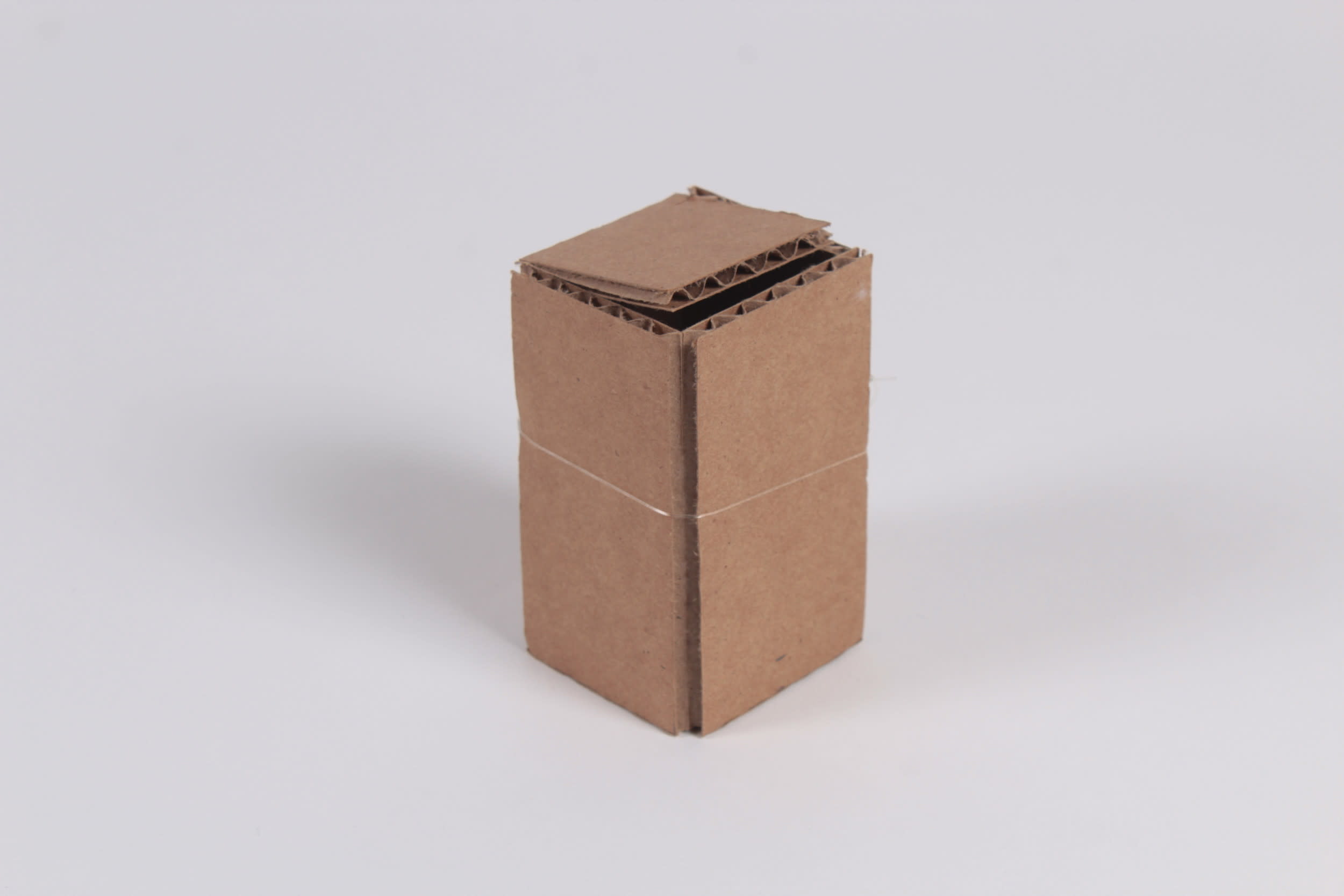
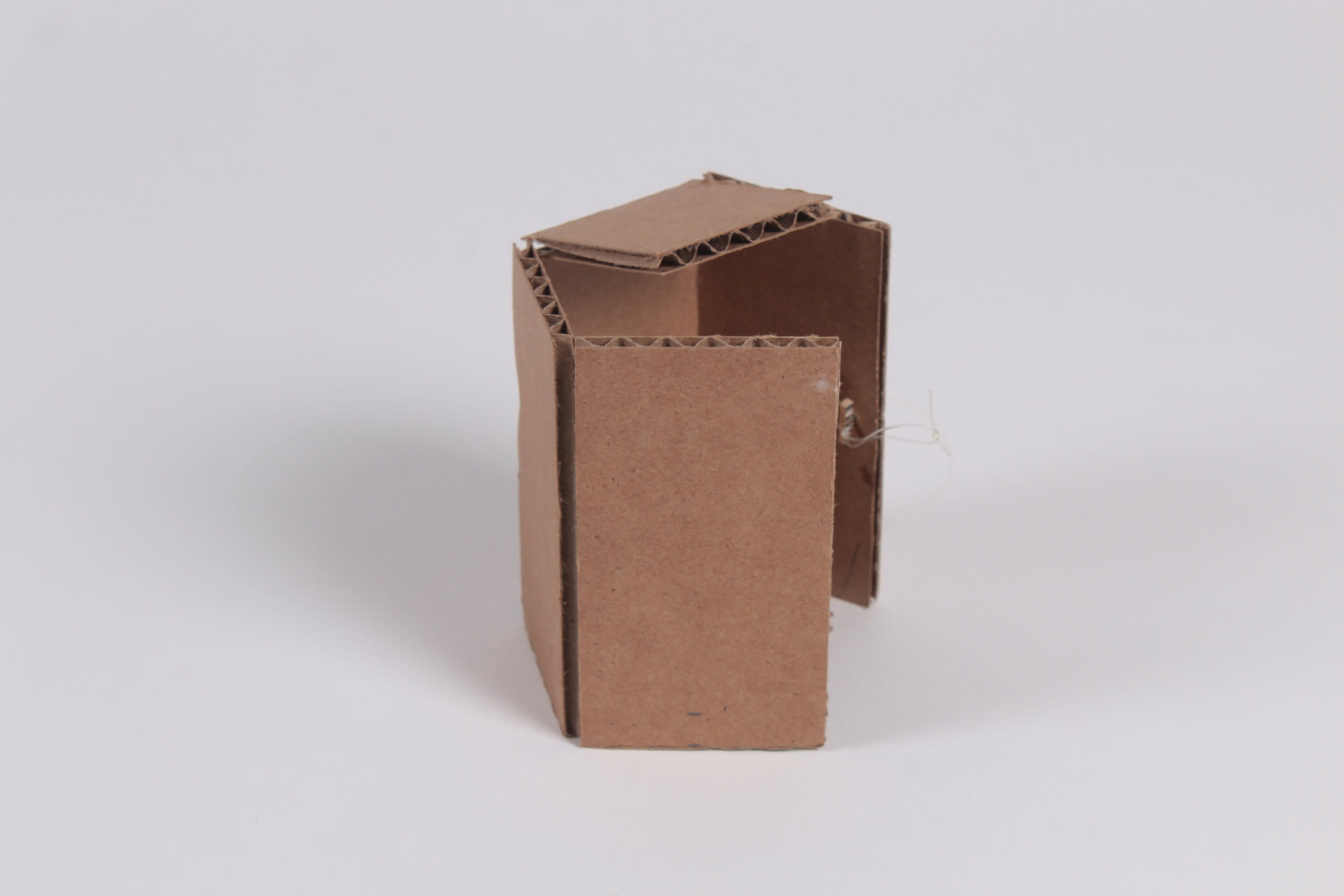
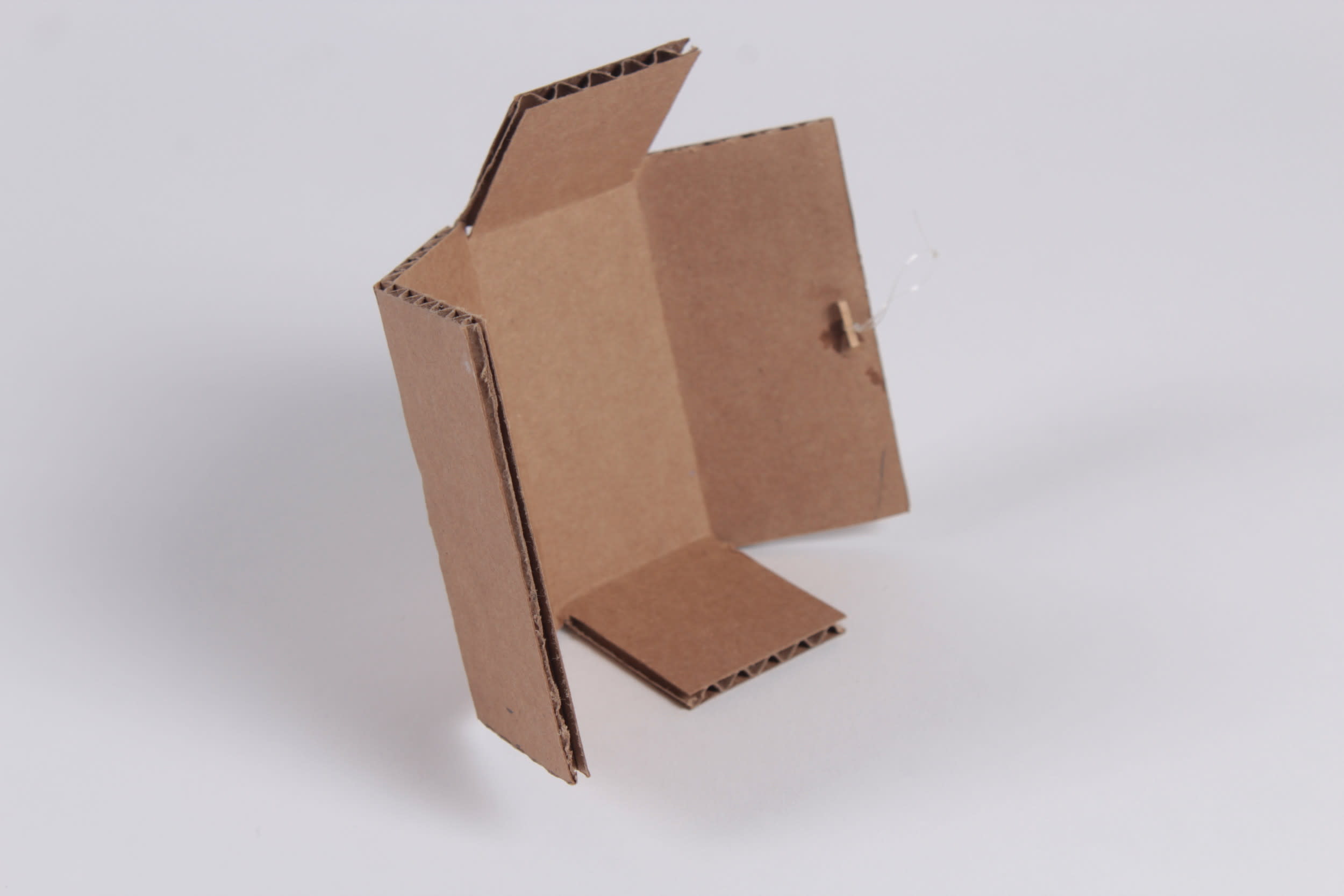
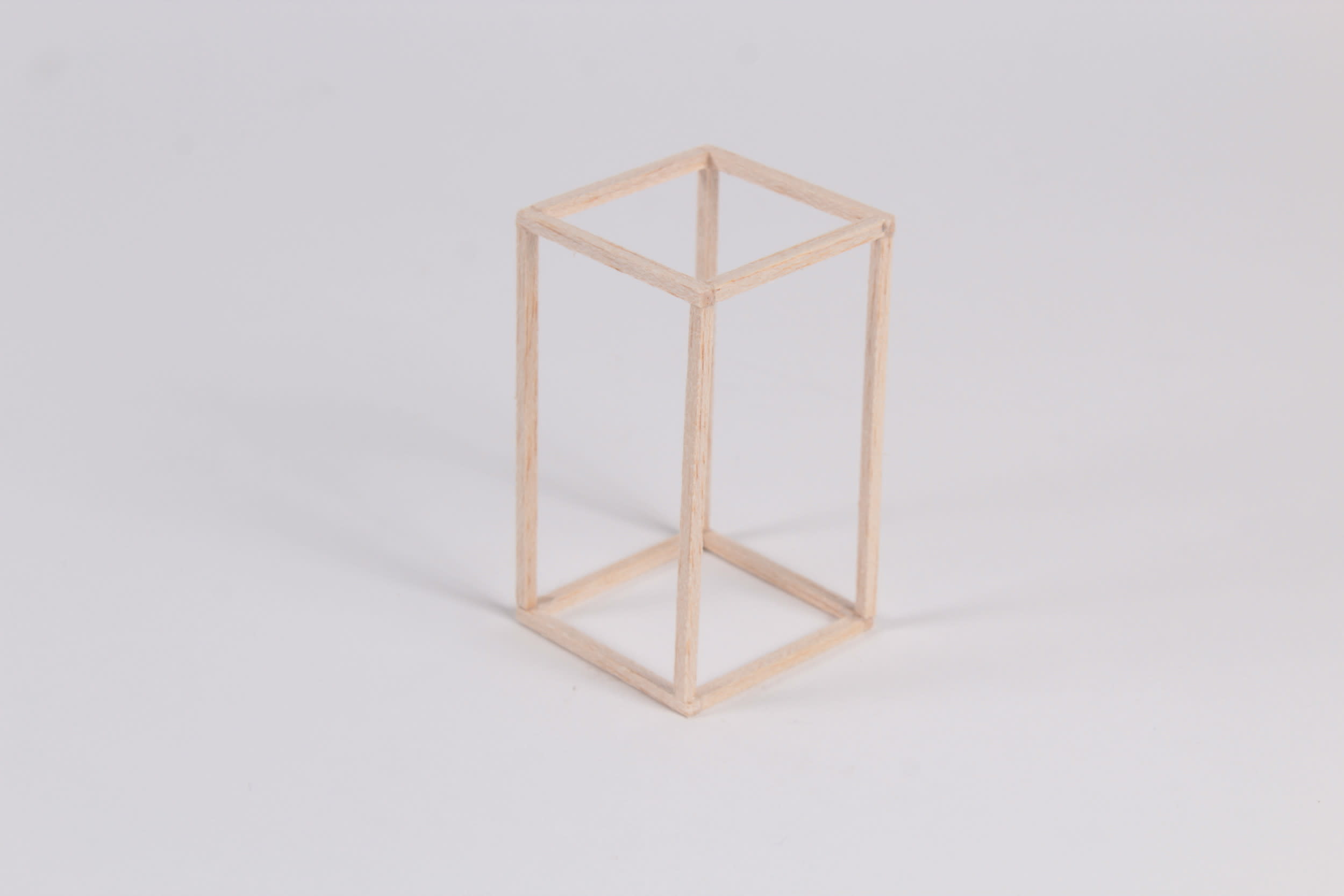
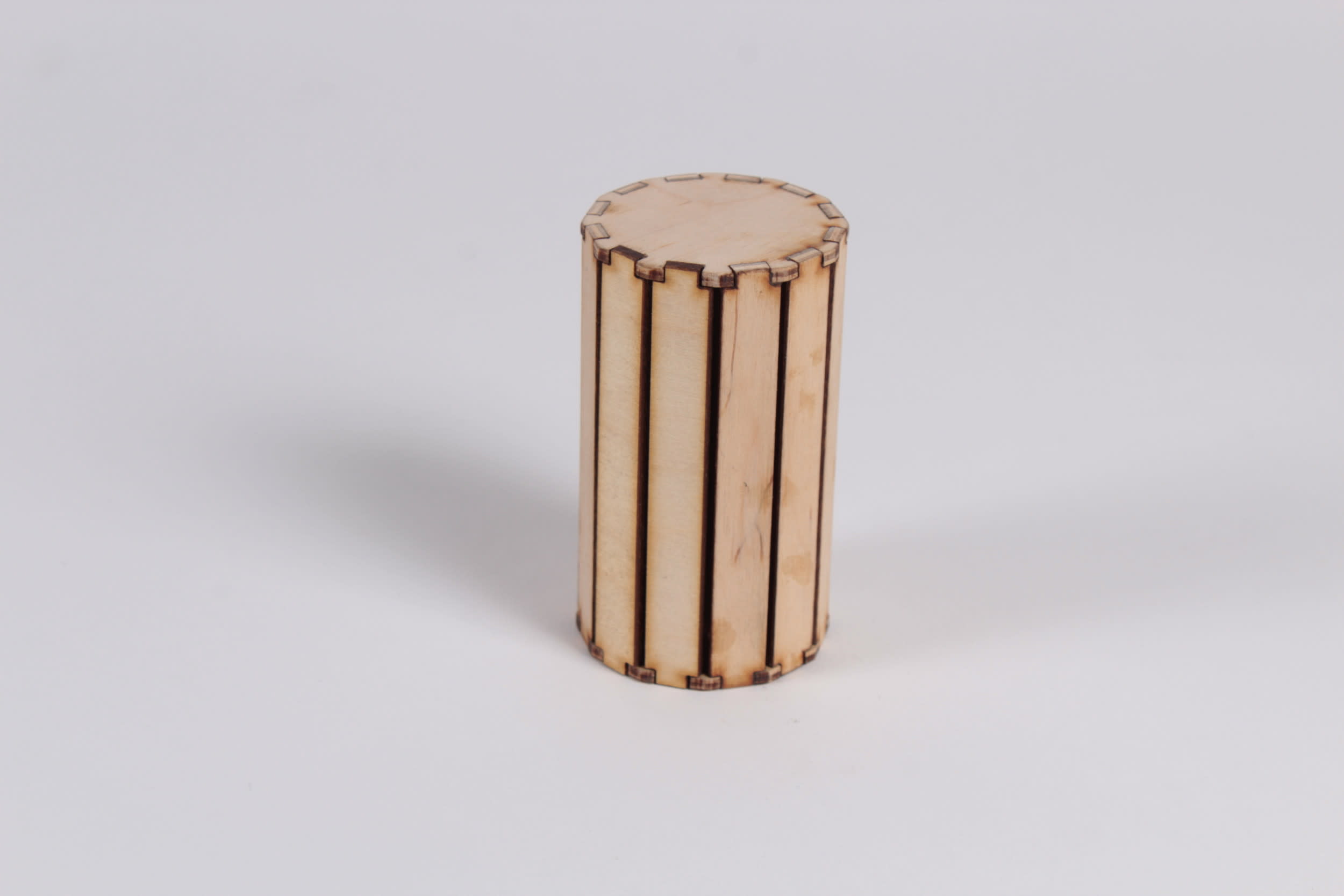
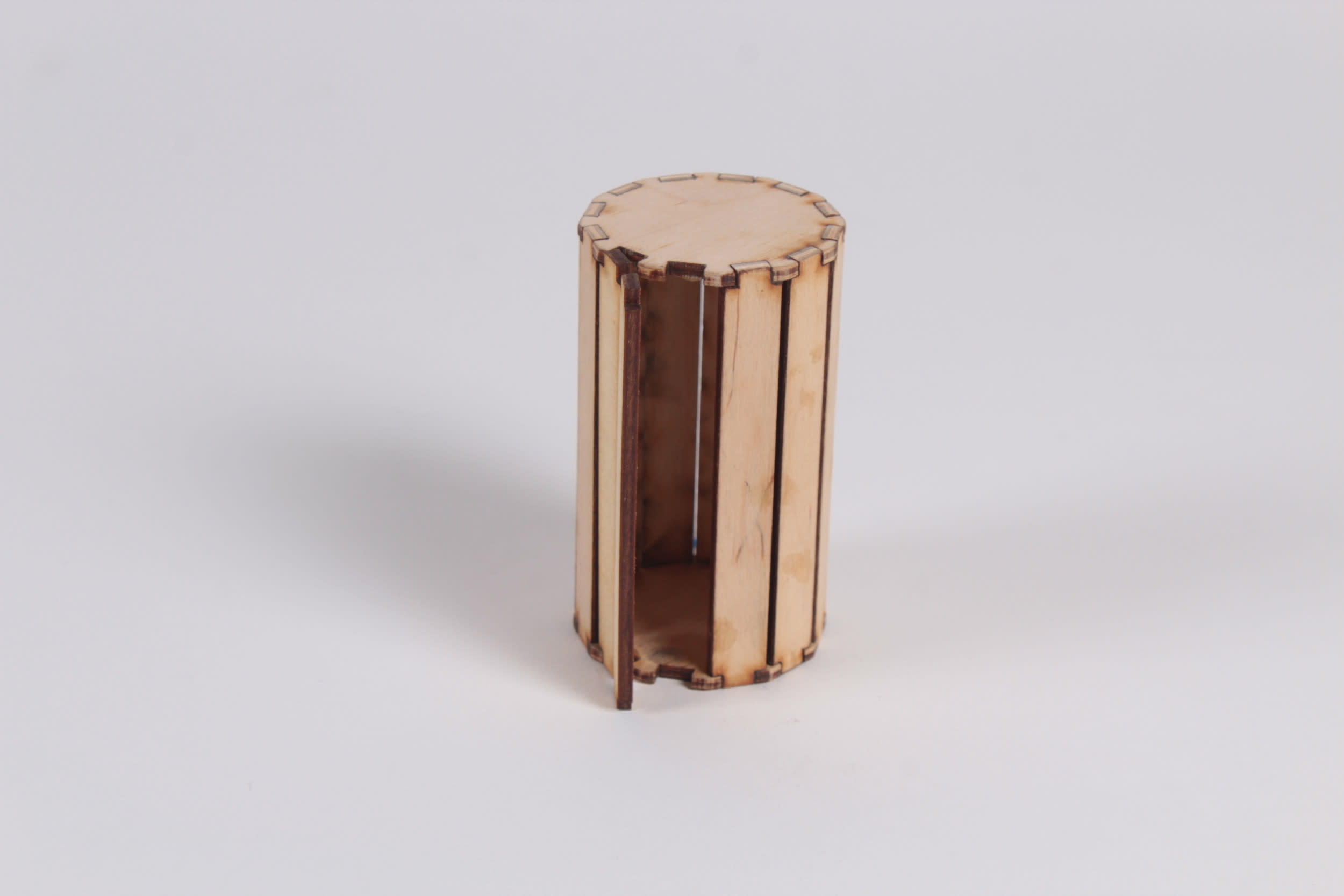
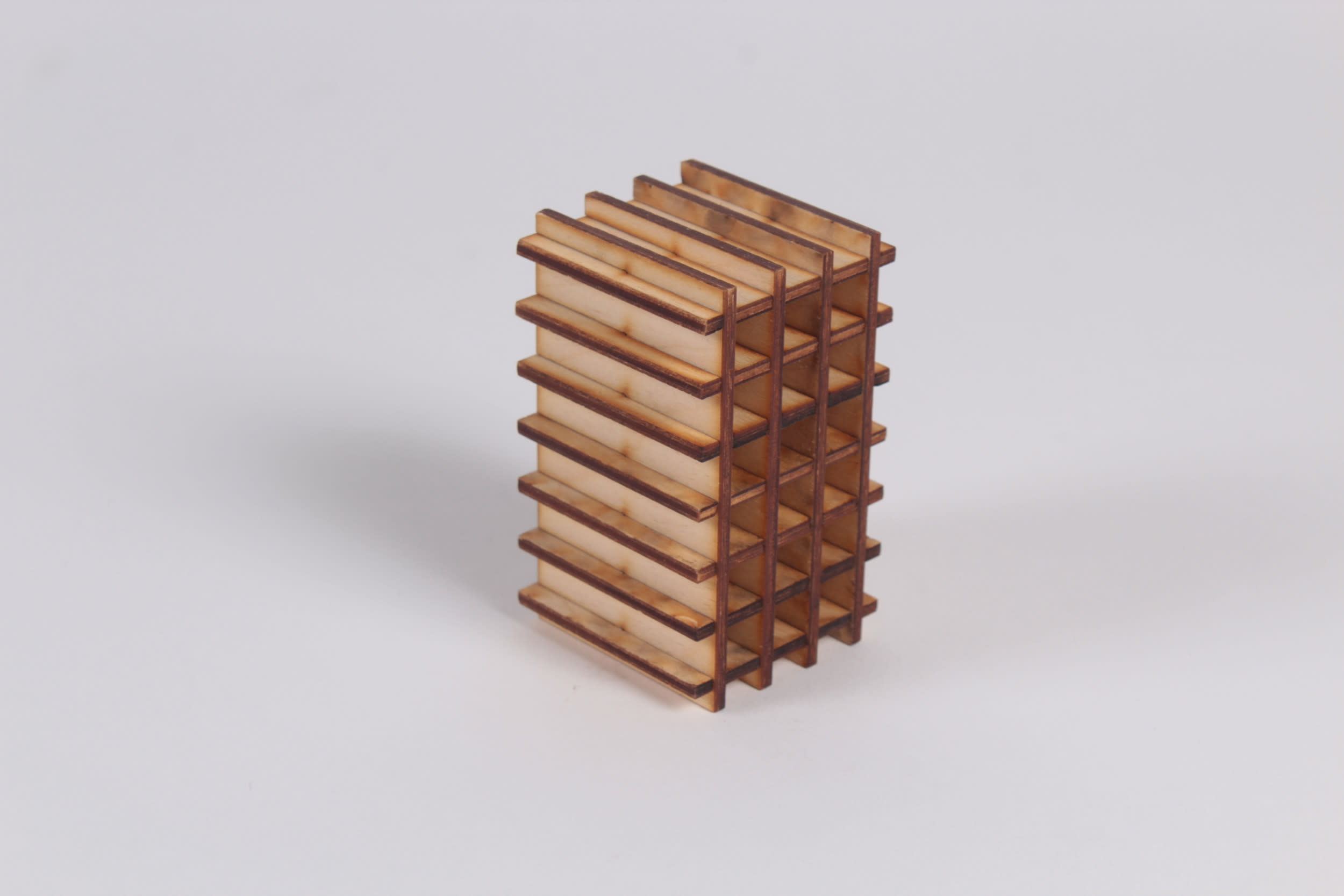
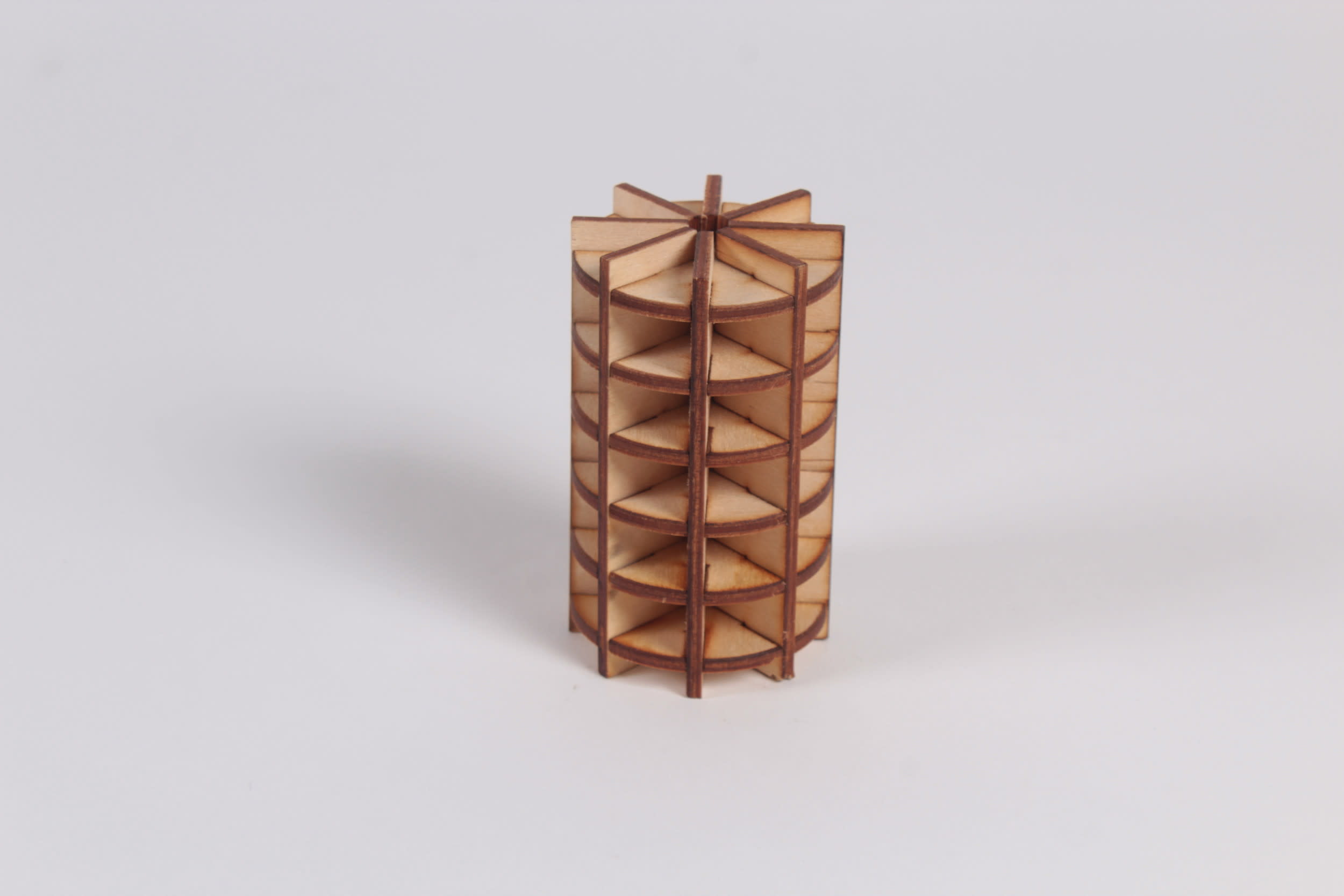
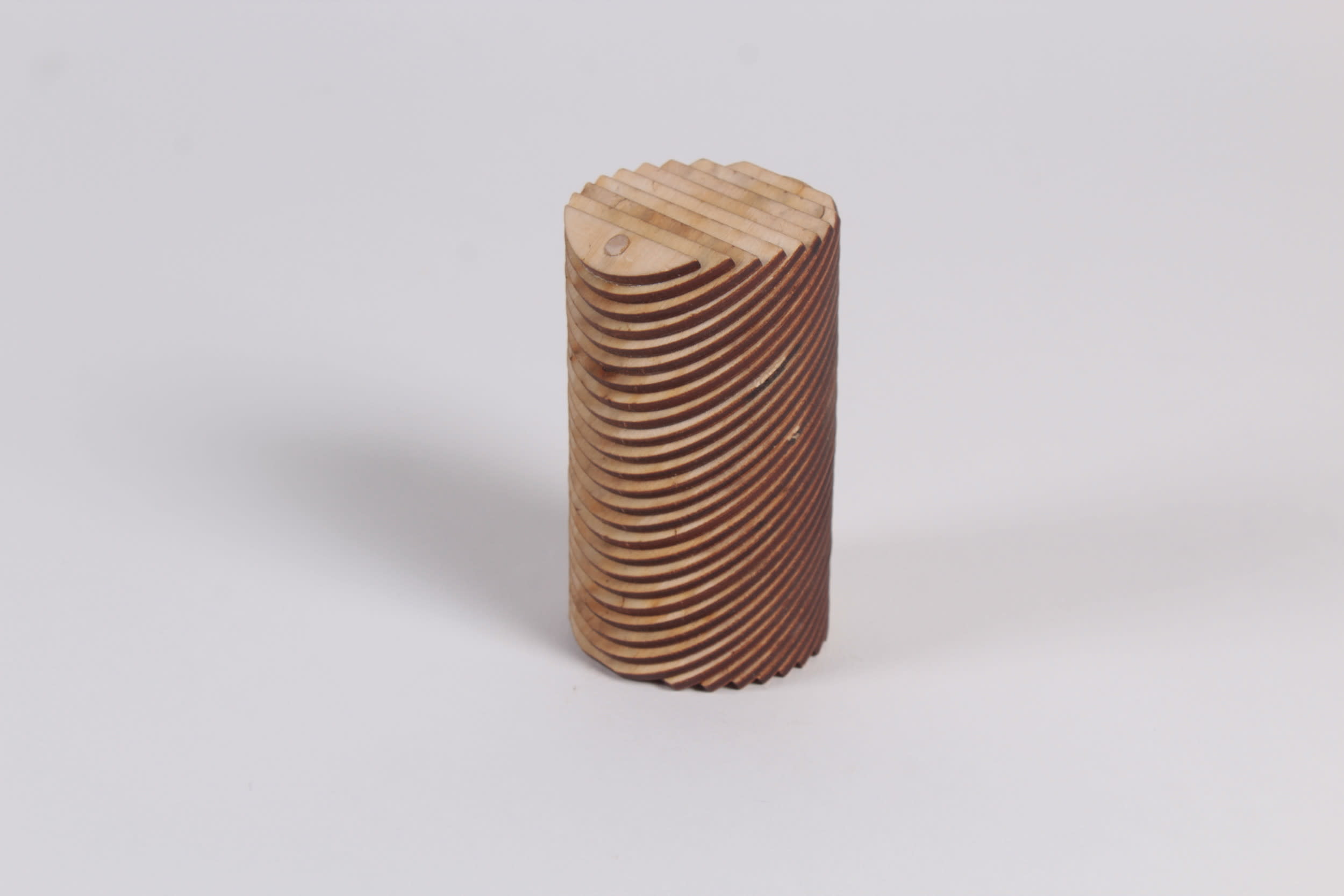
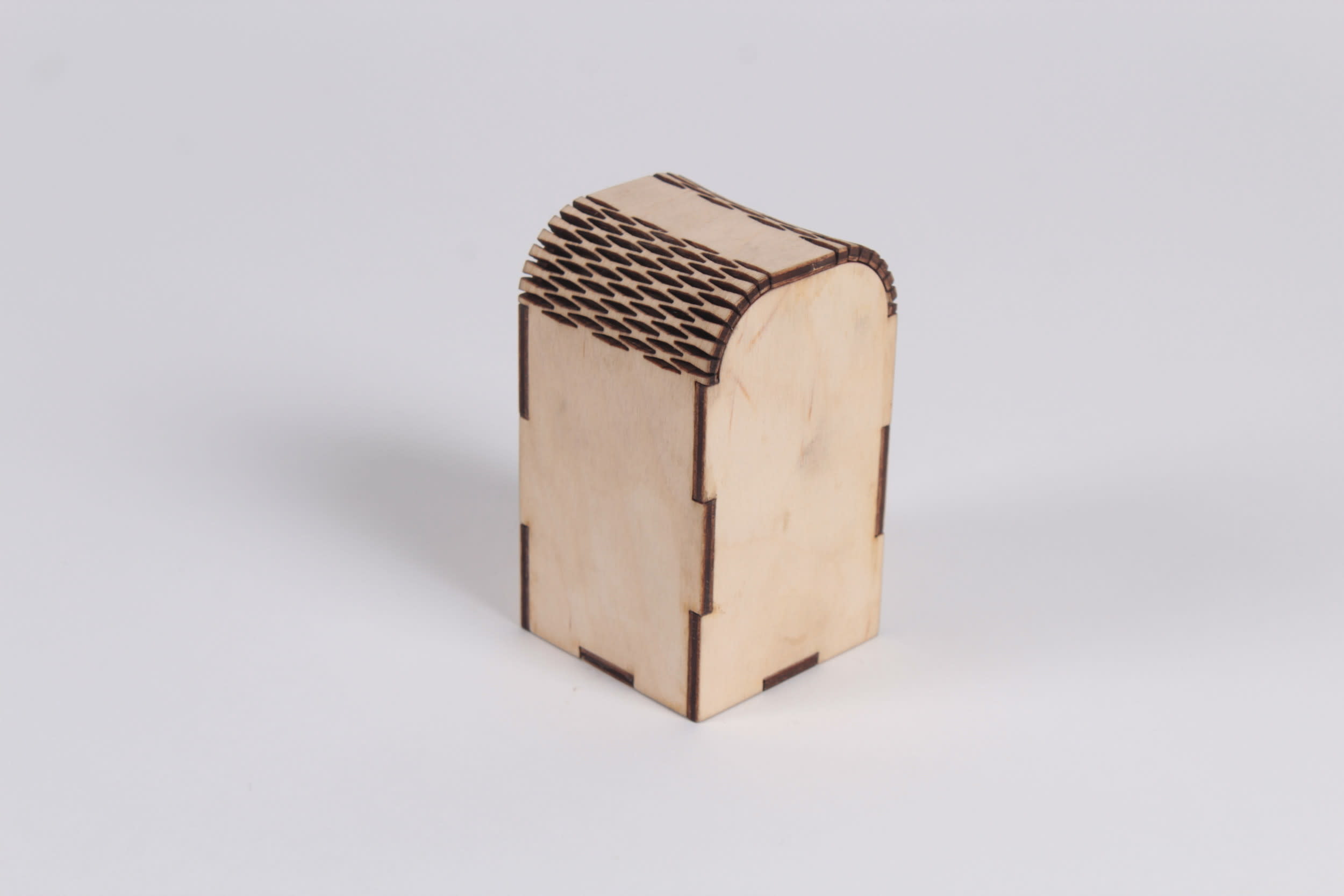
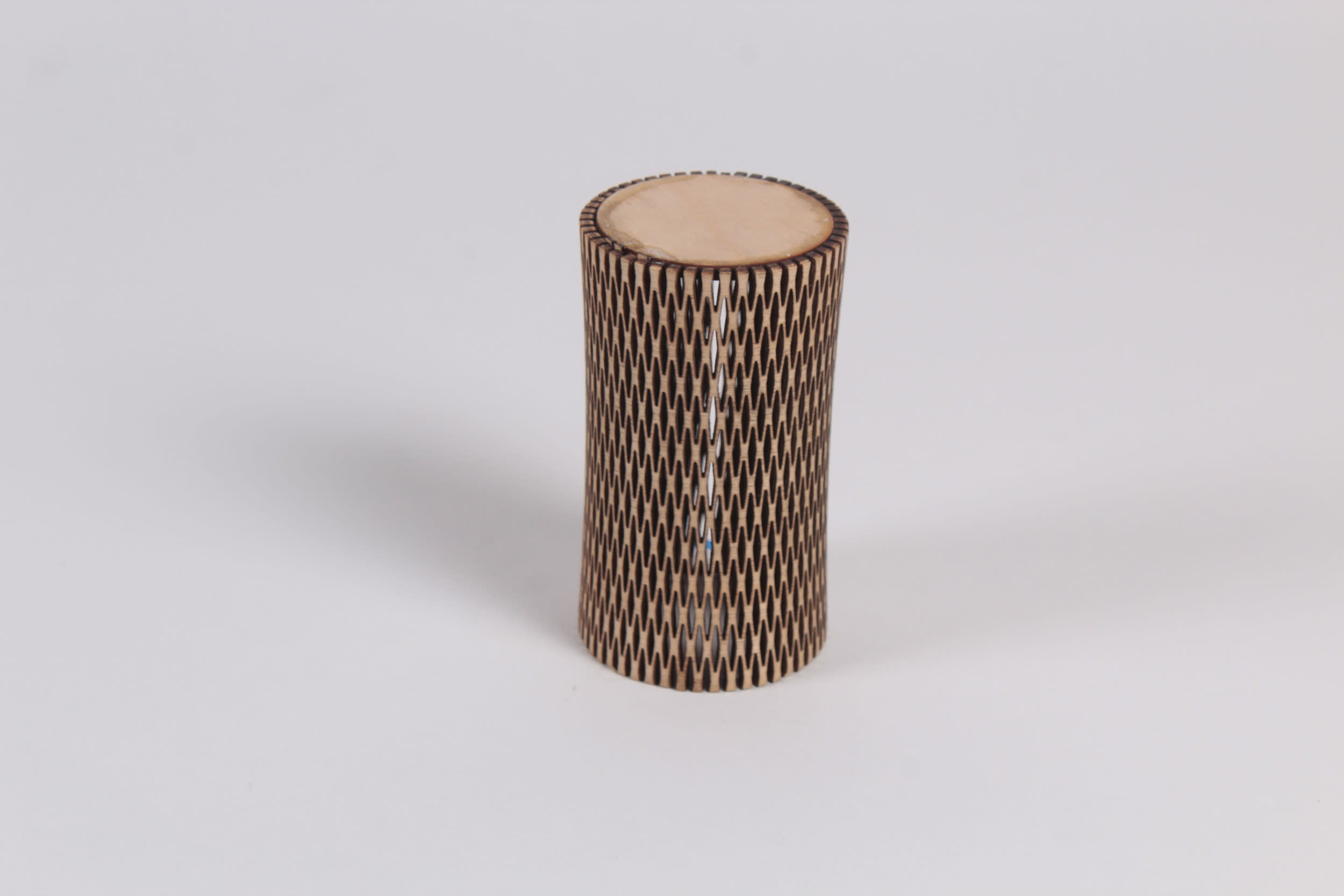
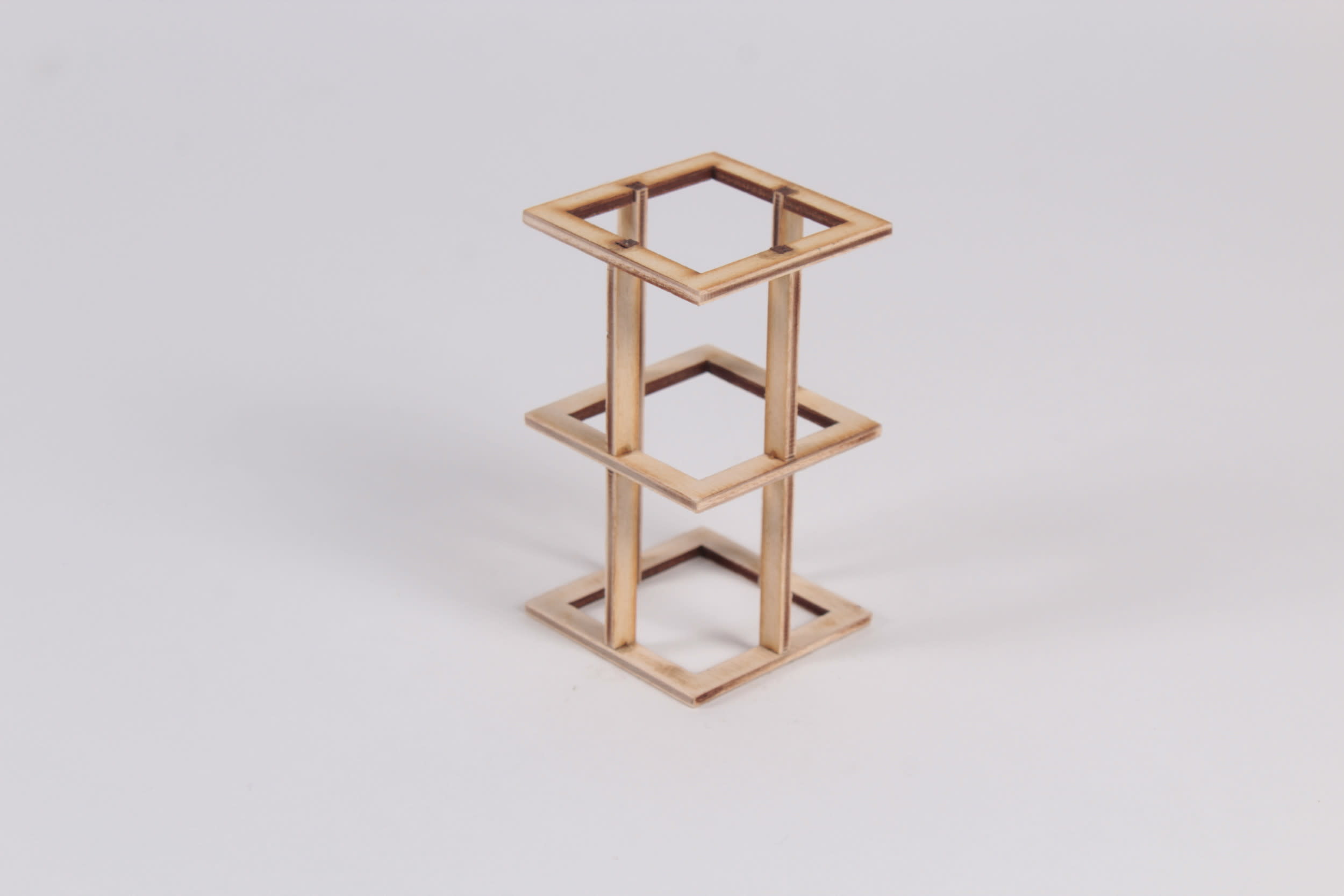
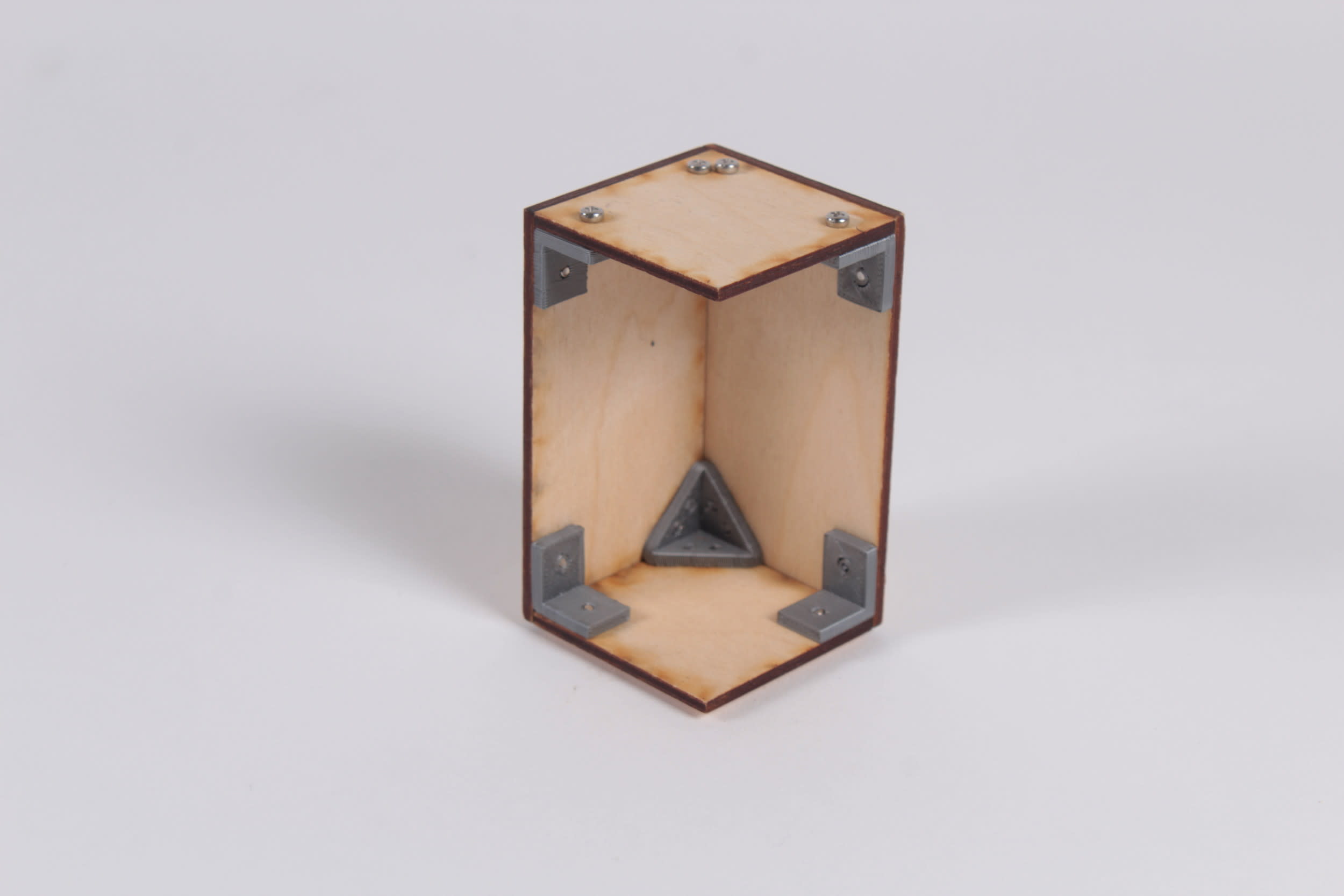
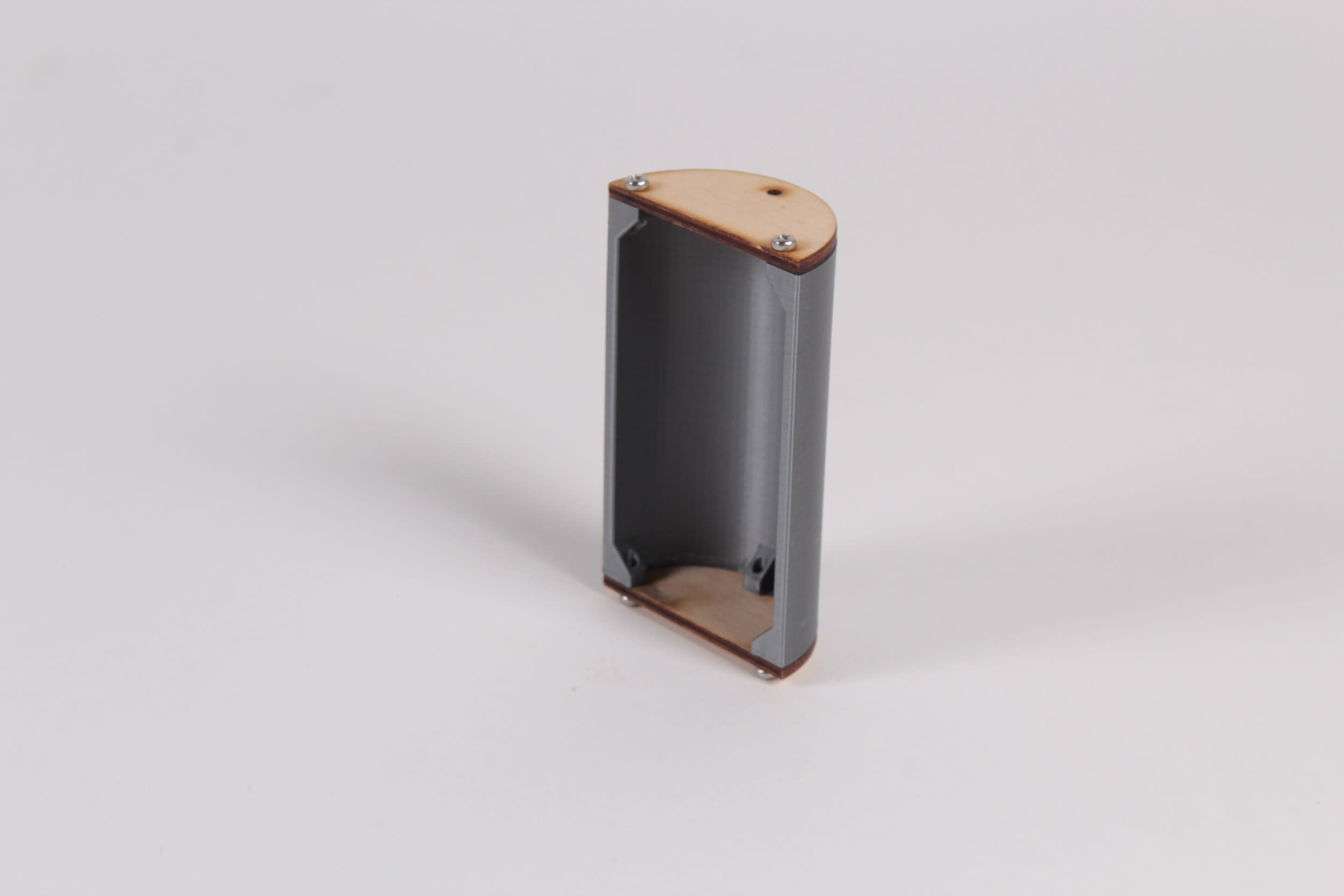
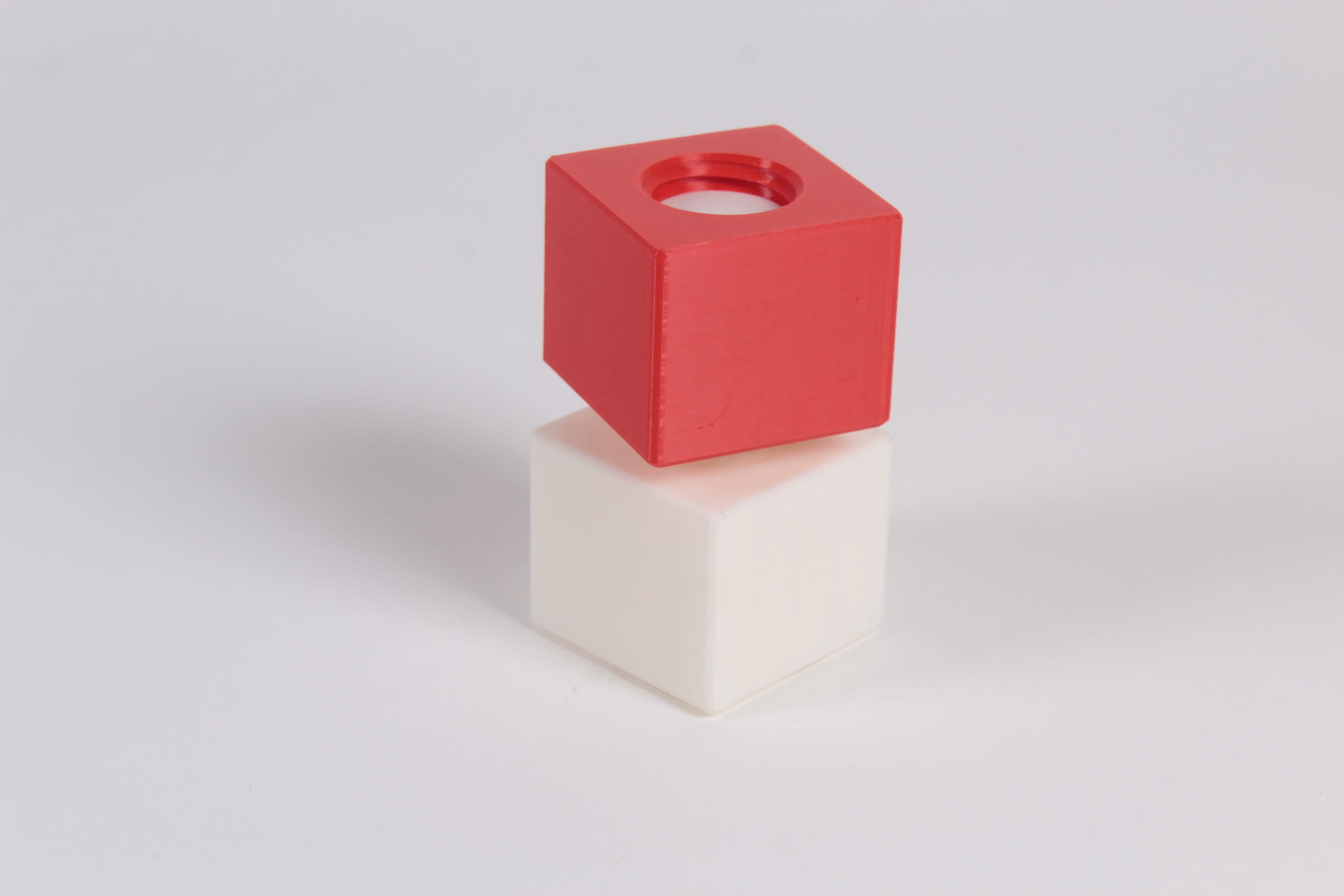
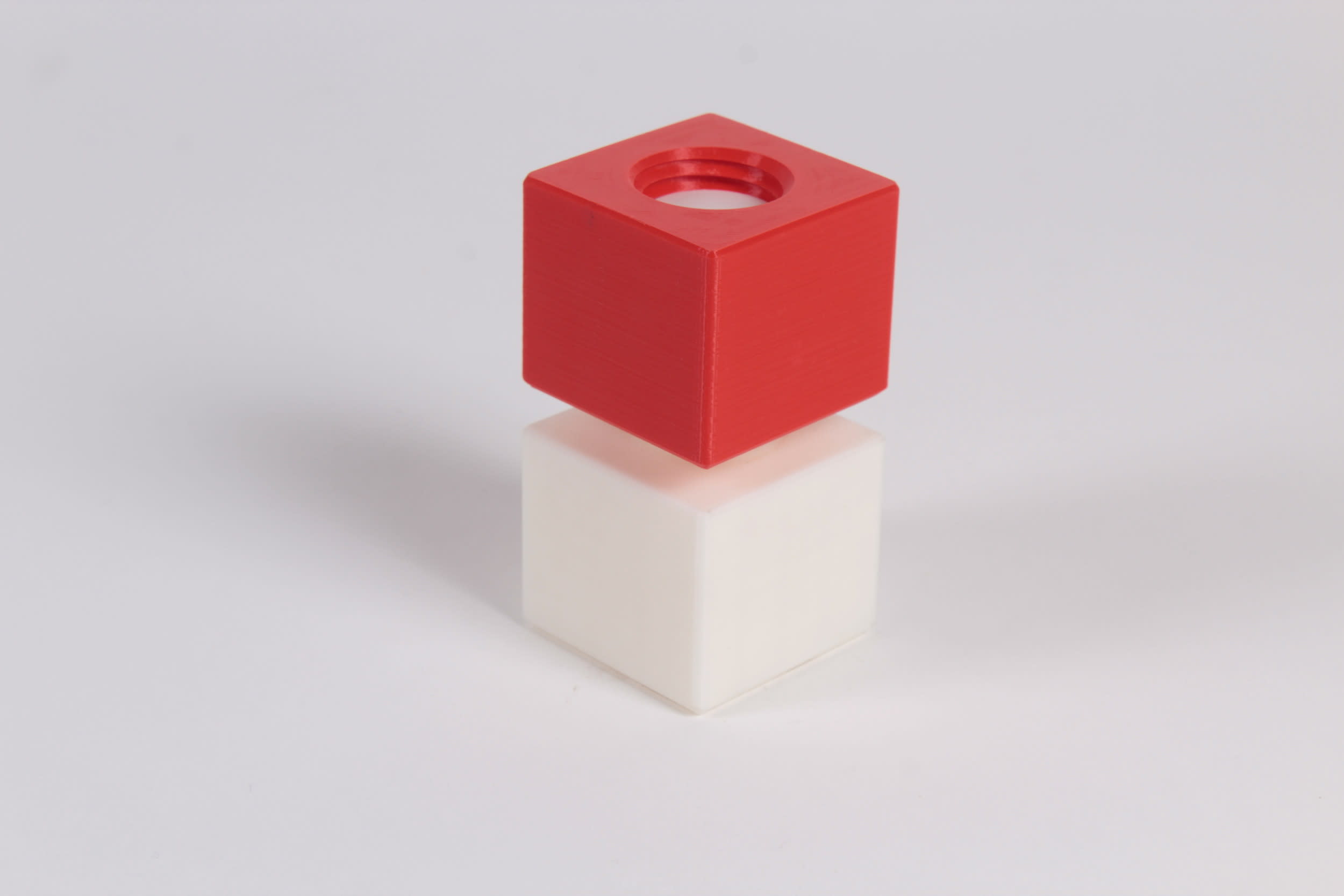
The ToolBox consists of two sets of objects that support students in creating three-dimensional forms and designing simple mechanisms. The first set, called “Forms,” helps students understand the available manufacturing methods and select the technique best suited to their designs. These methods include laser-cut tabs, stacked laser-cut slices, 3D printing, concrete molding, and laser-cut and scored paper. Each method is represented by three objects: a rectangular prism, a cylinder, and a sphere. Together, these objects represent three fundamental categories of form: rectilinear, singly curved, and doubly curved.
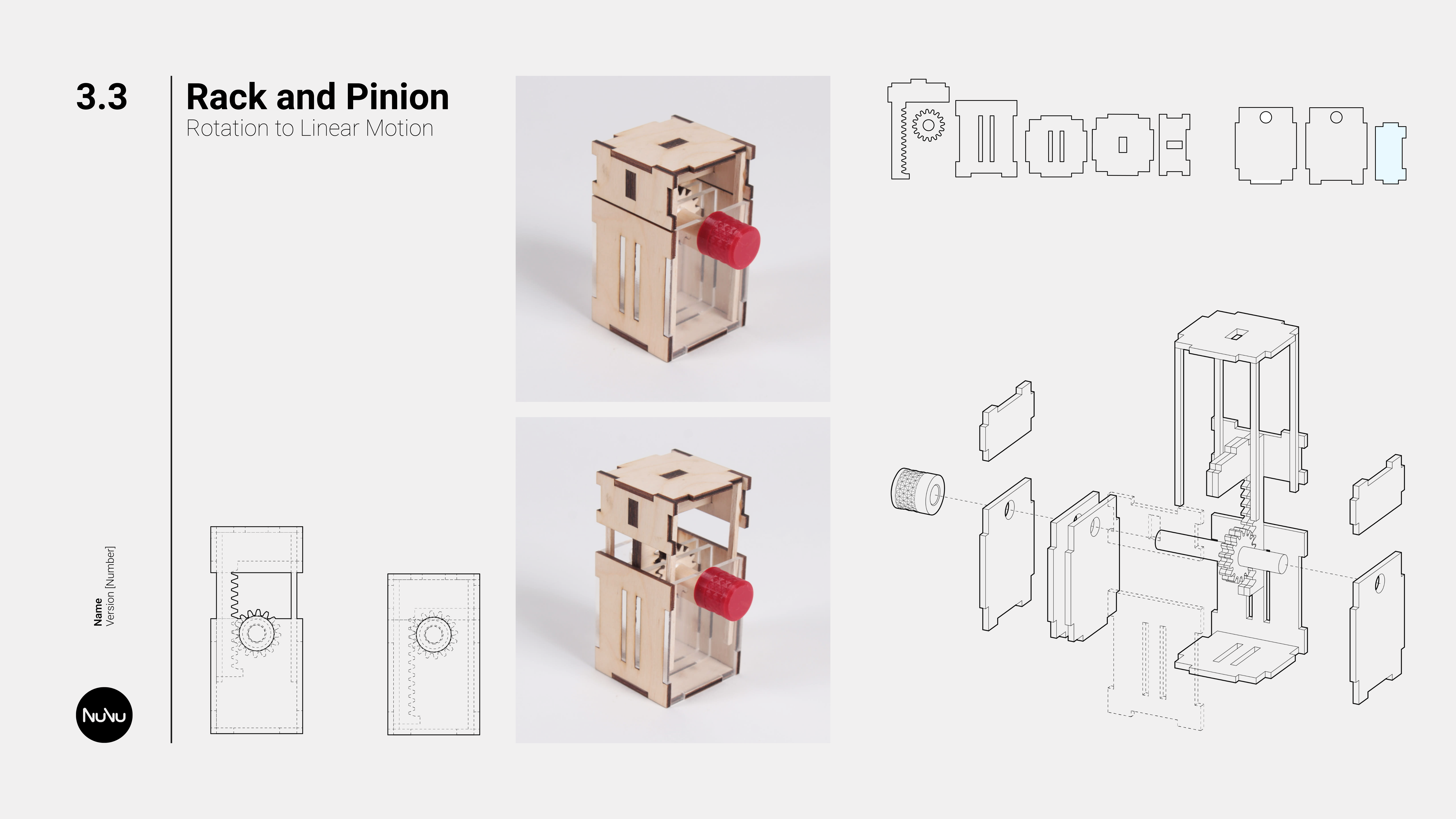
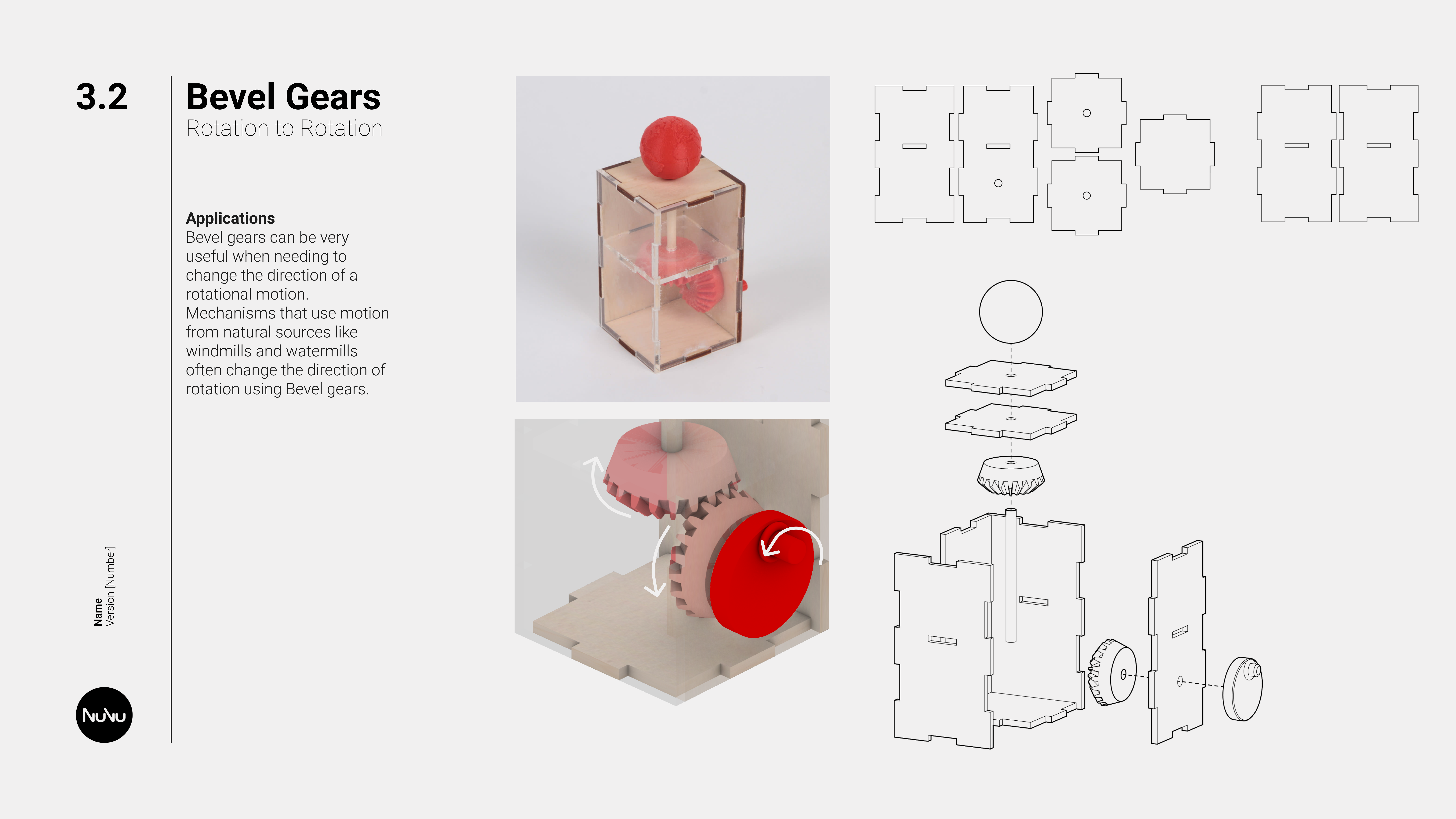
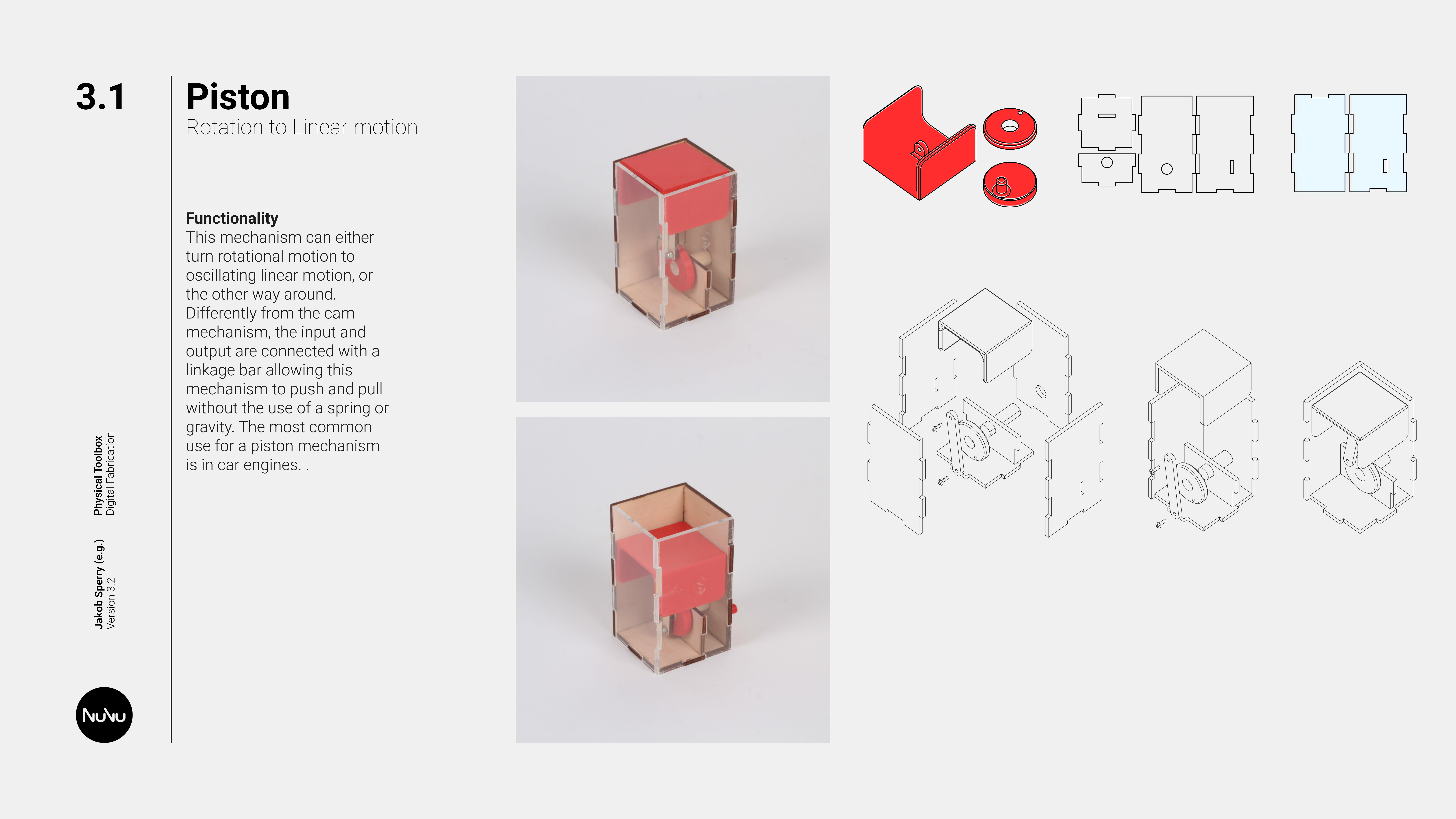
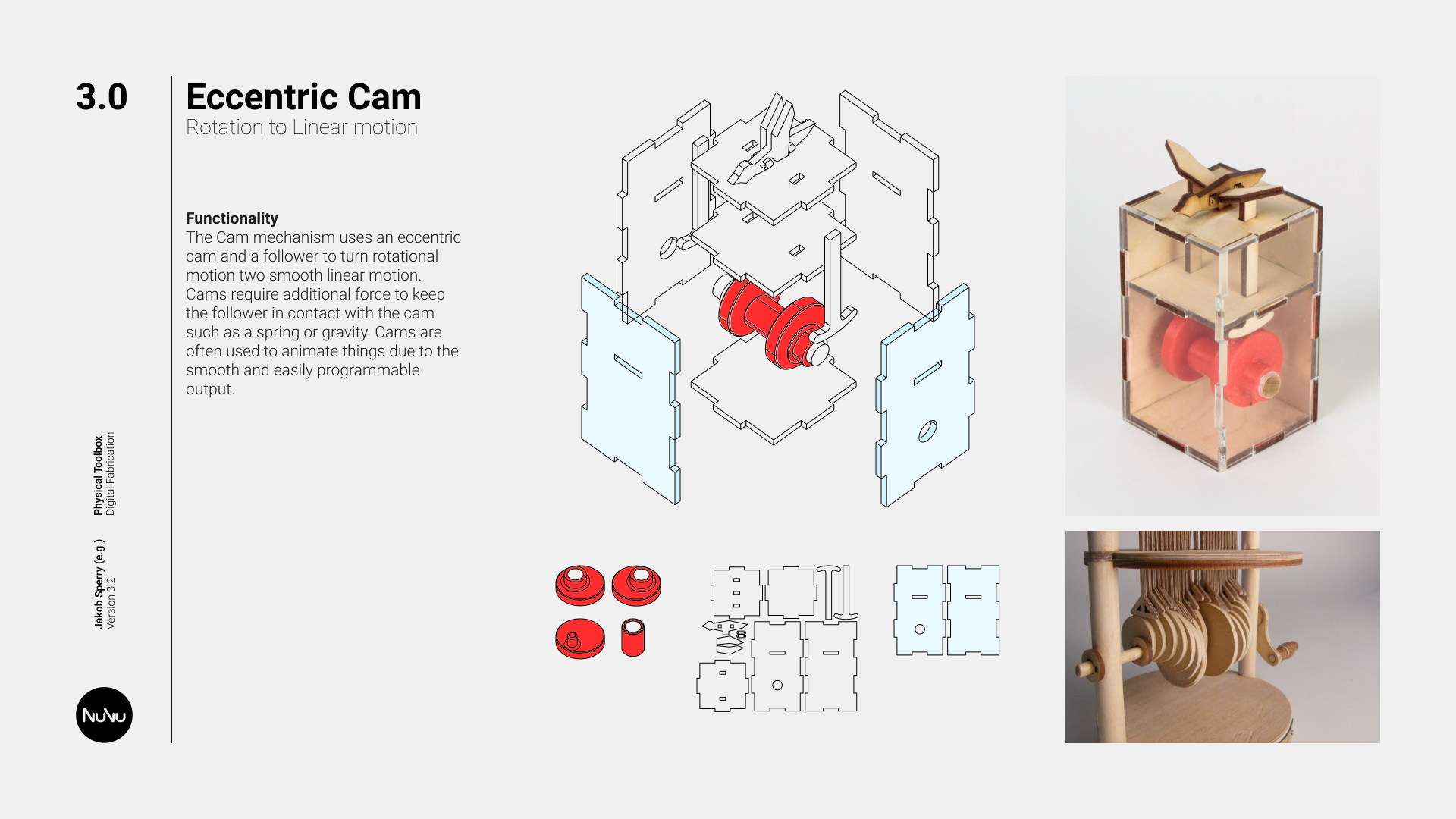
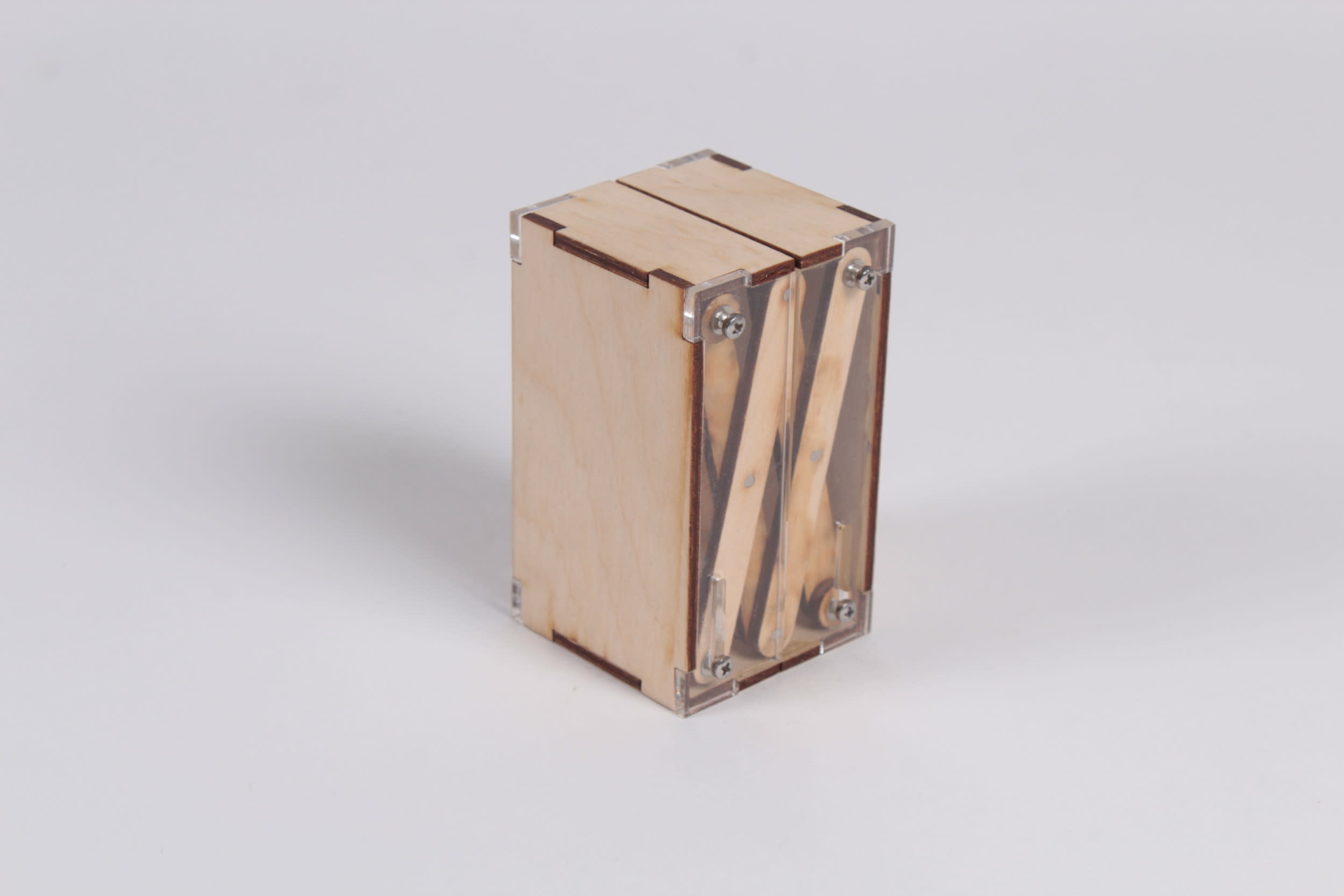
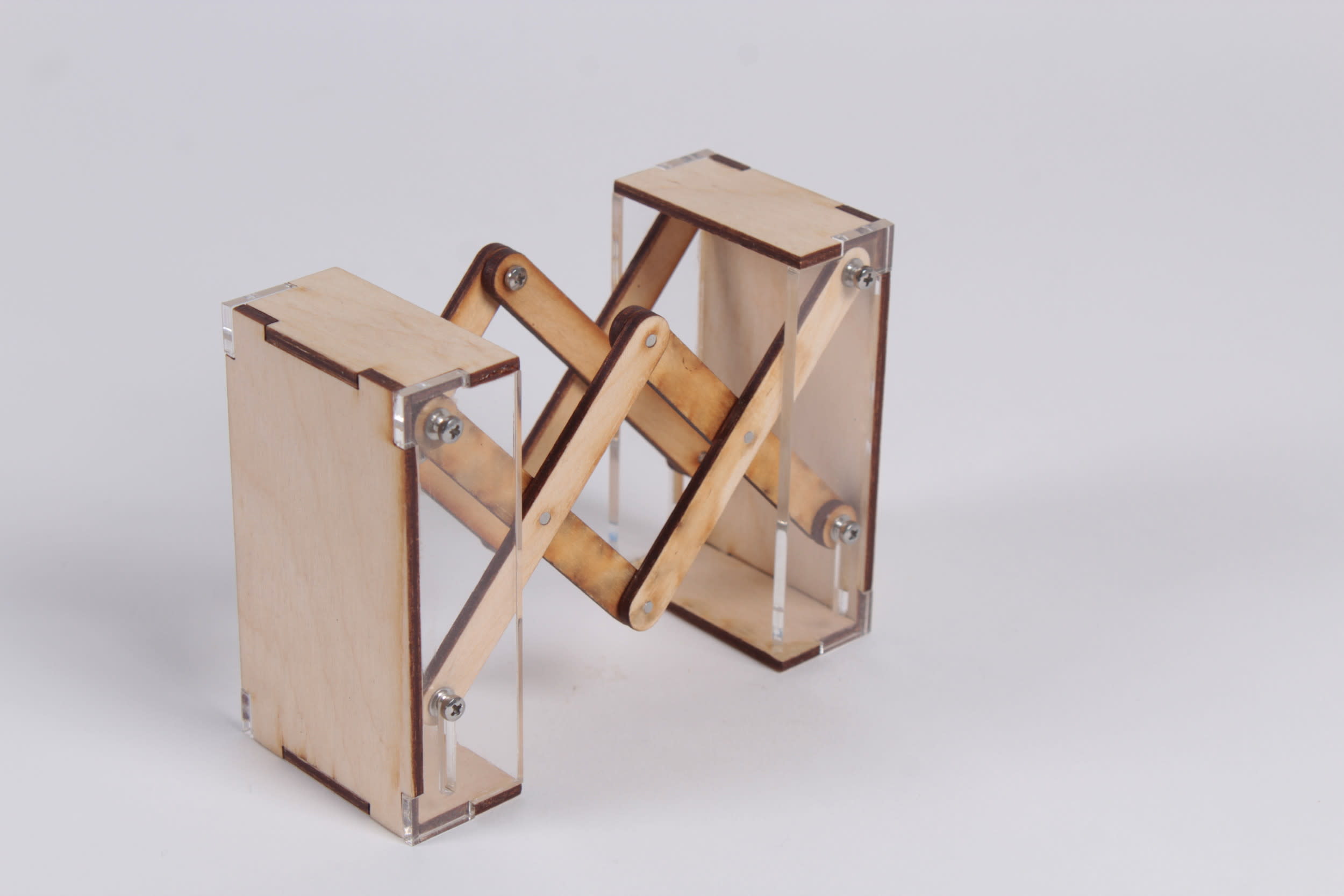
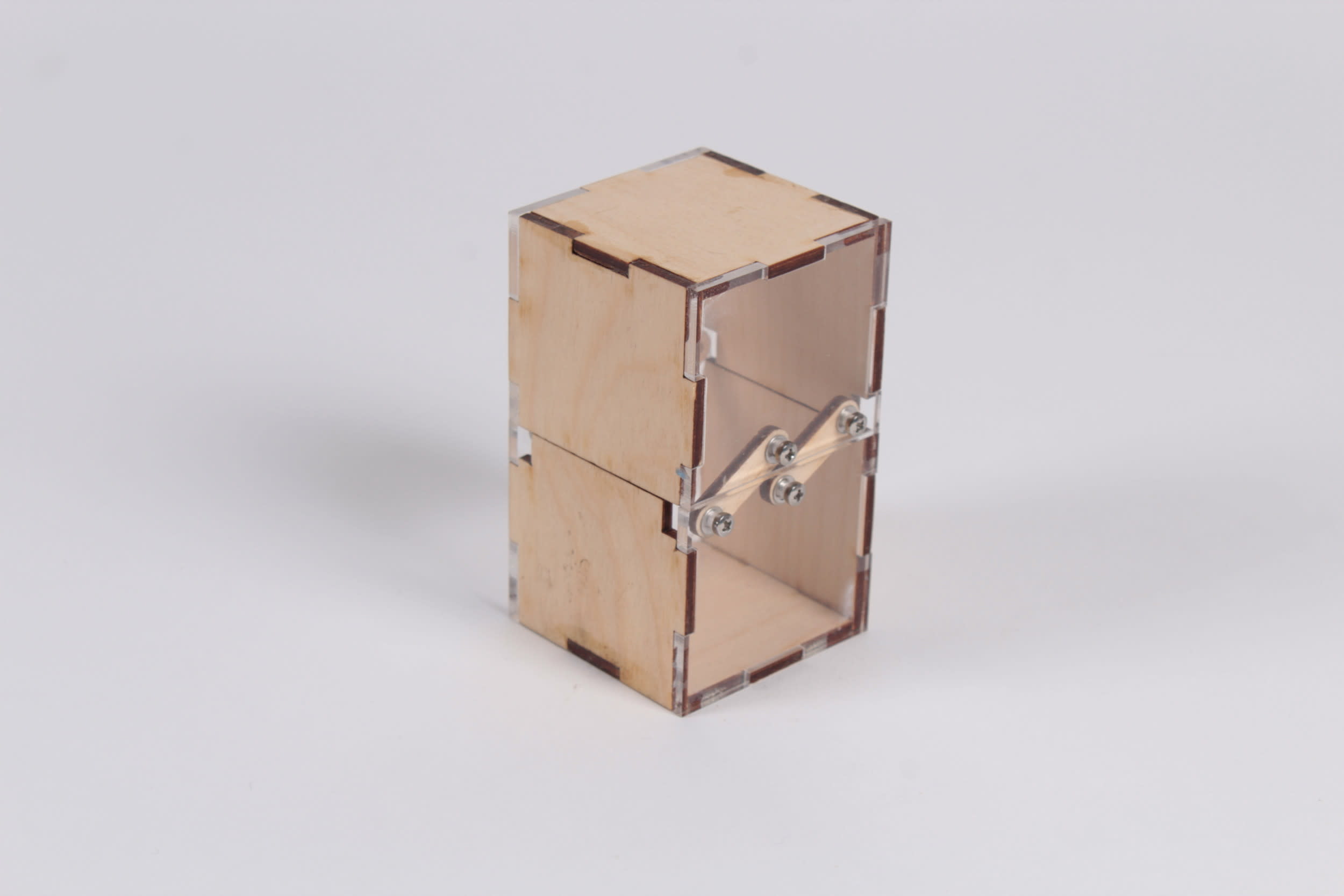
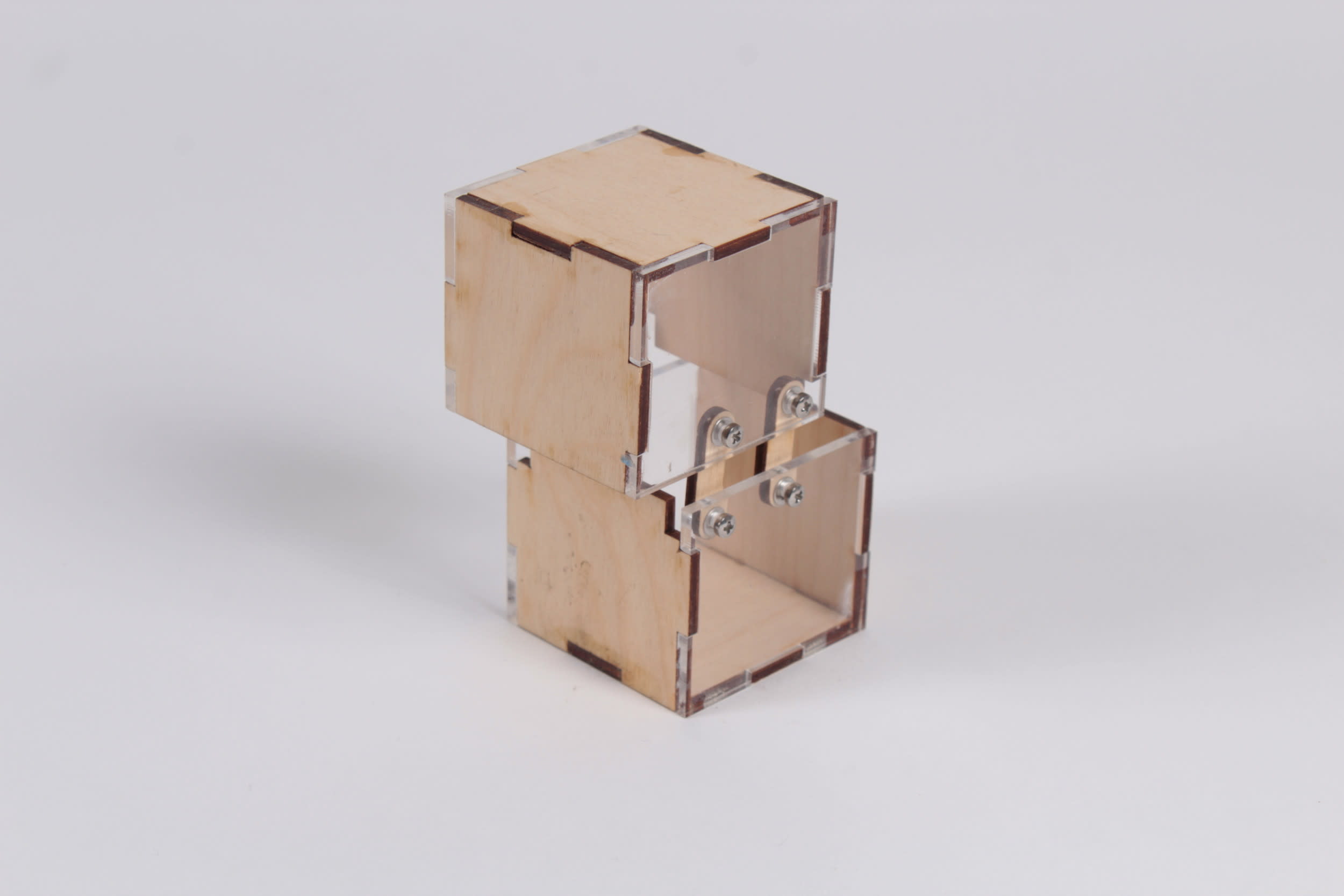
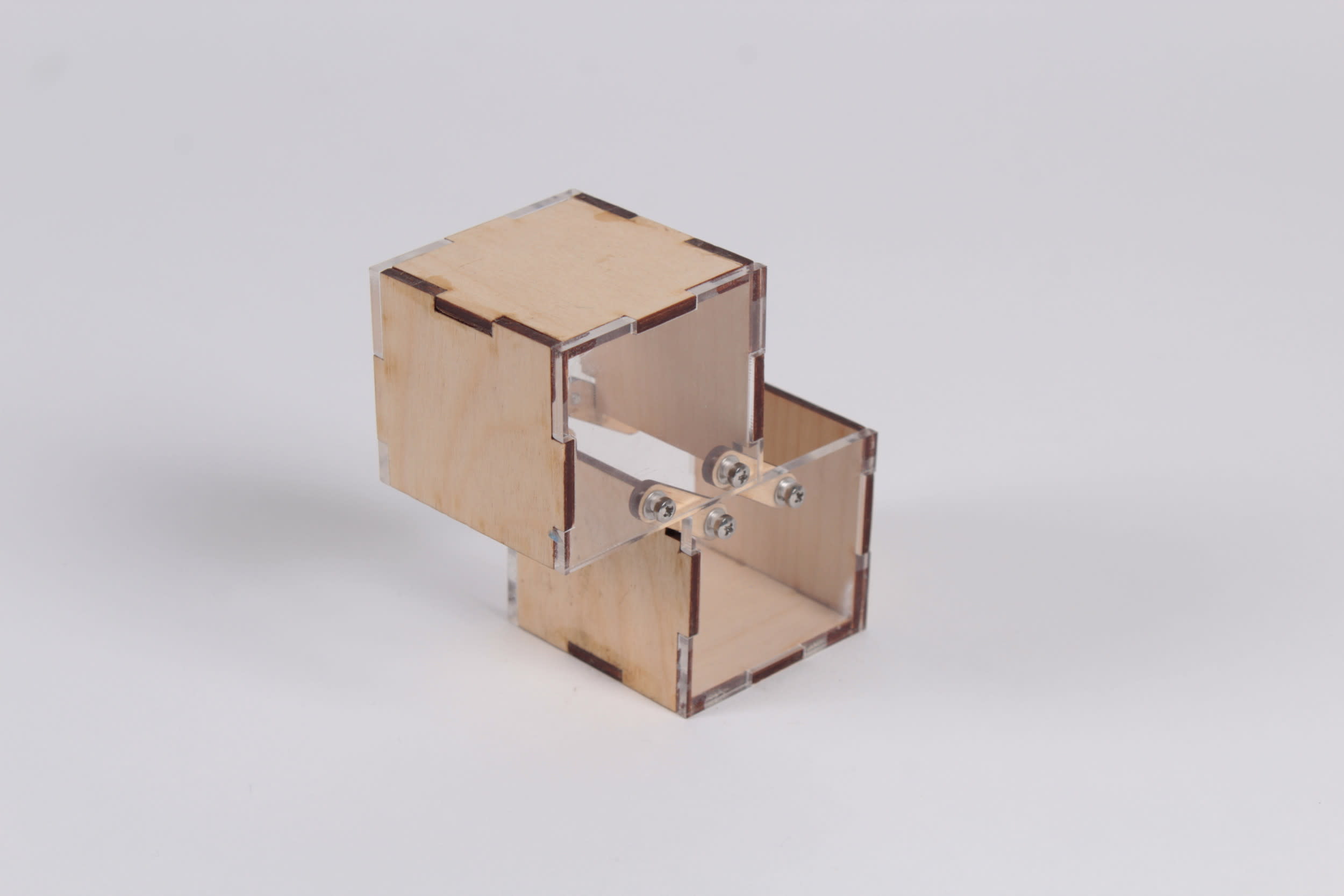
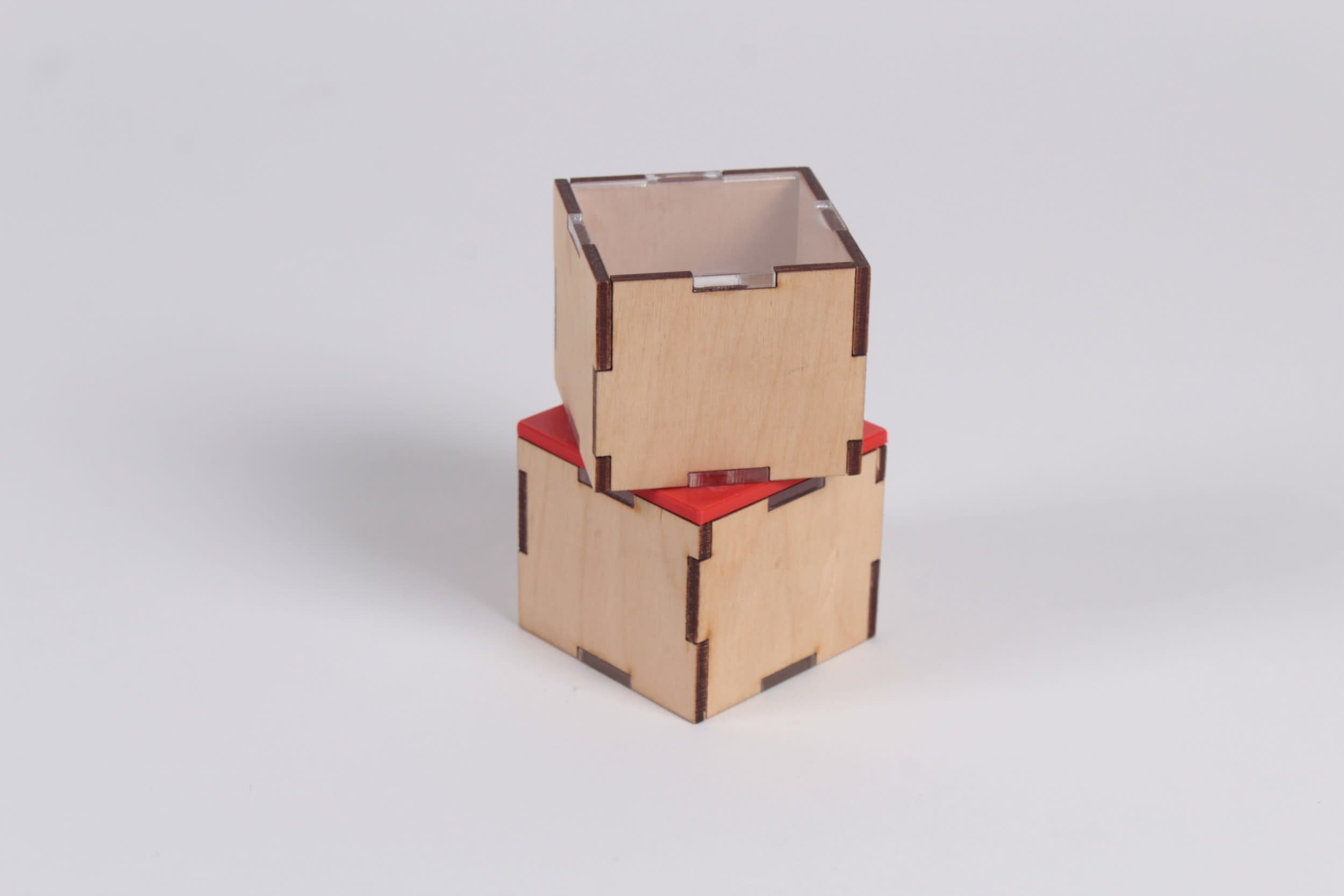
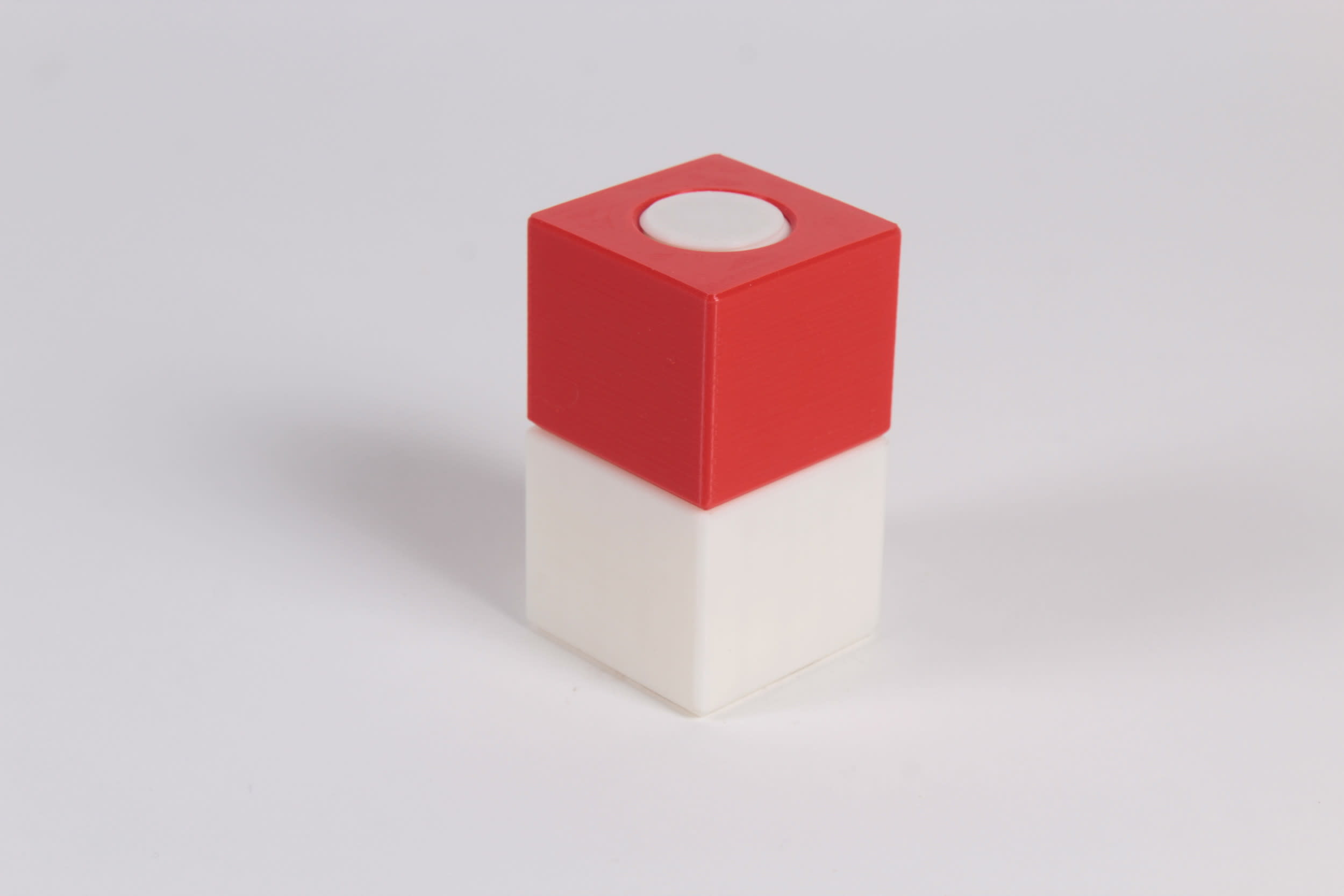
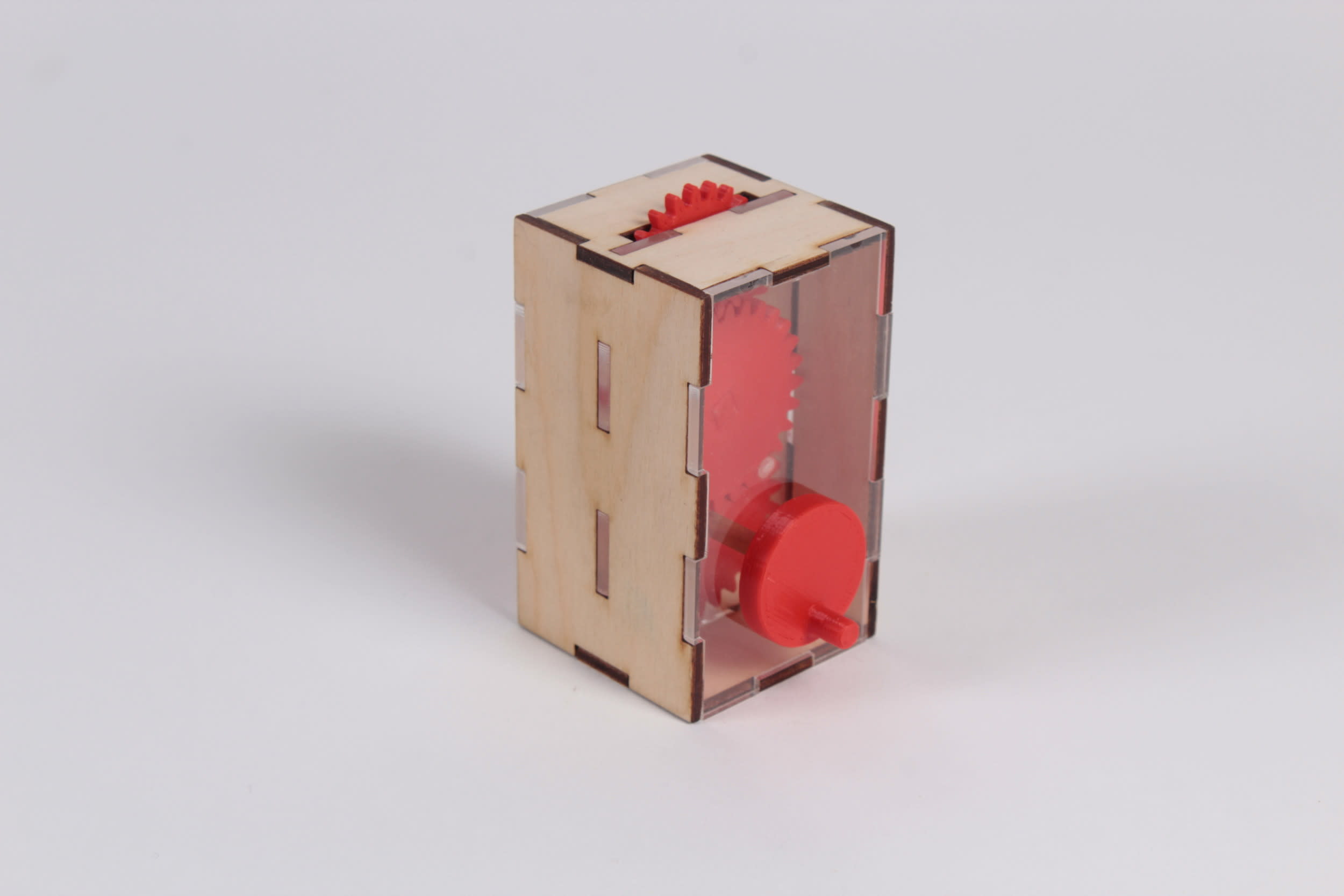
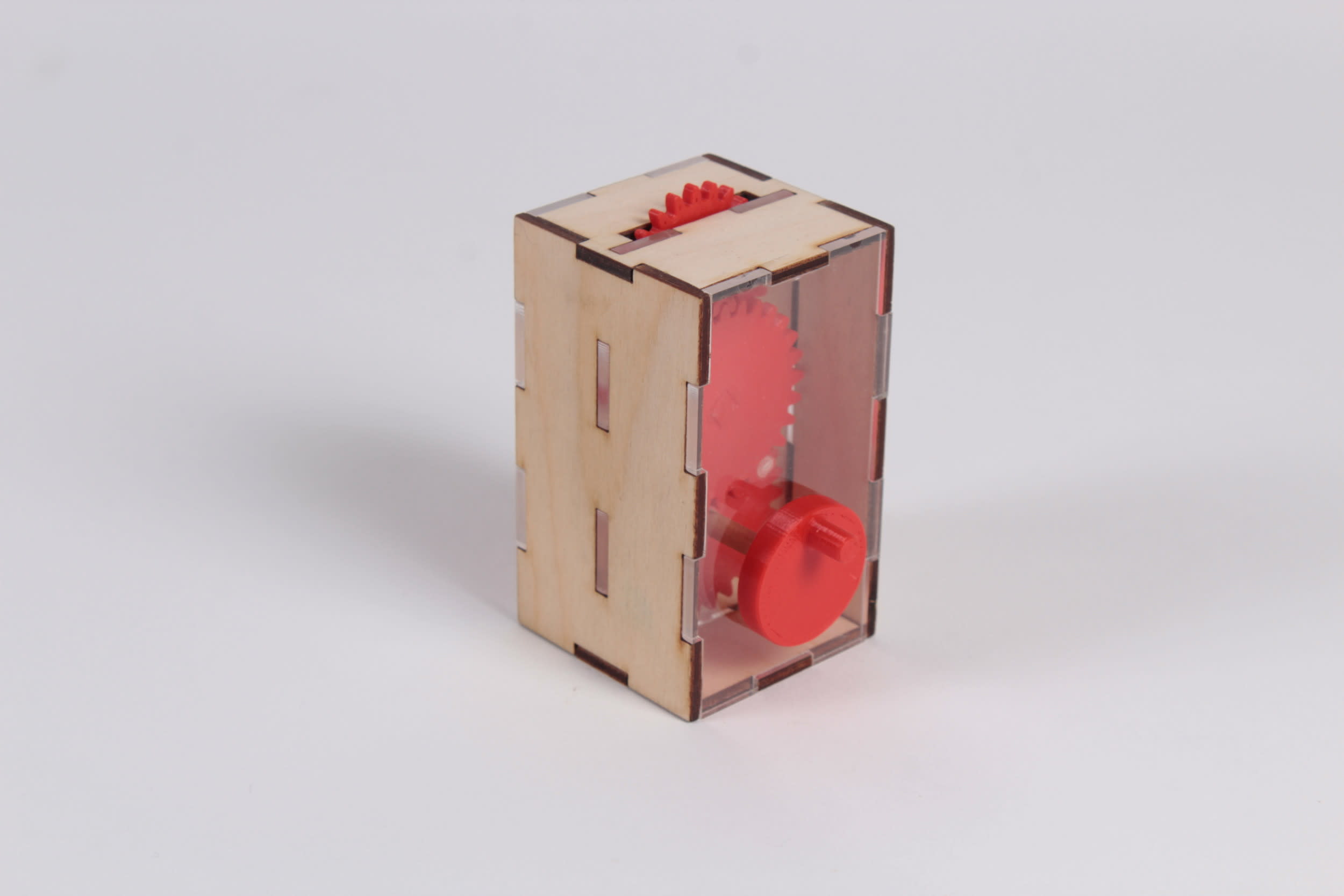
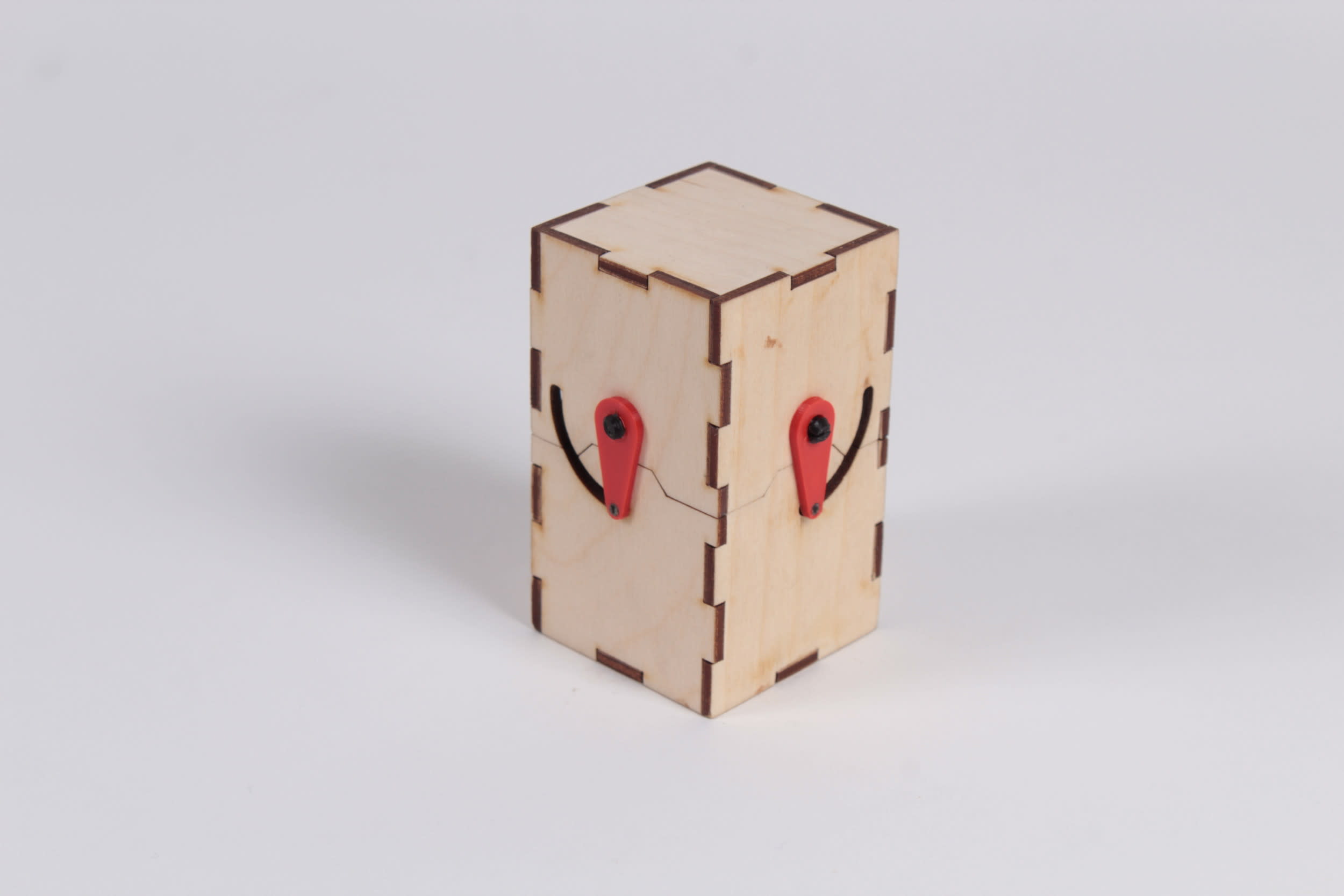
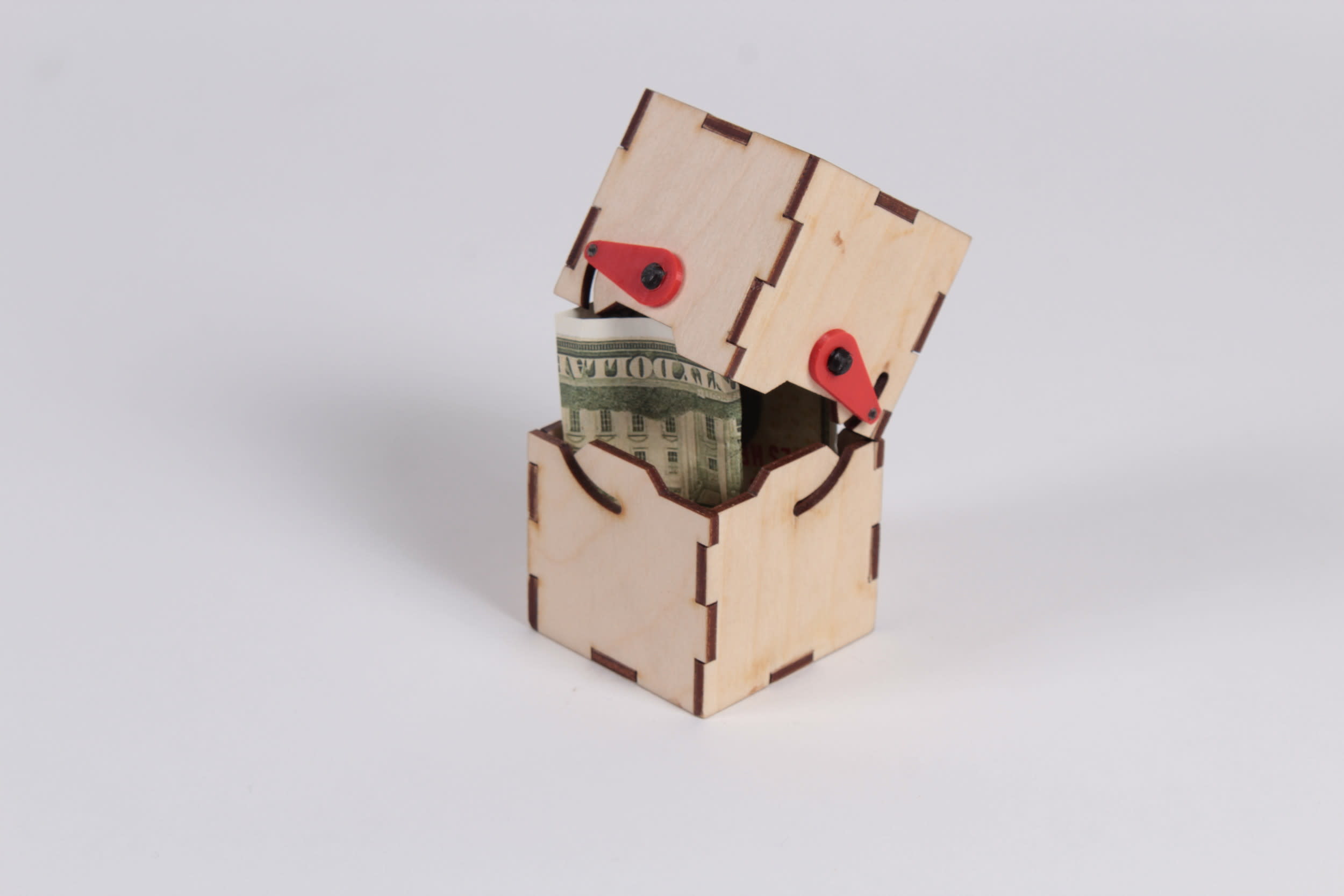
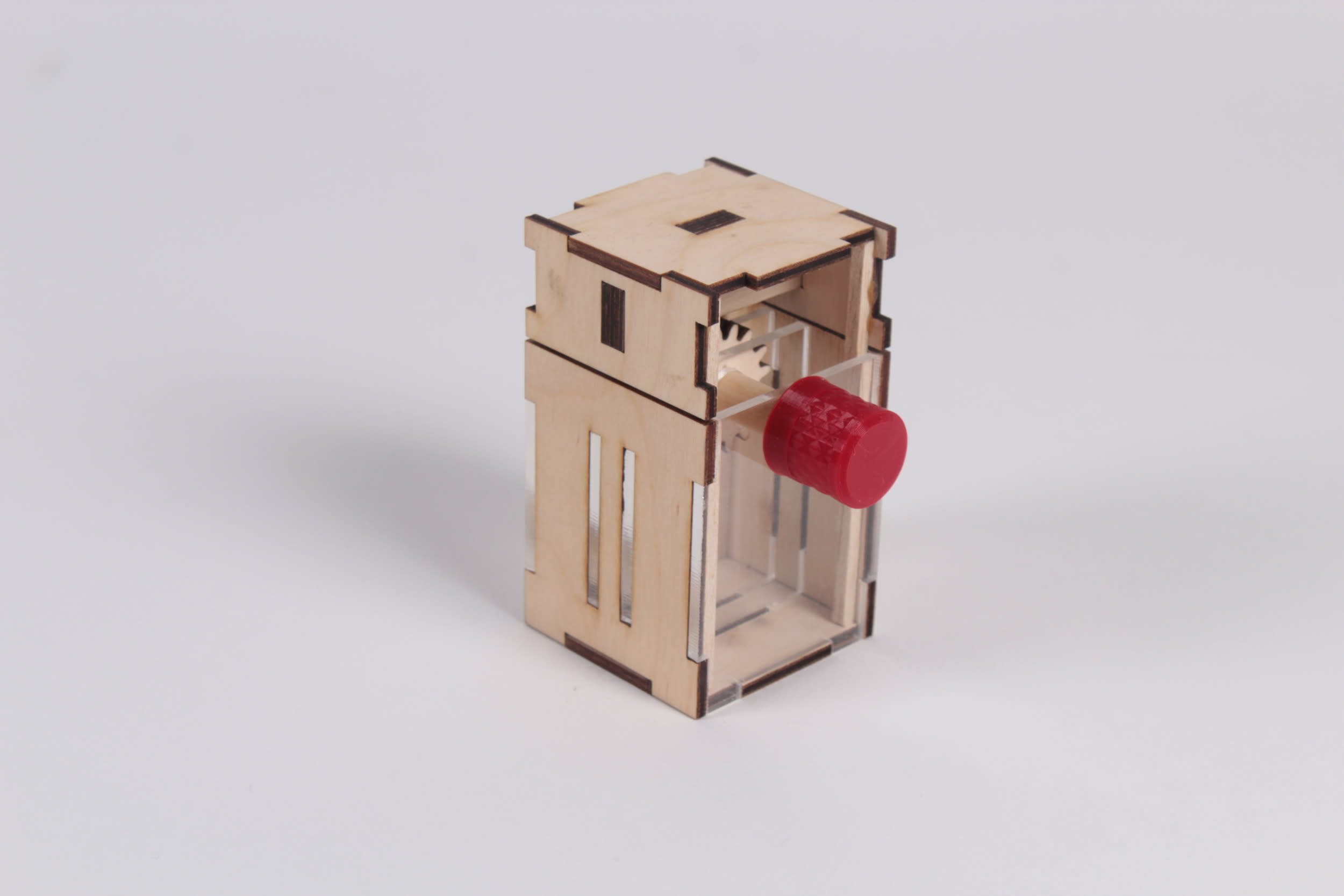
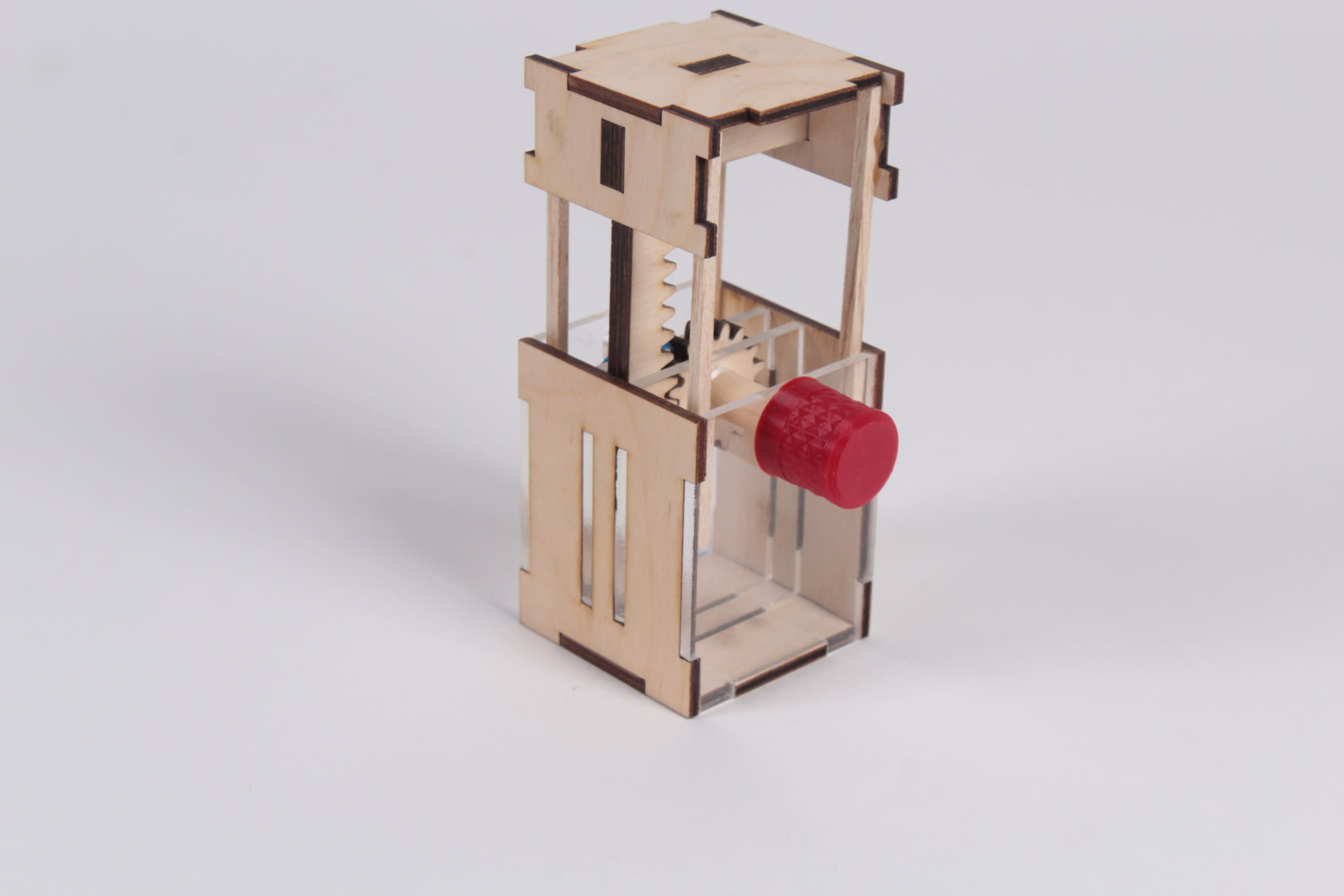
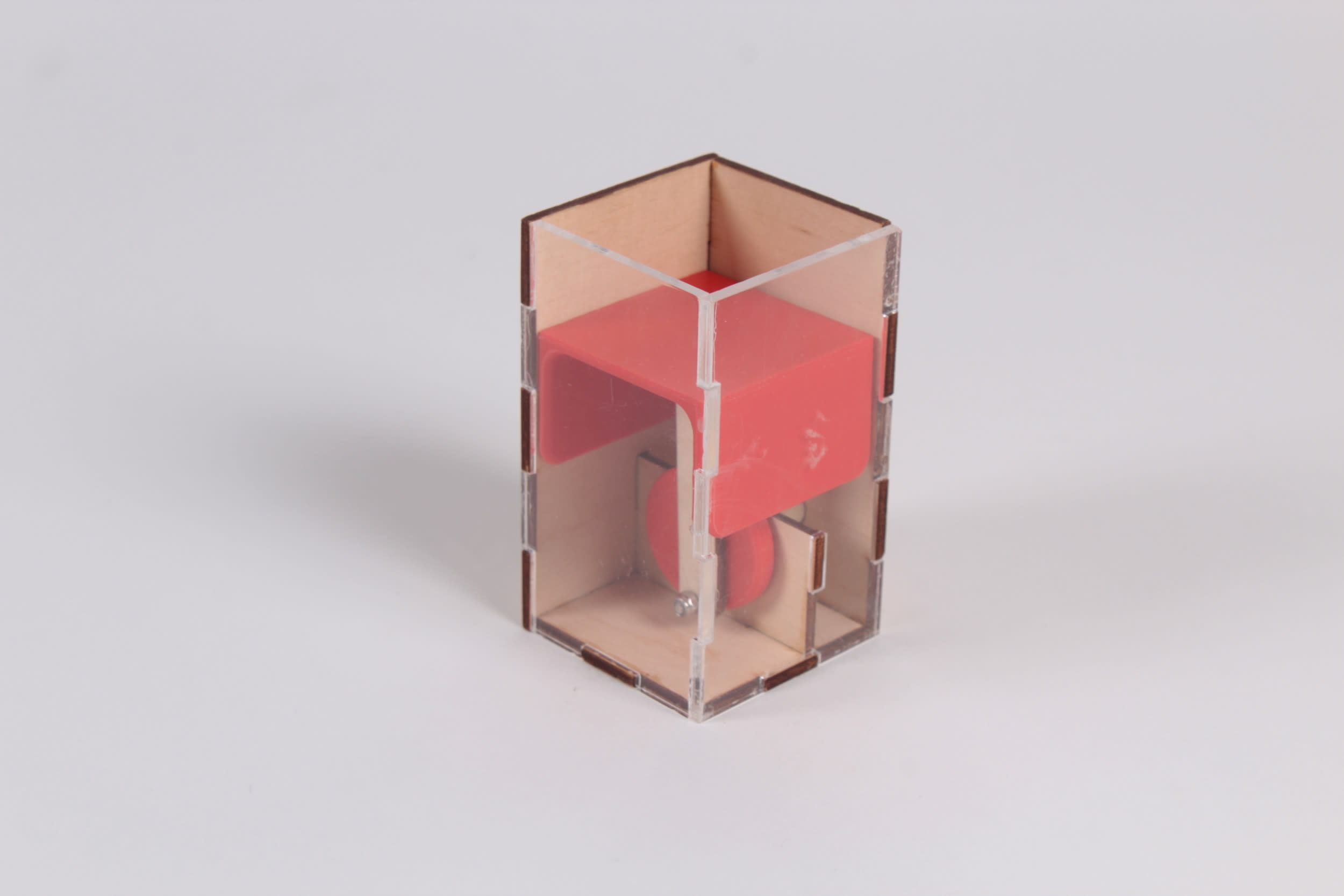
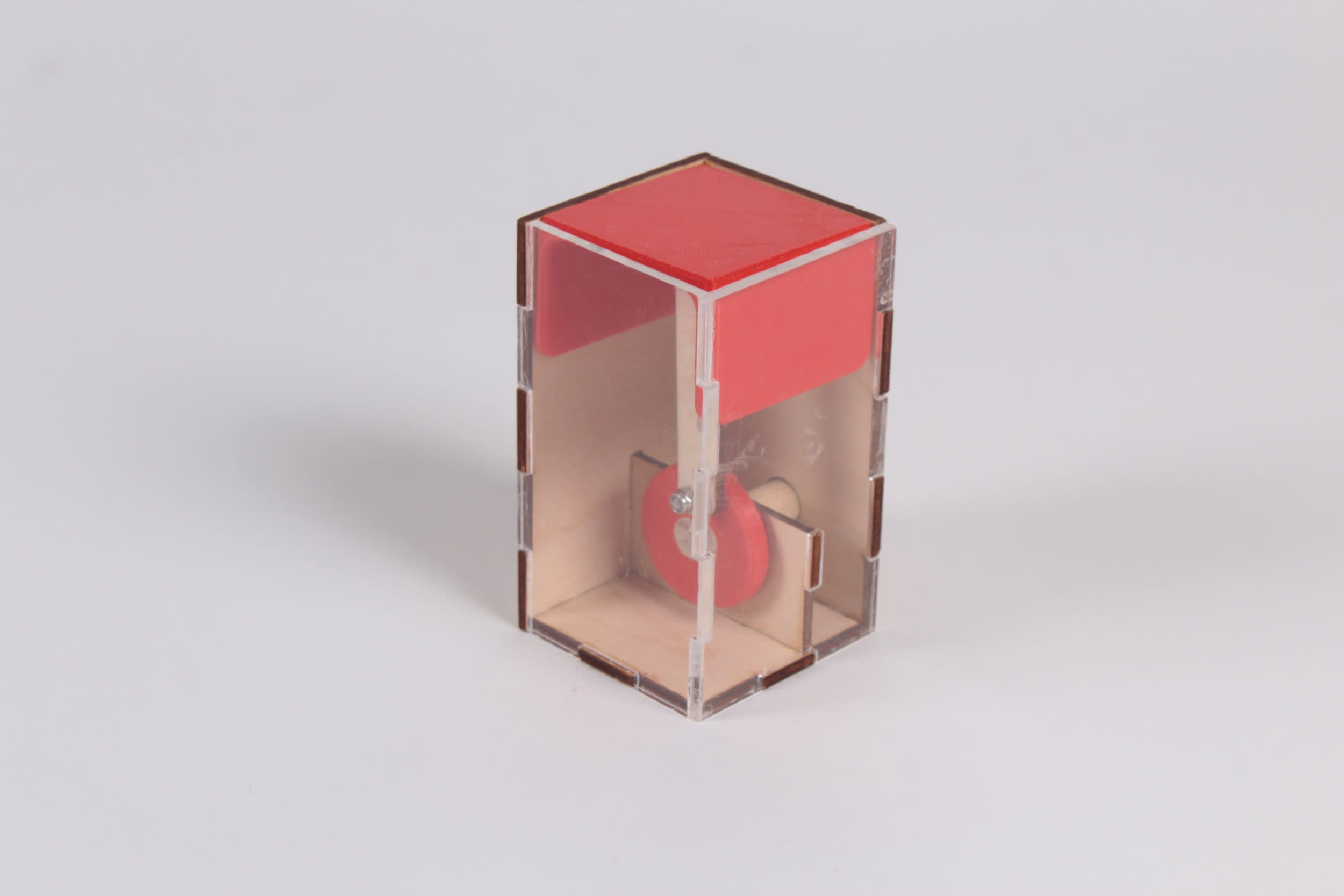
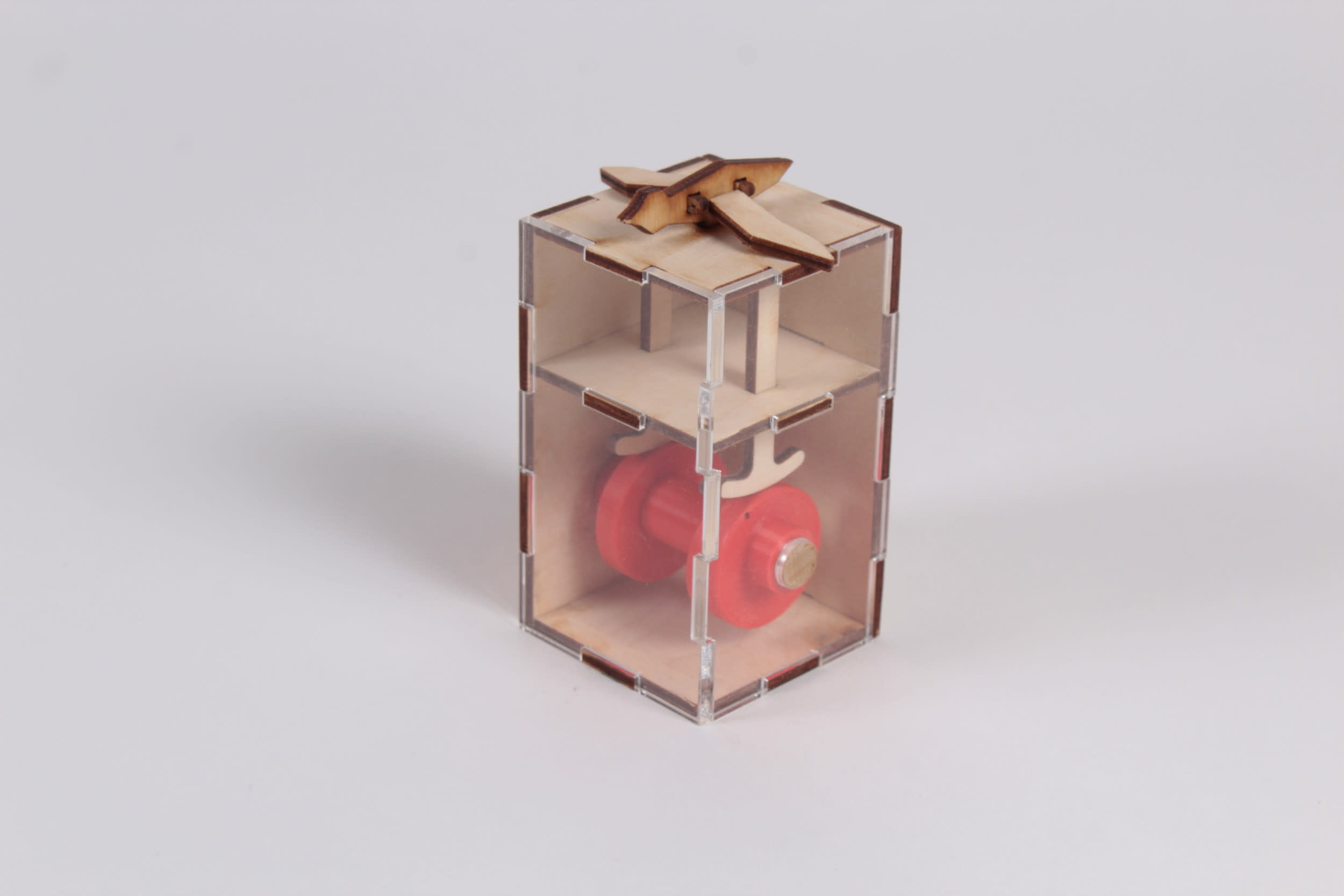
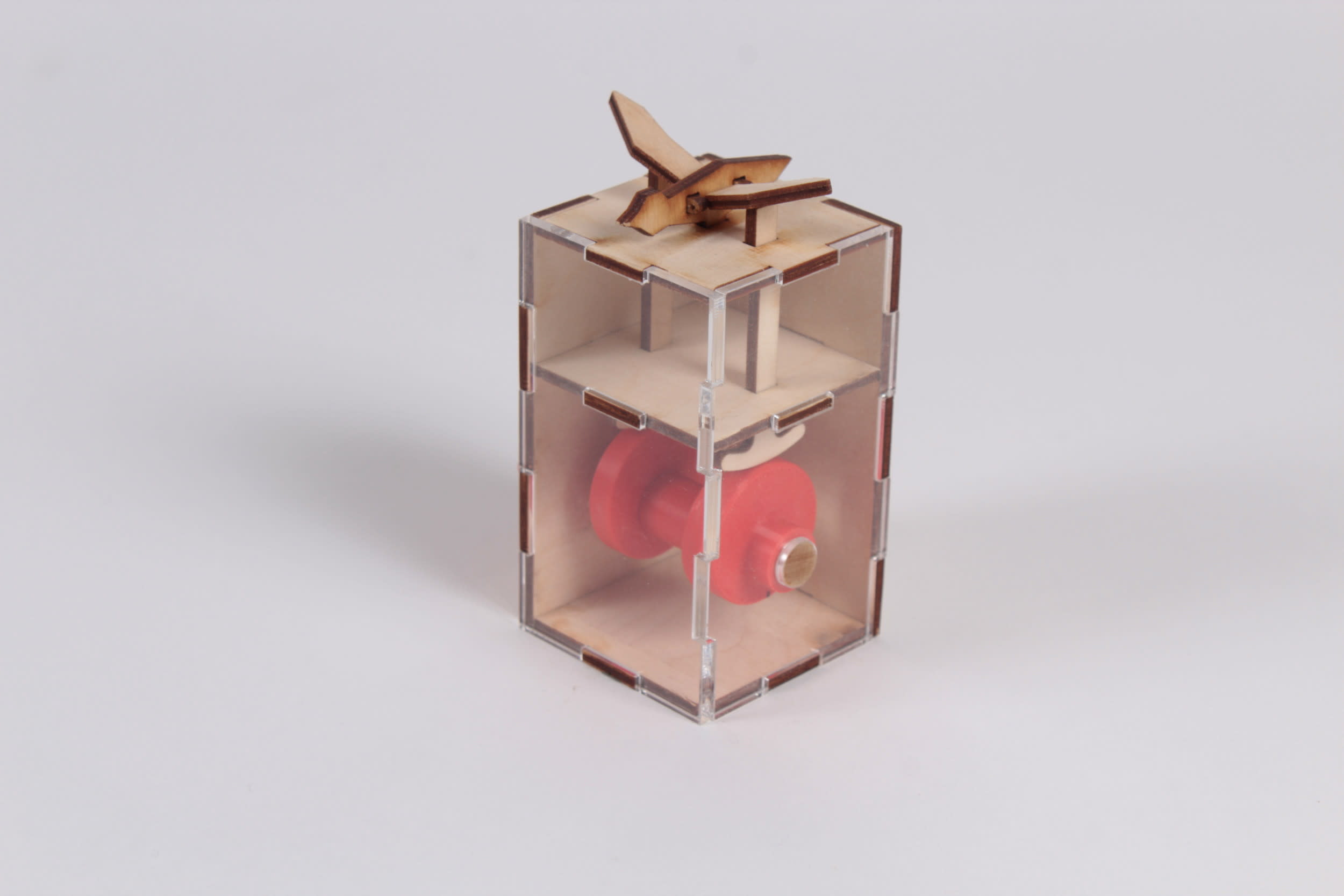
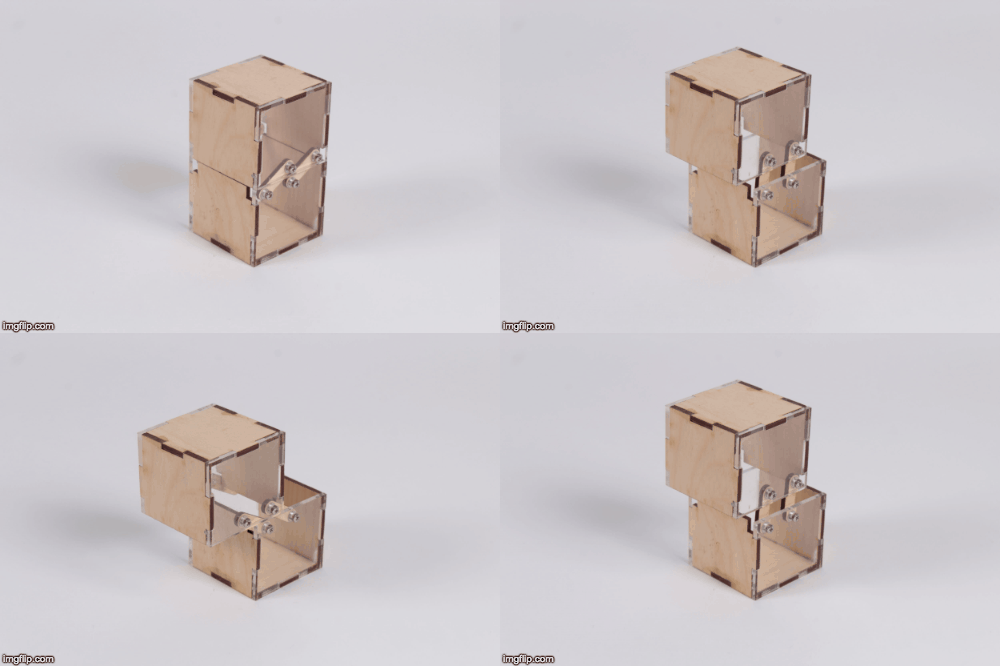
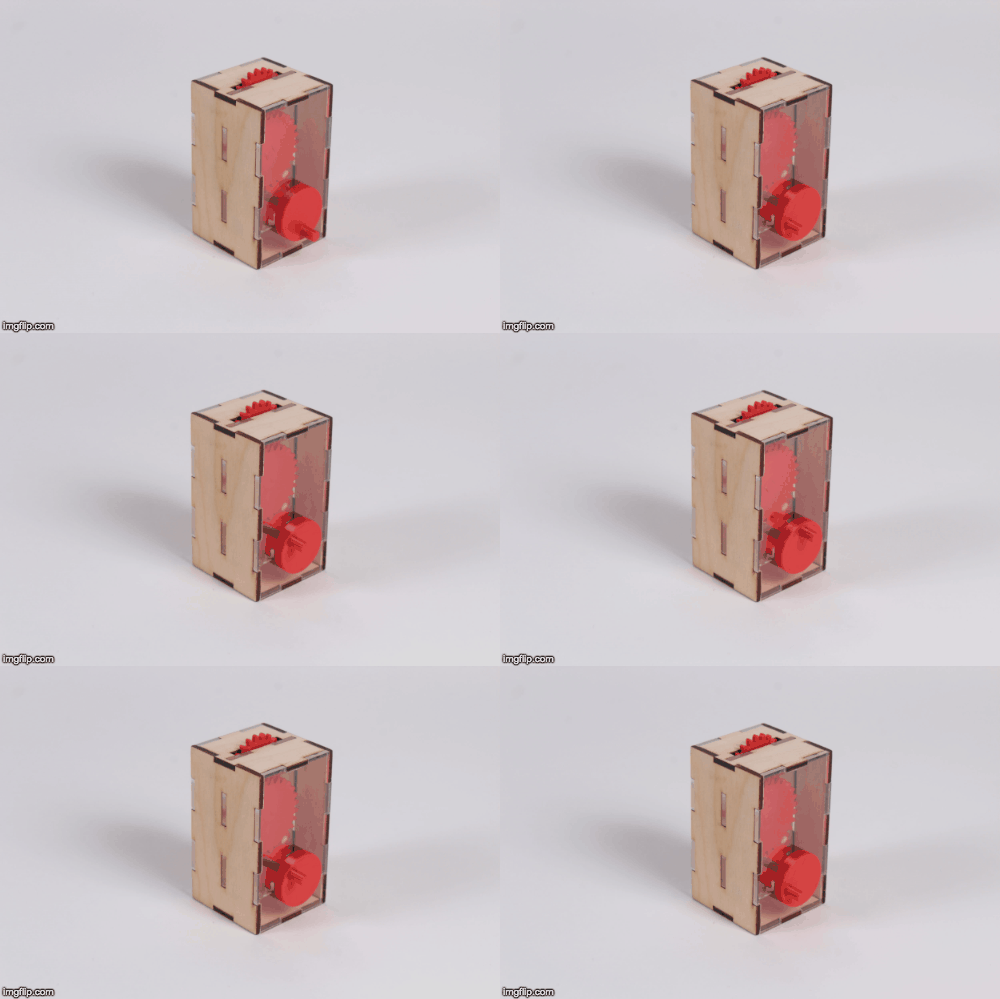
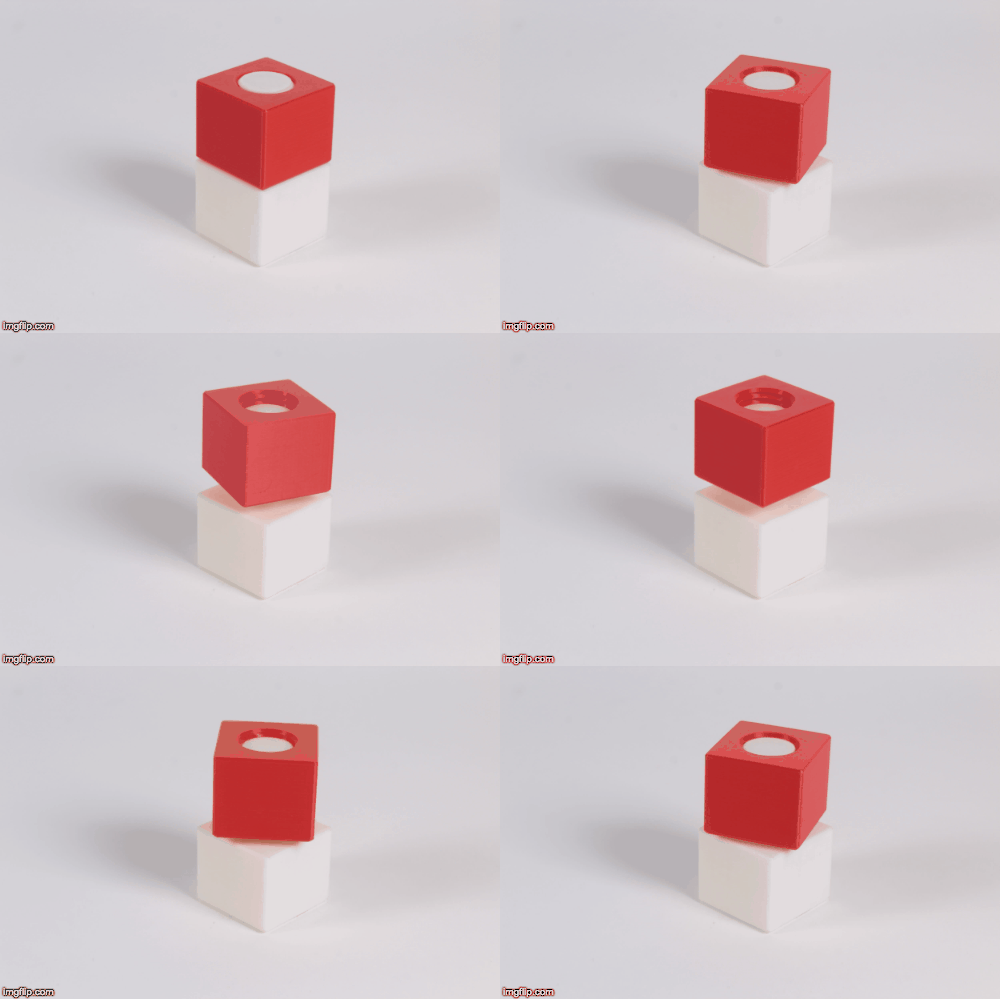
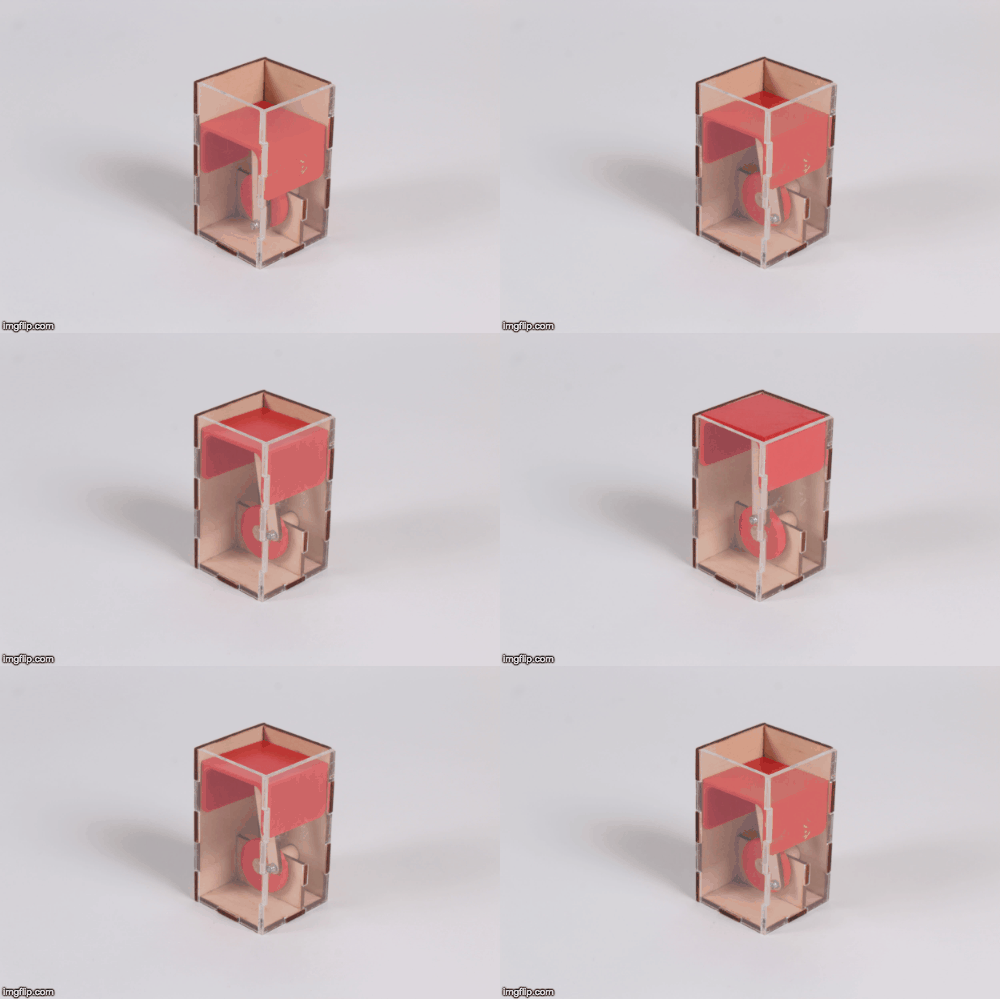
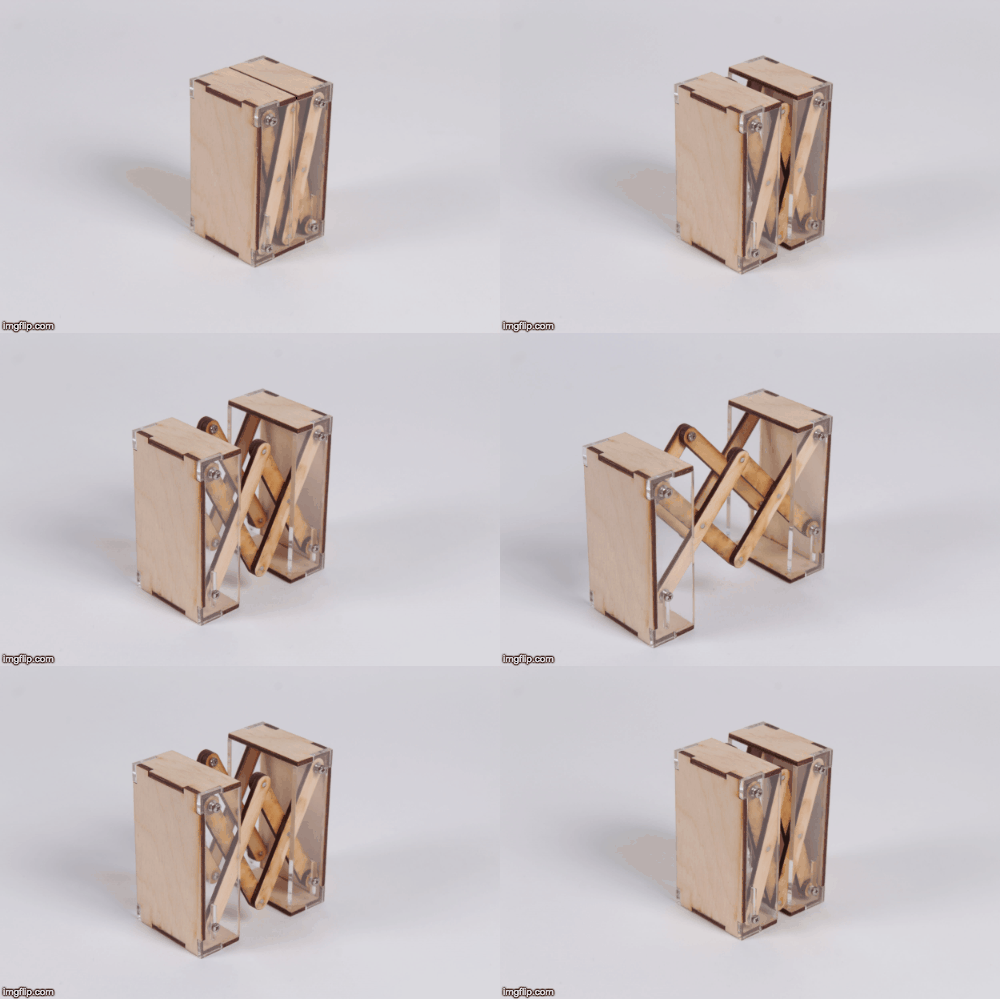
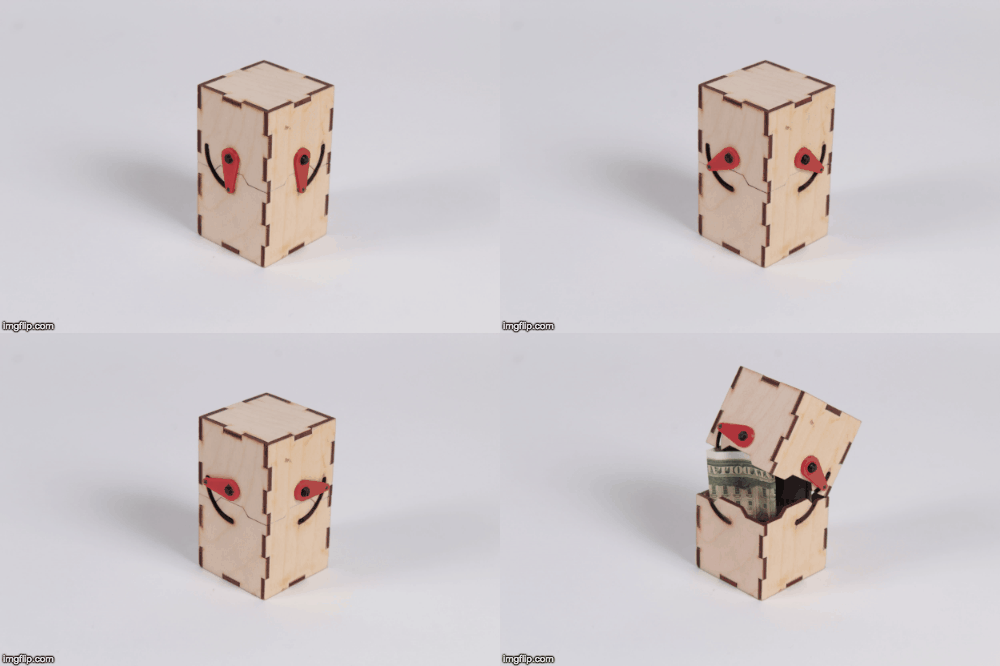
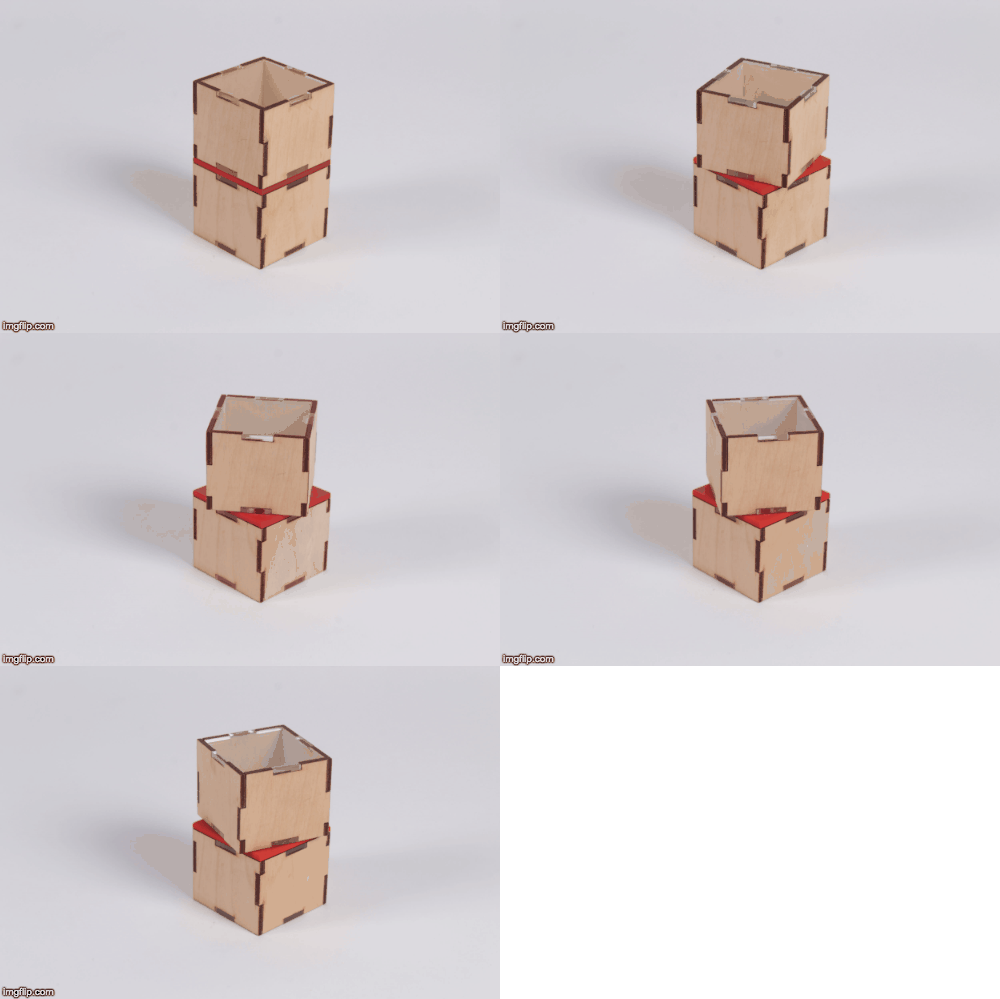
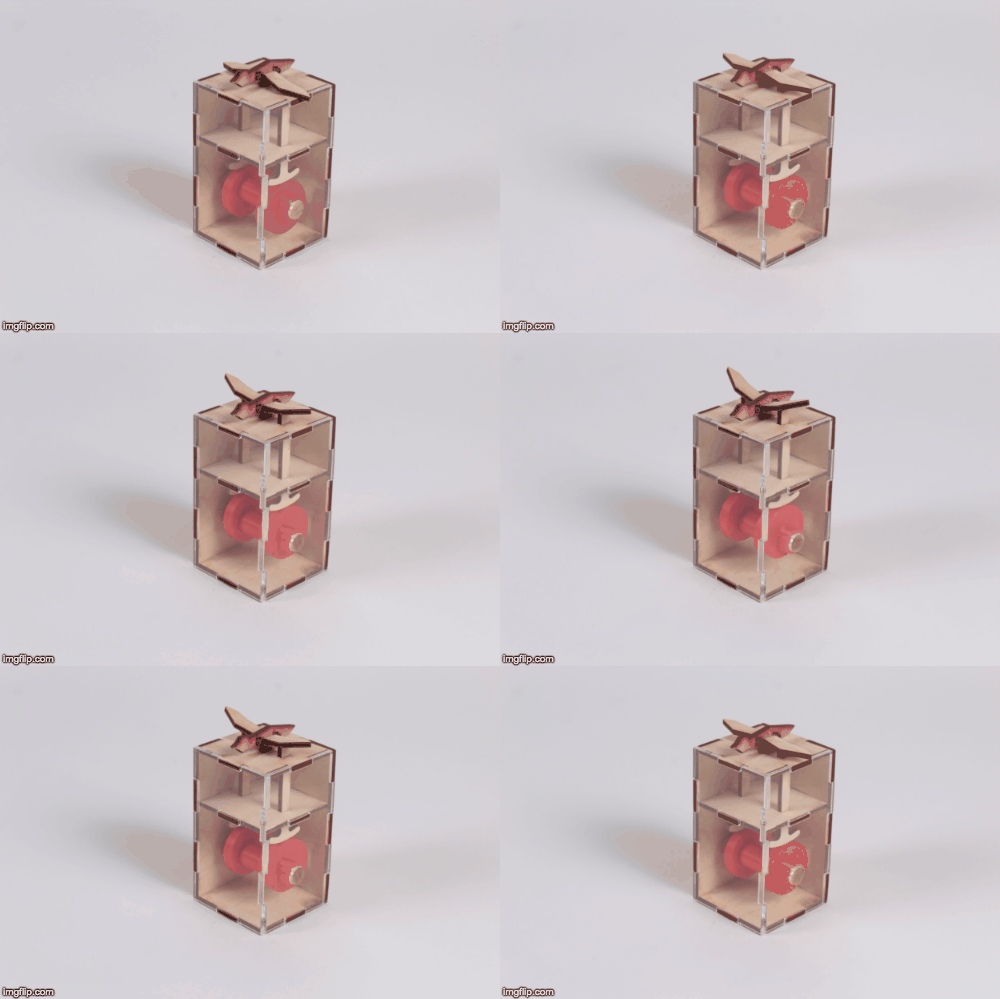
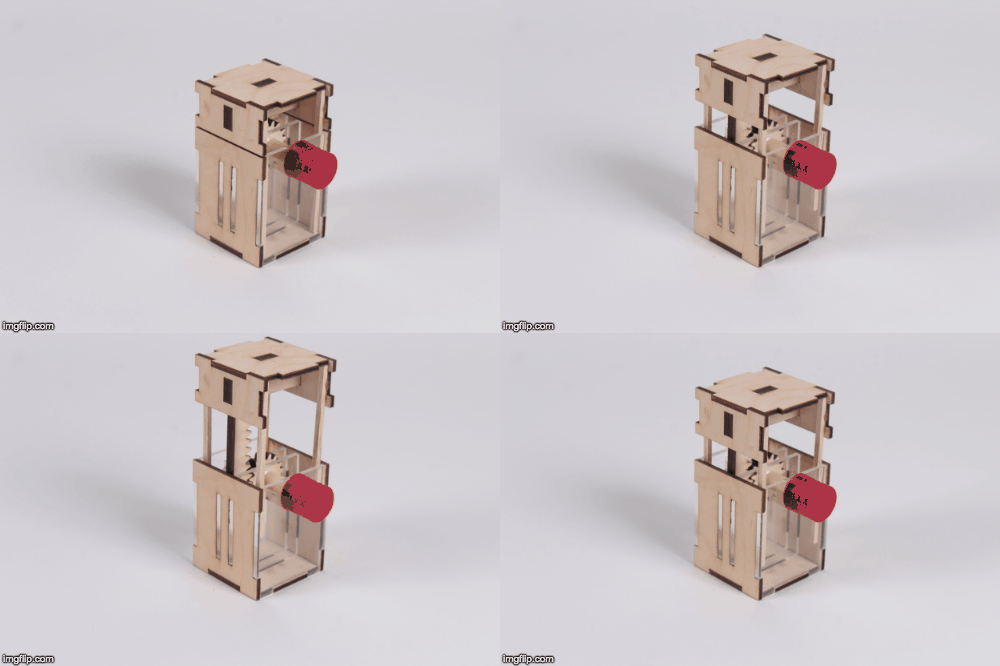
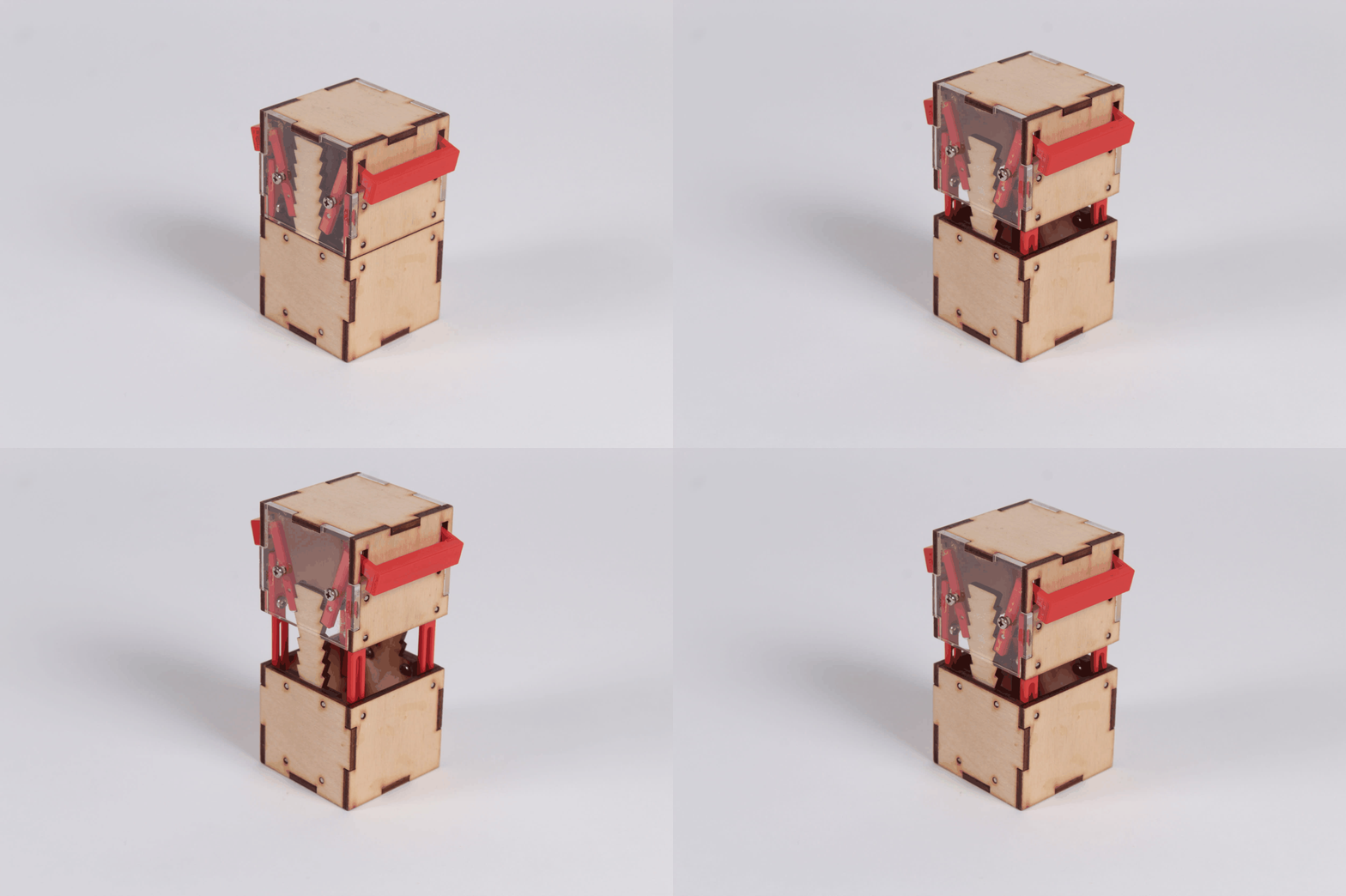
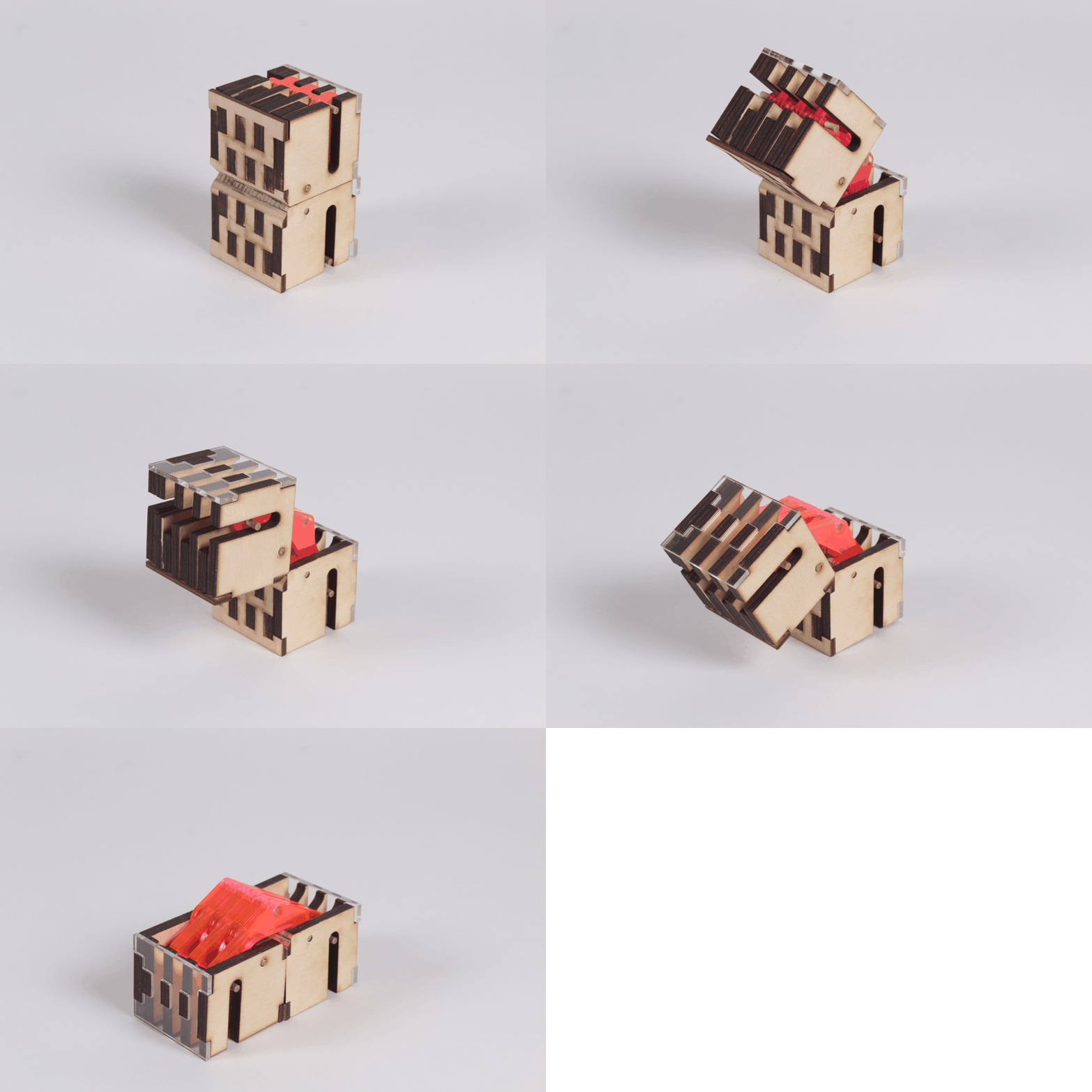
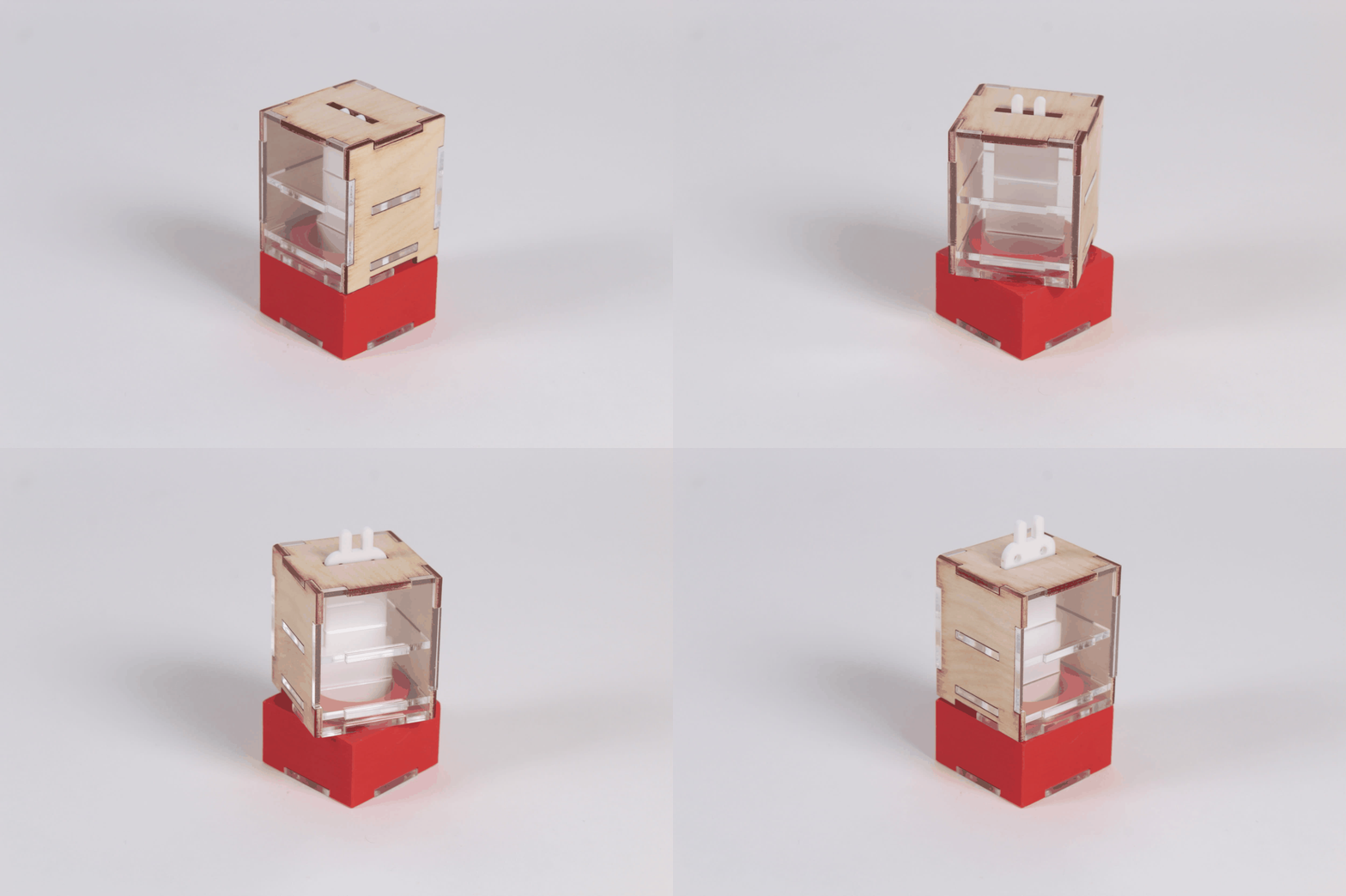
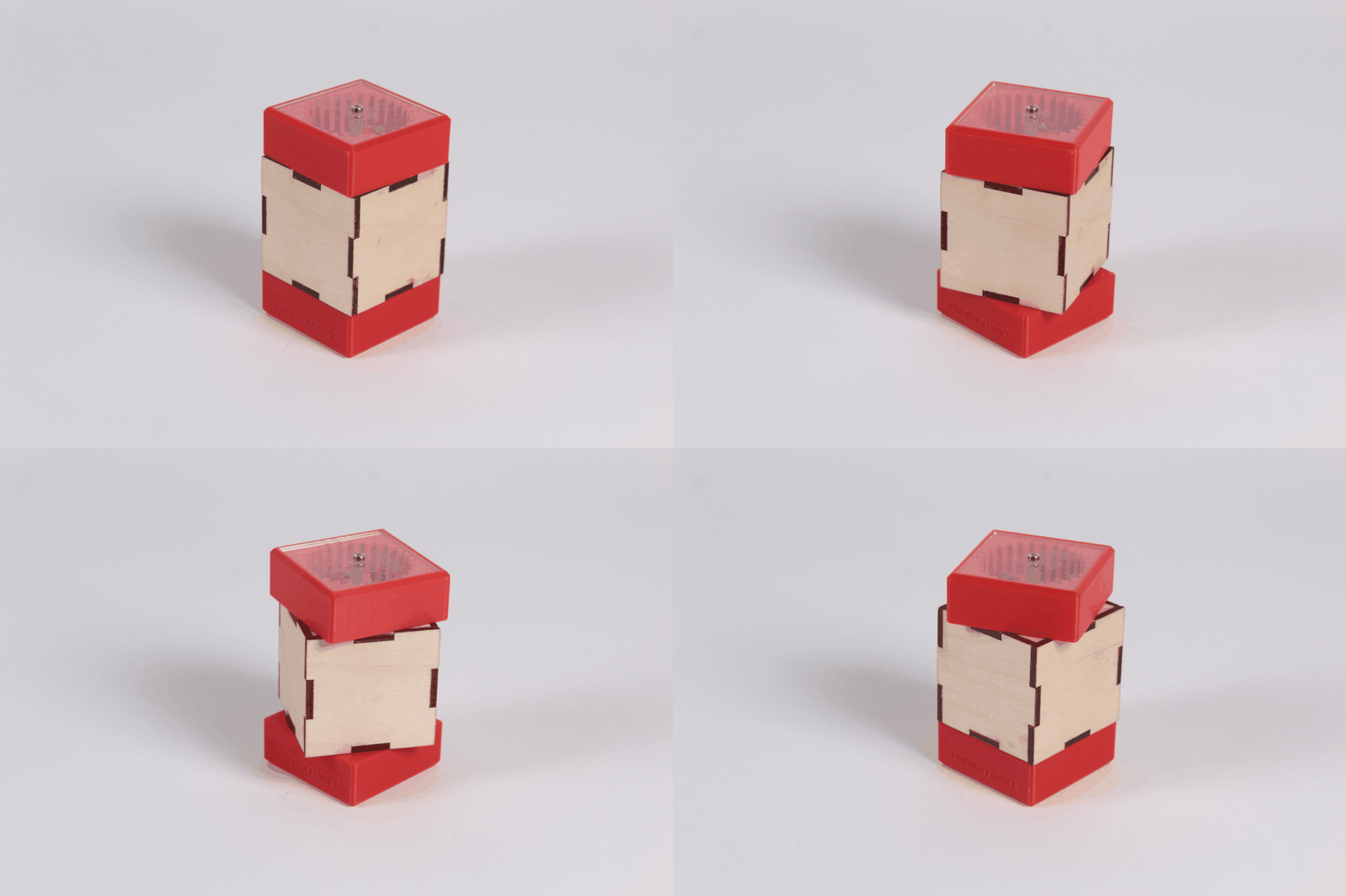
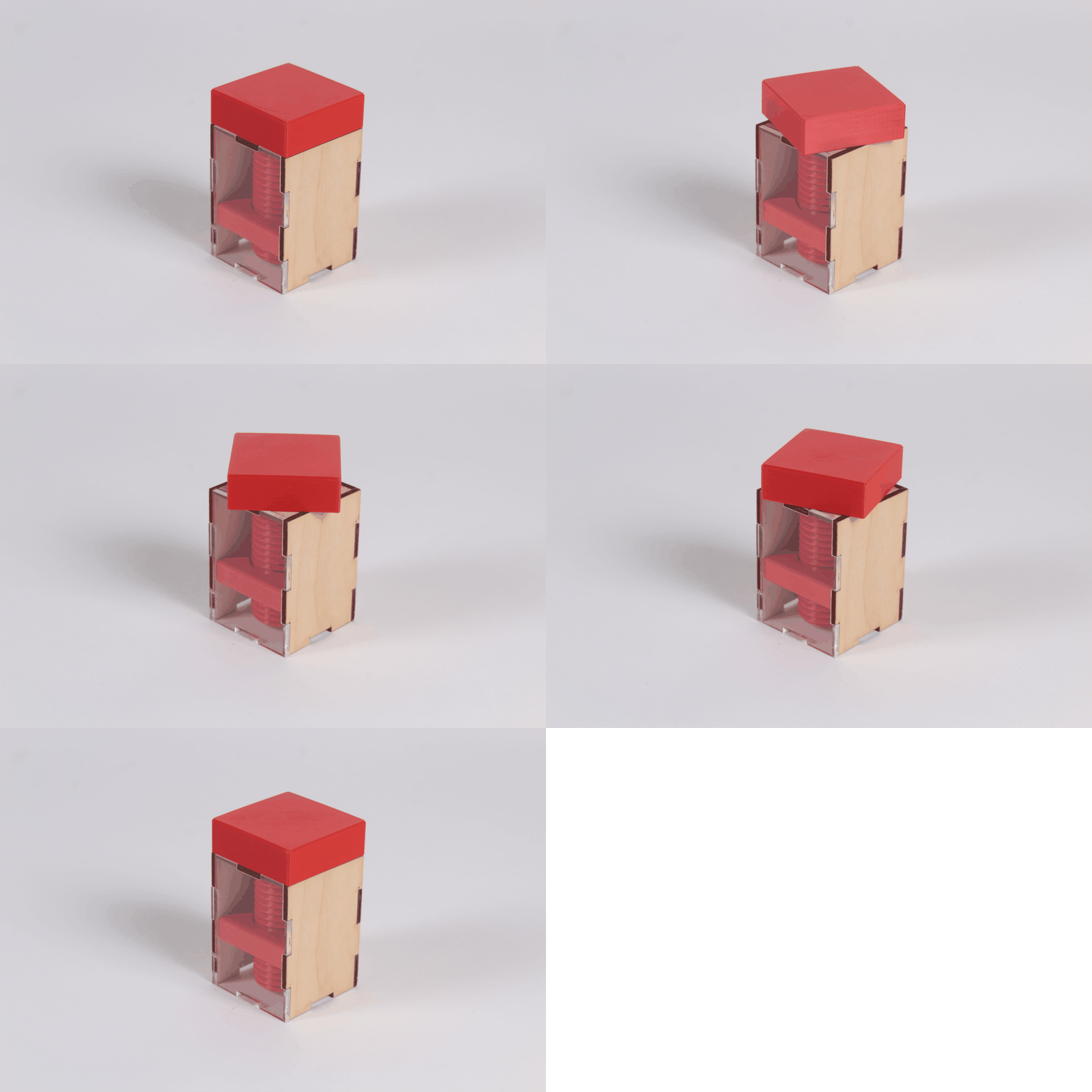
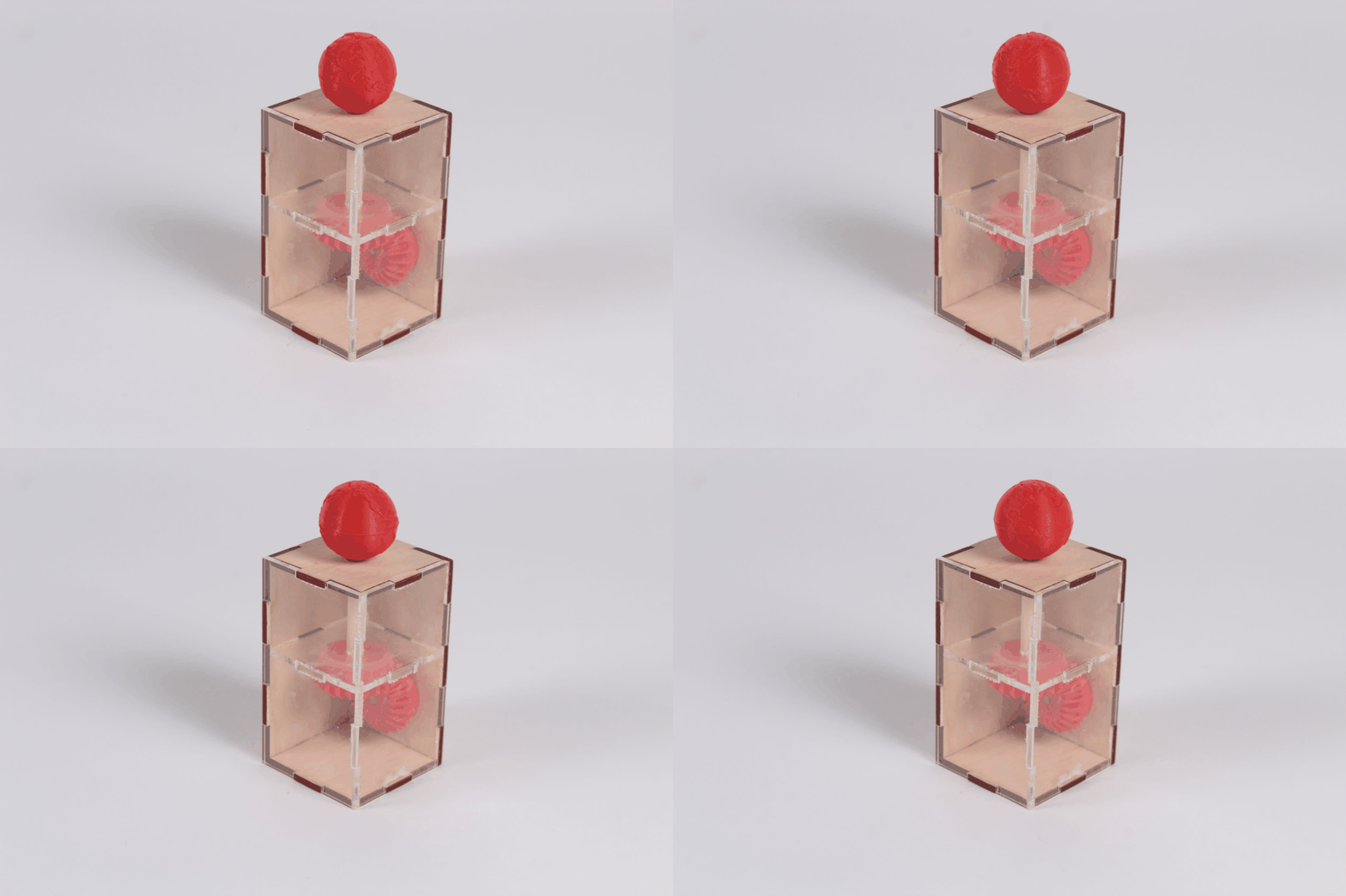
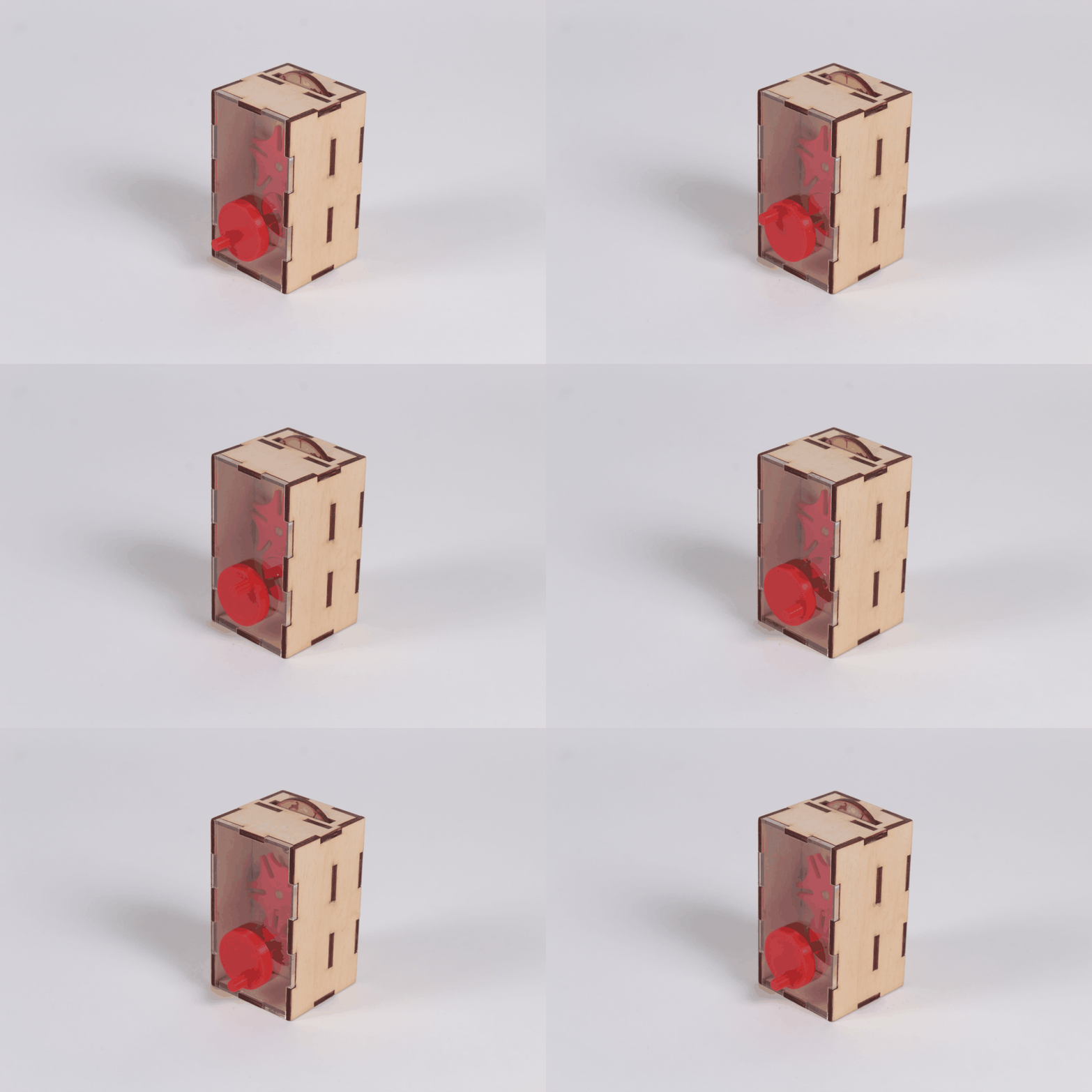
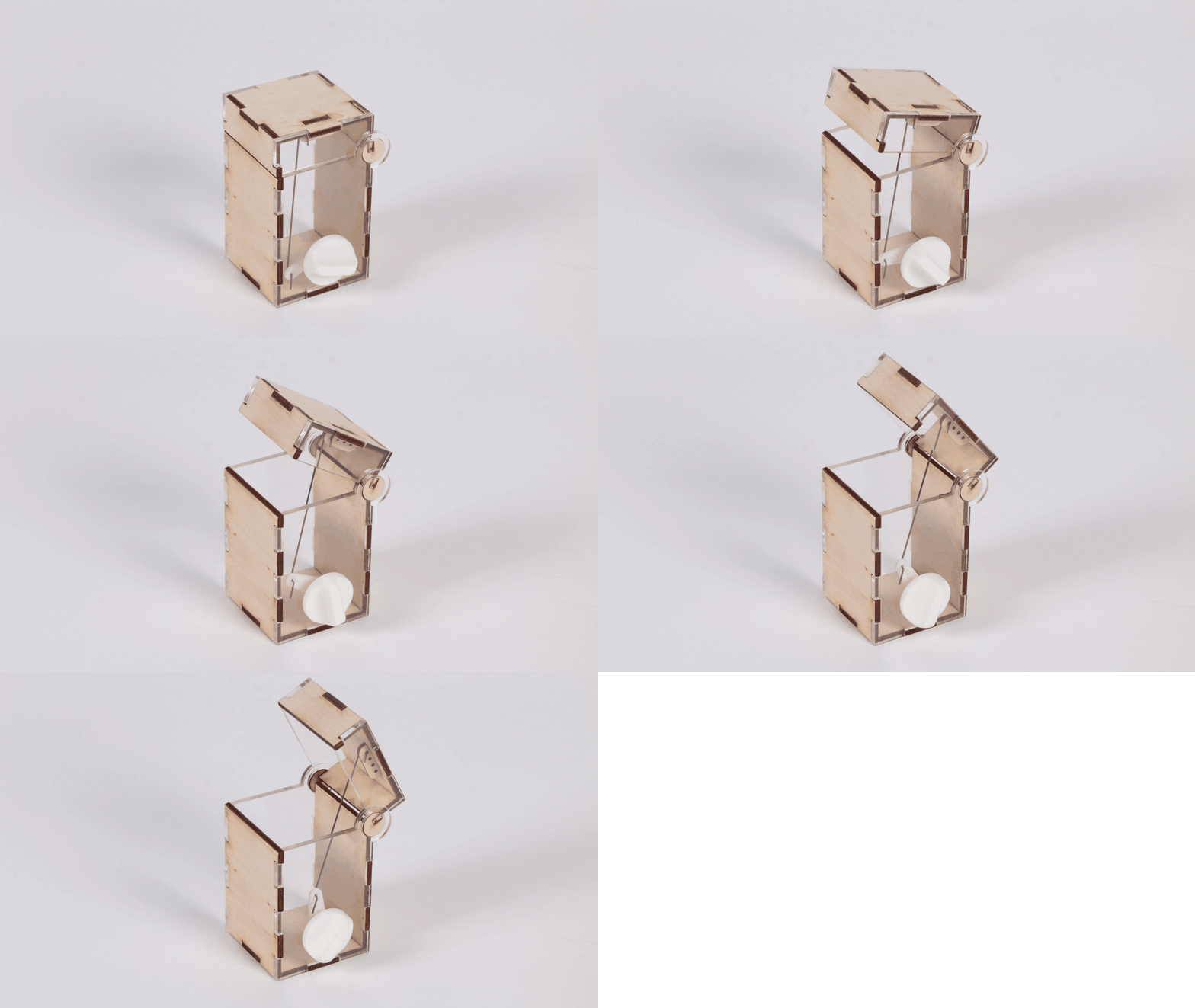
The second set focuses on mechanisms. These objects demonstrate how NuVu’s tools can be used to transfer motion and torque through mechanisms such as gears, ratchets, bevel gears, linkages, belts, and cams.
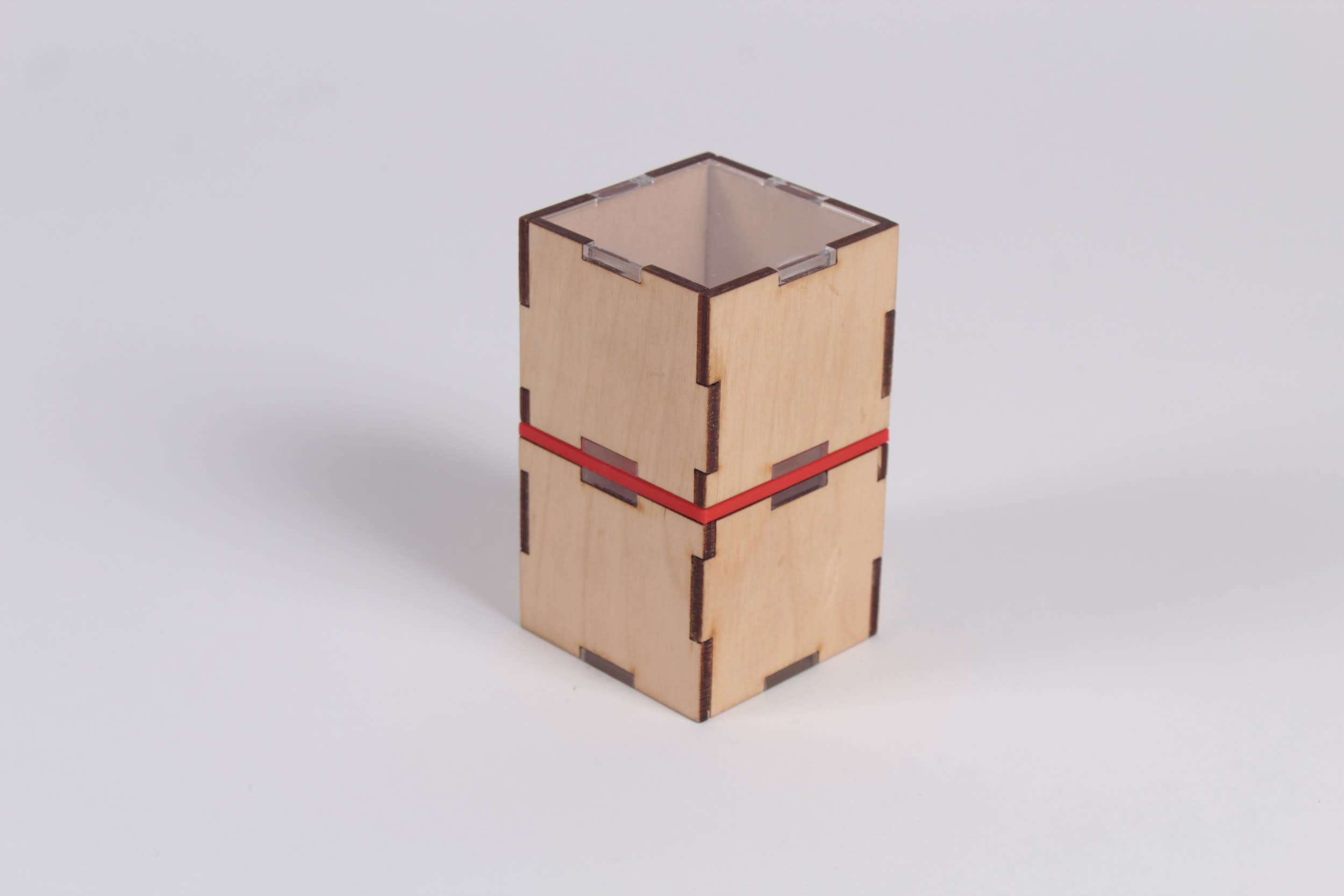
Both the Forms and Mechanisms fit within a uniform 52 × 52 × 90 mm bounding box, with each mechanism constructed inside a rectangular prism. Dedicated holders allow both sets to be stored, organized, and displayed on the wall.
Forms
NuVu ToolBox is a comprehensive system of objects designed to help inexperienced creators turn their ideas into reality using the tools available to them.
The ToolBox consists of two sets of objects that support students in creating three-dimensional forms and designing simple mechanisms. The first set, called “Forms,” helps students understand the available manufacturing methods and select the technique best suited to their designs. These methods include laser-cut tabs, stacked laser-cut slices, 3D printing, concrete molding, and laser-cut and scored paper. Each method is represented by three objects: a rectangular prism, a cylinder, and a sphere. Together, these objects represent three fundamental categories of form: rectilinear, singly curved, and doubly curved.
The second set focuses on mechanisms. These objects demonstrate how NuVu’s tools can be used to transfer motion and torque through mechanisms such as gears, ratchets, bevel gears, linkages, belts, and cams.
Both the Forms and Mechanisms fit within a uniform 52 × 52 × 90 mm bounding box, with each mechanism constructed inside a rectangular prism. Dedicated holders allow both sets to be stored, organized, and displayed on the wall.
Mechanisms
Movement
Documentation