July 16, 2026

Designing the NuVu Design Studios

No items found.

By the time fall creeps into the air and our students head back to Central Square for the new school year, NuVu's design studio curriculum is set and ready to launch. As students dive straight into the first studio of the session—sketching ideas, asking questions, and imagining possibilities—what goes unseen are the summer weeks coaches spend building these hands-on learning experiences from the ground up.

So what goes on behind the scenes all summer?

According to Nada Elsonni, NuVu's Creative Director, this summer the staff has been thinking about studios through the lens of Framework and Experimental Design Studios. Framework Studios are the core classes of NuVu. They are flexible, repeatable, and aligned with NuVu's Core Academic Standards.

Design Coach Ryan with students

Those standards—Communication and Expression; Scientific Inquiry and Systems Thinking; Mathematical Thinking and Quantitative Literacy; Social Systems & Civic Engagement; Design & Innovation; Technology & Digital Citizenship; and Personal Growth, Wellness & Professional Skills—serve as the goalposts for every coach as they create new studios.

Mixed into each term are also Experimental Studios—those that push boundaries, encourage risk-taking, and often inspire future Framework Studios.

"The strongest studios intentionally create opportunities for research, iteration, critique, and reflection," says Nada, "and leave room for students to make meaningful decisions throughout the design process. The project may change every year, but the learning experience remains consistent."

For Design Coach Ryan Ferguson, his studio ideas can come from just about anywhere—from stumbling upon a compelling project that encourages deep thinking on a particular topic to recontextualizing familiar ideas in a new way.

"We try to keep studios relevant to what's currently going on in the world so students can have a voice in those tricky conversations and feel like they're contributing to a larger discourse outside of school," shares Ryan. "A lot of studios are also just building on the personal interests/creative itches of the coaches or student body in general."

That said, good ideas don't emerge in a vacuum. According to Ryan, coaches immerse themselves in research before a studio ever reaches students. They study what's already happening in a particular field while making sure they're confident in the technical skills students will need.

Creative Director Nada speaking with students

"I also have to make sure I'm familiar and confident with the specific technical skills involved in the studio," he says. "This may require some training on my part to brush up on certain methodologies, and may also require building out new tutorials that will be used with students."

Next, Ryan imagines three or four possible outcomes for the studio he is creating. If several completely different ideas rise to the surface, that's a good test of whether the studio has been framed well.

"Is it constrained enough to be generative and lead to unique ideas, while not being too limiting or didactic in what students can make?" asks Ryan. "Once I have some initial ideas of end outcomes, it's a matter of reverse engineering the process to get there and building out the necessary scaffolding."

After the conceptual and technical foundation is laid, Ryan transitions into what he considers one of the most challenging parts of any studio: brainstorming.

"You have to ask yourself how the students will synthesize all of this knowledge and background into compelling project ideas. This is where well defined constraints and structure is really critical—to help give students some guidance as they come up with project ideas that are innovative and novel, while remaining grounded."

"A great design studio is one where students learn a particular skill and start applying it outside the studio in real life," says Technology Coach Ayush Gandhi

Ayush shares that most of his studio ideas stem from his own interests.

"I am pretty much a nerd and have 10 threads going on in my brain at any point, so any new topic that I look at, I have some defined lenses through which I see them, and then try to freewheel from there," he admits. "The defined lenses for me personally have been Ecology, Computer Science, Personalized Learning, Community & Belongingness."

For Ayush, filtering those many ideas into a single four-week studio is the biggest challenge of the summer. Realistically mapping out final projects, identifying the skills and learning goals students will need, and drawing on expertise and resources from his extensive professional network all culminate in a studio that balances academic depth with an achievable timeline.

Jon Turnquist, NuVu's Dean of Students, hopes every design studio helps students discover something about themselves—not just academically, but personally.

He says much of the design studio journey is about developing the soft skills of integrating critique, collaborating with others, and taking ownership of project management.

"Our central question is always: Is this studio bringing out the student's intrinsic motivation?" says Jon. "This level of vulnerability and reflection for students is only possible through strong relationships and trust built over time with NuVu's coaches and staff."

Media Maven Coach Heide

"In many ways, we're approaching curriculum design the same way we ask students to approach design challenges: prototype, reflect, iterate, and continuously improve," explains Nada. "That behind-the-scenes process is what allows each studio to feel creative and spontaneous while being grounded in a thoughtful, intentional educational framework."

While creating a final prototype that is well made and functional is always a goal, Jon explains that success runs much deeper. When a student can explain the journey behind their design decisions and carry new skills into future projects—and eventually into their professional lives—"that's the core of what success means to NuVu."

By the end of the summer, coaches have turned ideas inside out, refined them through feedback and discussion, and transformed them into design studios ready to ignite students' curiosity. Each coach brings a unique perspective and expertise, but together they share one goal: creating learning experiences that challenge students, build lasting skills, and inspire them to see themselves in new ways.

"A great design studio is one which invites students just outside their comfort zone," shares Ryan. "It's sort of a double-edged sword. The mind cannot grow if it's not being stretched, but at the same time, the mind cannot learn if it does not feel safe to fail."

July 16, 2026

Designing the NuVu Design Studios
By the time fall creeps into the air and our students head back to Central Square for the new school year, NuVu's design studio curriculum is set and ready to launch. As students dive straight into the first studio of the session—sketching ideas, asking questions, and imagining possibilities—what goes unseen are the summer weeks coaches spend building these hands-on learning experiences from the ground up.

So what goes on behind the scenes all summer?

According to Nada Elsonni, NuVu's Creative Director, this summer the staff has been thinking about studios through the lens of Framework and Experimental Design Studios. Framework Studios are the core classes of NuVu. They are flexible, repeatable, and aligned with NuVu's Core Academic Standards.

Design Coach Ryan with students

Those standards—Communication and Expression; Scientific Inquiry and Systems Thinking; Mathematical Thinking and Quantitative Literacy; Social Systems & Civic Engagement; Design & Innovation; Technology & Digital Citizenship; and Personal Growth, Wellness & Professional Skills—serve as the goalposts for every coach as they create new studios.

Mixed into each term are also Experimental Studios—those that push boundaries, encourage risk-taking, and often inspire future Framework Studios.

"The strongest studios intentionally create opportunities for research, iteration, critique, and reflection," says Nada, "and leave room for students to make meaningful decisions throughout the design process. The project may change every year, but the learning experience remains consistent."

For Design Coach Ryan Ferguson, his studio ideas can come from just about anywhere—from stumbling upon a compelling project that encourages deep thinking on a particular topic to recontextualizing familiar ideas in a new way.

"We try to keep studios relevant to what's currently going on in the world so students can have a voice in those tricky conversations and feel like they're contributing to a larger discourse outside of school," shares Ryan. "A lot of studios are also just building on the personal interests/creative itches of the coaches or student body in general."

That said, good ideas don't emerge in a vacuum. According to Ryan, coaches immerse themselves in research before a studio ever reaches students. They study what's already happening in a particular field while making sure they're confident in the technical skills students will need.
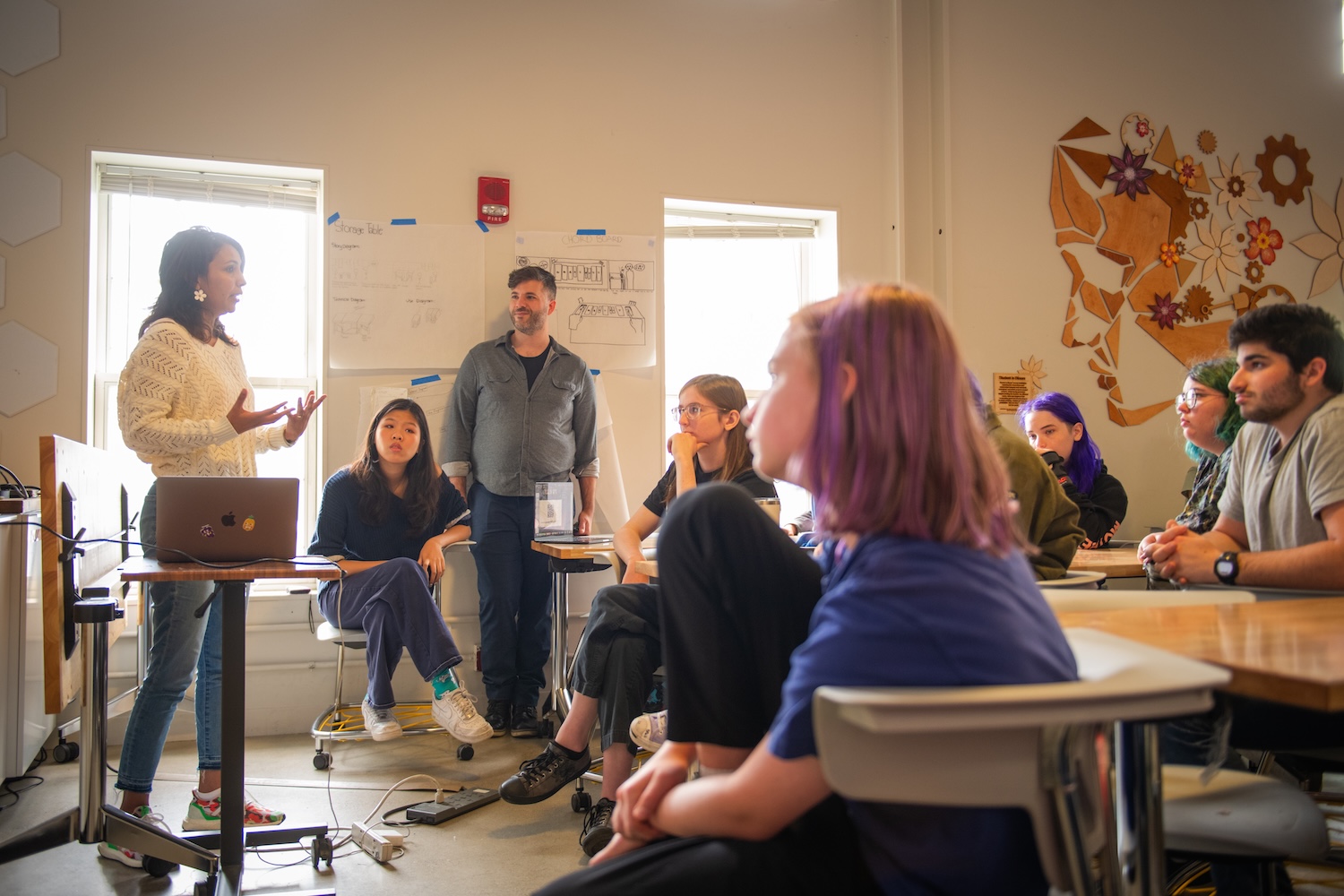
Creative Director Nada speaking with students

"I also have to make sure I'm familiar and confident with the specific technical skills involved in the studio," he says. "This may require some training on my part to brush up on certain methodologies, and may also require building out new tutorials that will be used with students."

Next, Ryan imagines three or four possible outcomes for the studio he is creating. If several completely different ideas rise to the surface, that's a good test of whether the studio has been framed well.

"Is it constrained enough to be generative and lead to unique ideas, while not being too limiting or didactic in what students can make?" asks Ryan. "Once I have some initial ideas of end outcomes, it's a matter of reverse engineering the process to get there and building out the necessary scaffolding."

After the conceptual and technical foundation is laid, Ryan transitions into what he considers one of the most challenging parts of any studio: brainstorming.

"You have to ask yourself how the students will synthesize all of this knowledge and background into compelling project ideas. This is where well defined constraints and structure is really critical—to help give students some guidance as they come up with project ideas that are innovative and novel, while remaining grounded."

"A great design studio is one where students learn a particular skill and start applying it outside the studio in real life," says Technology Coach Ayush Gandhi

Ayush shares that most of his studio ideas stem from his own interests.

"I am pretty much a nerd and have 10 threads going on in my brain at any point, so any new topic that I look at, I have some defined lenses through which I see them, and then try to freewheel from there," he admits. "The defined lenses for me personally have been Ecology, Computer Science, Personalized Learning, Community & Belongingness."

For Ayush, filtering those many ideas into a single four-week studio is the biggest challenge of the summer. Realistically mapping out final projects, identifying the skills and learning goals students will need, and drawing on expertise and resources from his extensive professional network all culminate in a studio that balances academic depth with an achievable timeline.

Jon Turnquist, NuVu's Dean of Students, hopes every design studio helps students discover something about themselves—not just academically, but personally.

He says much of the design studio journey is about developing the soft skills of integrating critique, collaborating with others, and taking ownership of project management.

"Our central question is always: Is this studio bringing out the student's intrinsic motivation?" says Jon. "This level of vulnerability and reflection for students is only possible through strong relationships and trust built over time with NuVu's coaches and staff."
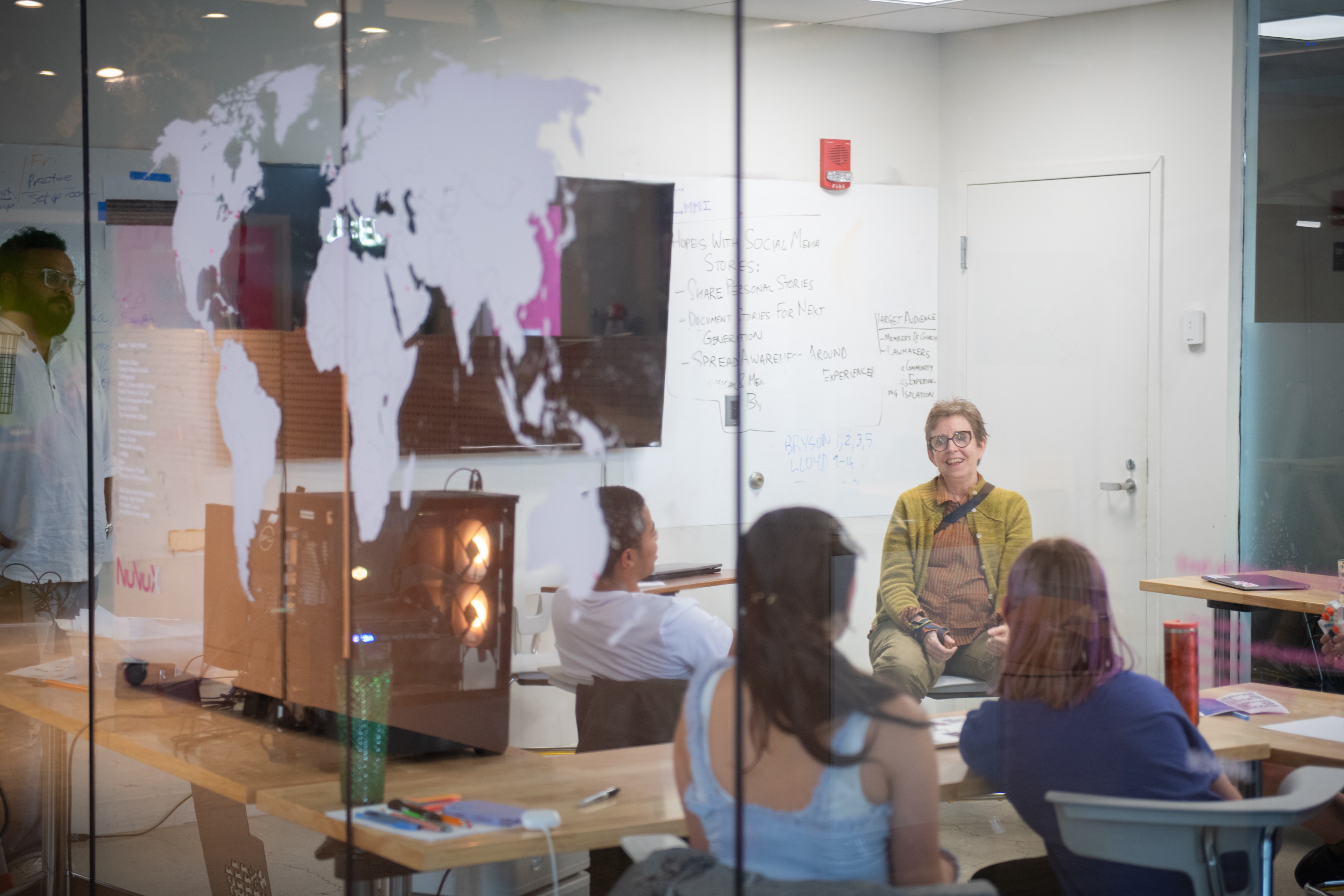
Media Maven Coach Heide

"In many ways, we're approaching curriculum design the same way we ask students to approach design challenges: prototype, reflect, iterate, and continuously improve," explains Nada. "That behind-the-scenes process is what allows each studio to feel creative and spontaneous while being grounded in a thoughtful, intentional educational framework."

While creating a final prototype that is well made and functional is always a goal, Jon explains that success runs much deeper. When a student can explain the journey behind their design decisions and carry new skills into future projects—and eventually into their professional lives—"that's the core of what success means to NuVu."

By the end of the summer, coaches have turned ideas inside out, refined them through feedback and discussion, and transformed them into design studios ready to ignite students' curiosity. Each coach brings a unique perspective and expertise, but together they share one goal: creating learning experiences that challenge students, build lasting skills, and inspire them to see themselves in new ways.

"A great design studio is one which invites students just outside their comfort zone," shares Ryan. "It's sort of a double-edged sword. The mind cannot grow if it's not being stretched, but at the same time, the mind cannot learn if it does not feel safe to fail."

To learn more about joining our school, click this button!
Admission